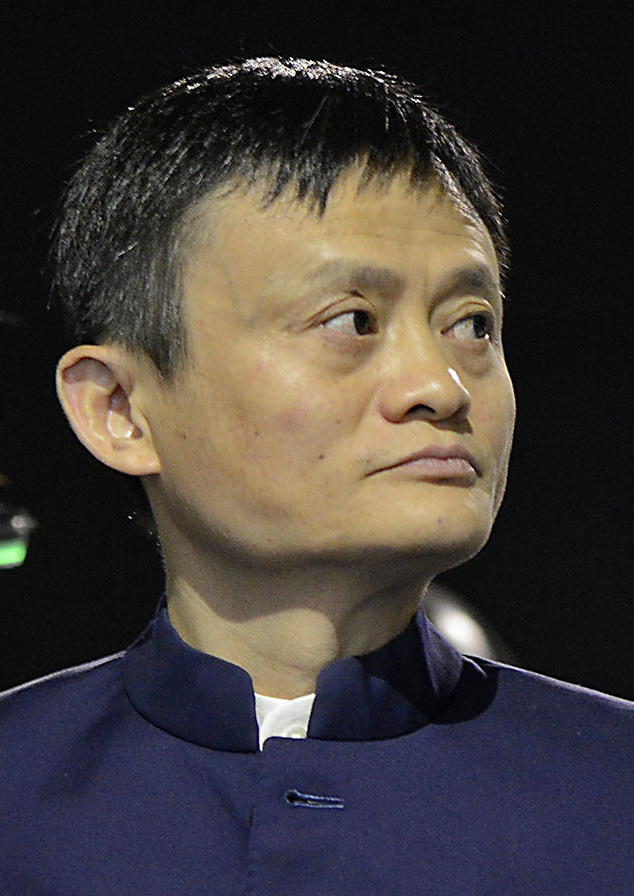
Jack Ma
Co-founder of Alibaba — the English teacher who built China’s e-commerce giant on trust infrastructure (Alipay), became its richest man, then collided with the Chinese state after the 2020 Ant IPO was suspended.
Alibaba Group · E-commerce, internet, fintech · est. 1999Jack Ma (Ma Yun, b. 1964, Hangzhou) is a former English teacher who co-founded Alibaba in 1999 with a group of partners in his apartment. Non-technical but relentless, he built China’s dominant e-commerce platforms (Alibaba, Taobao) and, crucially, the Alipay escrow system that solved online trust. Alibaba’s 2014 NYSE IPO was then the world’s largest. After Ma criticised regulators in an October 2020 speech, Ant Group’s record IPO was suspended, Alibaba was fined ~$2.8B for antitrust, and Ant was forced to restructure; Ma withdrew from public life before a partial rehabilitation from 2023.
Notable achievements
- Co-founded Alibaba in 1999 in his Hangzhou apartment with a group of partners and ~500,000 yuan.
- Beat eBay in China with Taobao, and built Alipay’s escrow system — the trust infrastructure that won the market.
- Led Alibaba to a record ~$25B NYSE IPO in 2014, becoming China’s richest man.
- Secured the legendary early SoftBank investment from Masayoshi Son.
- After a 2020 speech criticising regulators, navigated the suspended Ant IPO, a record antitrust fine, and Ant’s forced restructuring — then a partial public rehabilitation from 2023.
Find them online