Jack Ma: The Teacher Who Built China’s Internet, and Met Its Ceiling
A non-technical English teacher built one of the largest companies on earth on a simple insight — solve trust — became China’s richest man, then discovered the limit of founder power when it collides with the state.
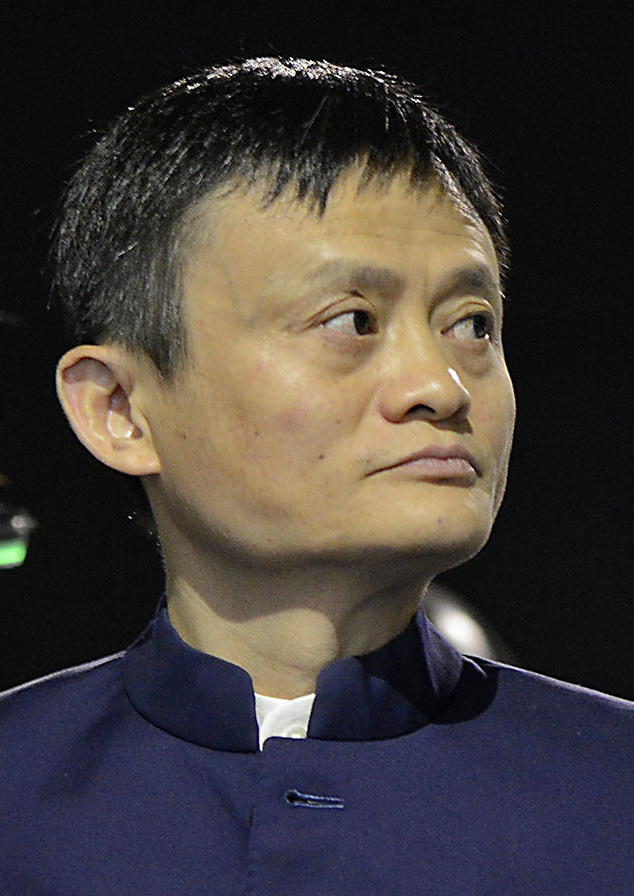
Every founder profile on HustleMemo asks the same two questions: how did they actually do it, and why did it work? Jack Ma forces a third, darker one: what happens when it works so well that it collides with a power larger than any company? His story has three acts — national hero, cautionary symbol, and partial rehabilitation — and telling it honestly requires unusual discipline. The events are documented. The motives of the Chinese state behind those events are not, and anyone who tells you they know exactly why Beijing did what it did is guessing. This piece will be careful to separate the two. No myth-making, in either direction.
The least likely tech founder in the world
Jack Ma — Ma Yun — was born in Hangzhou in 1964, into an ordinary family, and almost nothing about his early life suggested he would build one of the largest companies on earth. He was not a coder. He has cheerfully admitted he is not technical at all. What he had instead was relentlessness and a gift for language and persuasion.
As a teenager, fascinated by English, he taught himself the language the hard way: for years he rode his bicycle to a Hangzhou hotel to find foreign tourists and act as a free, self-appointed guide in exchange for conversation practice. The tourists, struggling with "Ma Yun," gave him the name "Jack." It is a small detail that explains a great deal — his entire early advantage was that he could talk to the outside world when almost no one around him could.
His academic record was, by his own telling, a catalogue of failure. He sat China's brutal national college entrance exam, the gaokao, three times. On the first attempt his mathematics score was a single point. On the second it was nineteen. On the third he reached eighty-nine but still fell short of the cutoff — and was admitted to Hangzhou Normal University only because its foreign-language department needed to fill seats. He graduated with a degree in English in 1988 and became an English teacher, a job he has said he loved.
The rejection stories that followed are legendary, and a fair profile has to flag them as exactly that — legendary, and self-reported. By his own account, he applied for dozens of jobs and was turned down by all of them; in the most-repeated version, twenty-four people applied for jobs at a new KFC, twenty-three were hired, and he was the only one rejected. He has also claimed Harvard rejected him ten times. These tales are motivational set-pieces from his own speeches; the numbers drift between tellings, and none has been independently verified. They are part of the Jack Ma mythology, which he built deliberately and well, and they should be read as such — inspiring, probably embellished, and uncorroborated.
From "China Pages" to a apartment full of co-founders
The pivot came in 1995, when Ma traveled to the United States and encountered the internet for the first time. He searched for "beer" and "China," the story goes, and found almost nothing about his country online. He returned to build an early online directory of Chinese businesses, "China Pages" — a venture that made some money and taught him the shape of the opportunity, even as it struggled against state-backed competition.
He then spent a stint in Beijing working for an entity tied to China's foreign-trade ministry — a brief, formative immersion in how the Chinese state related to the emerging internet, and one he chose to leave. He walked away from the security of a government-adjacent post to return to Hangzhou and build something of his own. The decision rhymes with the rest of his life: the relentless outsider repeatedly betting on himself against the safer institutional path.
The name he chose for that something tells you how he thought. "Alibaba" was picked precisely because it was globally recognizable — the folk tale of "open sesame", a password that unlocks treasure, understood by waiters in San Francisco and shopkeepers in Shanghai alike. Ma was building a company to connect China to the world, and he wanted a name the world already knew. The mission he wrapped around it — to "make it easy to do business anywhere" — was grandiose for a startup run out of an apartment, and it was exactly the kind of oversized ambition he was good at making people believe.
In 1999, in his Hangzhou apartment, Ma gathered a group of eighteen people — himself and seventeen others, by the common framing — and founded Alibaba with the equivalent of a few hundred thousand yuan pooled between them. The idea was business-to-business: connect China's vast universe of small manufacturers to buyers around the world. It was a bet that the internet would let Chinese small enterprises reach global markets directly, and that someone needed to build the marketplace where that happened.
The money that made it possible came from two now-famous investments. Across late 1999 and early 2000, Alibaba raised roughly twenty-five million dollars, led by Goldman Sachs and SoftBank — including the celebrated investment from SoftBank's Masayoshi Son, who reportedly decided to back Ma within minutes of meeting him. It is one of the great venture bets in history, and it gave Alibaba the capital to survive the dot-com winter and build for the long term.
It nearly didn't survive. Like Nvidia in the 1990s — and like almost every company that later became enormous — Alibaba came close to death early. In its rush to look like a global internet company, it had expanded overseas and hired aggressively, and when the dot-com bubble burst it was burning cash with no profits in sight. Ma was forced to retrench hard: pull back the international ambitions, cut costs, and refocus on the unglamorous core of serving Chinese small businesses. He brought in operational discipline he himself lacked — seasoned executives to impose the financial rigor a charismatic English teacher could not — and ground the company back from the brink. The lesson is the same one this site keeps finding in the companies that last: the founding vision gets you started, but surviving the first near-death requires the humility to stop believing your own press and fix the economics. Ma, for all his showmanship, had that humility when it counted.
The real moat was trust
Here is the part of the story that is genuinely about "how it actually worked," beyond the charisma and the folklore. When eBay entered China, it looked like the heavyweight; Alibaba's answer, Taobao, launched in 2003 as a free consumer marketplace and beat it. eBay reportedly offered to buy Taobao; Ma declined, and instead took a one-billion-dollar investment from Yahoo in 2005.
But the decisive innovation was not the marketplace. It was Alipay. In a market with little consumer trust — where buyers feared paying for goods that would never arrive, and sellers feared shipping to buyers who would never pay — Alipay introduced an escrow system: the platform held the buyer's money until the goods were received, then released it to the seller. That single mechanism solved the trust problem that had crippled Chinese e-commerce, and it is the substantive reason Alibaba won. The lesson is one that travels far beyond China: in a low-trust market, the company that builds the trust infrastructure owns the market. Alipay grew into Ant, one of the most important financial platforms in the world.
Alipay is also the source of the first serious controversy in Ma's record, and it deserves a fair, precise telling. In 2010–2011, ownership of Alipay was transferred out of Alibaba Group into an entity Ma controlled. Alibaba's largest shareholders — Yahoo and SoftBank — said, in regulatory filings, that they learned the transfer had already happened without prior board or shareholder approval. Ma's defense was that Chinese regulations required domestic ownership of payment licenses and that the carve-out was a compliance necessity. Critics saw an asset worth a great deal moved out for comparatively little. What is proven is that the transfer happened without prior board approval and triggered a major shareholder dispute; the characterization — regulatory necessity versus expropriation — remains genuinely contested. It was ultimately resolved by a commercial settlement giving Alibaba a large future payout tied to Alipay's value.
The summit, and the hubris
In September 2014, Alibaba listed on the New York Stock Exchange, raising about twenty-five billion dollars — at the time the largest IPO in world history — and valuing the company at over two hundred billion. Ma became, briefly, the richest man in China and a global celebrity, the charismatic public face of Chinese enterprise who held court at Davos and lectured the world on entrepreneurship. He stepped back from operational roles over the following years — handing off the CEO title in 2013, announcing his eventual departure as chairman in 2018, and leaving the board in 2020 — to focus, he said, on education and philanthropy.
For a stretch, Ma was arguably the most globally visible Chinese businessman alive — a fixture at Davos, a self-styled teacher-philosopher who lectured the world on perseverance, met heads of state, and embodied a confident, outward-facing China that was winning at the internet game the West had invented. A former English teacher who could charm a foreign audience in their own language was an extraordinarily effective ambassador for Chinese enterprise, and for two decades that visibility was pure asset. In hindsight, it may also have made him too large, too independent, and too quotable a symbol — a private citizen who had become, in many eyes, bigger than the institutions around him. That is a precarious thing to be anywhere. In his country it would prove dangerous.
It was at the height of this fame that he made the remarks that, in hindsight, mark the transition from act one to act two. In April 2019, amid a fierce debate about overwork in Chinese tech, Ma defended the industry's punishing "996" schedule — nine in the morning to nine at night, six days a week — calling the ability to work 996 "a huge blessing" and asking, "If you don't work 996 when you are young, when can you ever work 996?" The backlash was immediate and large. In fairness, he softened within days, saying overtime should be a worker's choice and that forcing 996 on people was "foolish" and "unsustainable." Both sets of remarks are real, and a fair profile reports them together: a billionaire's casual celebration of grinding hours, followed by a partial retreat under criticism.
The fall
The turning point of the entire story is a single speech. On 24 October 2020, at the Bund Finance Summit in Shanghai, Ma delivered a blistering public critique of China's financial regulators and state-owned banks. He said Chinese banks operated with a "pawnshop mentality." He argued that good innovation should not fear regulation but should fear outdated regulation, that "we cannot use the way to manage a railway station to manage an airport," and likened global banking rules to "a club for the elderly." He said it in public, on the record, in front of an audience that included senior figures of the Chinese establishment.
What happened next is documented; why it happened is not. Ant Group was days away from a dual listing in Shanghai and Hong Kong that would have raised around thirty-four billion dollars — the largest IPO in the world, surpassing Saudi Aramco's. On 3 November 2020, two days after regulators summoned Ma and Ant's executives, the listing was suspended, with the Shanghai exchange citing changes in the fintech regulatory environment. Ma then largely vanished from public view for roughly three months, reappearing in January 2021 in a brief video at an event for rural teachers.
In April 2021, China's market regulator fined Alibaba eighteen-point-two billion yuan — about 2.8 billion dollars — for abusing its dominant market position through an exclusivity practice (forcing merchants to "pick one of two" platforms). It was a record fine. Ant was forced into a sweeping restructuring; by January 2023, Ma had ceded control, his voting rights in Ant falling from an indirect majority to about six percent, restructured so that no single party controlled it. In July 2023, China's central bank fined Ant roughly seven billion yuan — about 985 million dollars — for a range of governance and compliance violations, formally concluding the overhaul and turning Ant into a regulated financial holding company. Ma himself spent much of this period abroad, including a stint as an invited professor at a college in Tokyo focused on sustainable agriculture.
Here is where discipline matters most. It is tempting, and many outlets did it, to draw a straight line: Ma criticized the state, so the state destroyed his empire in revenge. The events — the speech, the summons, the suspended IPO, the record fine, the forced restructuring — are all documented fact. The causal chain and the motive are not. Beijing's stated rationale was regulatory: that Ant had grown into a systemically important financial institution operating with the leverage of a bank but the oversight of a tech startup, and that China's broader "common prosperity" turn demanded reining in the power of private tech giants. Many observers connect the speech to the suspension, and the timing is hard to ignore. But what was said in the private regulatory meetings, and what role personal offense versus genuine financial-stability concern played, is unknowable from the outside. The honest sentence is this: after Ma publicly criticized regulators, his companies faced a suspended IPO, a record antitrust fine, and a forced restructuring; observers widely linked these events, while the state framed them as regulation. Anything more certain than that is speculation dressed as reporting.
What the saga actually teaches
Strip away the drama and Jack Ma's arc is the clearest case study available of a hard truth about entrepreneurship under a powerful state: there is a ceiling on founder power, and where that ceiling sits is not set by the market. In the United States, a founder's antagonist is competition, regulators with limited reach, and shareholders. In China, the ultimate stakeholder is the Party-state, and a founder who forgets that — however rich, however celebrated, however much of a national hero — discovers the limit abruptly. Ma's voting control of Ant going from a majority to six percent is not a market outcome. It is a political one.
The reverberations went far beyond one man. The regulatory wave that began with Ant rippled across China's entire technology sector — erasing enormous value from the country's internet giants, chilling private investment, and signalling to a generation of founders that there was a line, invisible and movable, that the state would enforce without warning. For two decades, China's entrepreneurs had operated on an implicit bargain: generate wealth and employment, and the Party would largely leave you to build. Ma's fall rewrote the terms in public. Whatever one concludes about Ant's actual financial risks — and the argument that a giant, lightly-supervised lender genuinely needed oversight is a serious one, not a fig leaf — the manner of the reckoning taught every Chinese founder the same lesson Ma learned the hard way: the ceiling is real, it is set by the state, and you do not get to argue with it from a podium.
It is worth noting, without over-reading it, that Ma was reported in 2018 to be a member of the Communist Party — a reminder that the relationship between China's great entrepreneurs and the Party-state is one of entanglement, not independence. The "private" tech sector that built modern China was always operating inside a structure it did not control.
There is a third act, and as of this writing it is still being written. Beginning around 2023, signs of a partial rehabilitation appeared. The clearest came in February 2025, when Ma was among the prominent entrepreneurs invited to a symposium hosted by Xi Jinping in Beijing, alongside the founders of Huawei, Tencent, Xiaomi, BYD, and others — widely read as a state signal of a more business-friendly posture, driven by China's need for growth and its race in artificial intelligence. Ma was visible, applauding. He has not, as far as the public record shows, returned to any operational leadership role. "Partial rehabilitation" is the accurate phrase — not a comeback, but a thaw.
The honest close
Jack Ma is neither the pure folk hero of his own speeches nor the simple martyr of the Western retelling. He is a genuinely extraordinary builder — a non-technical English teacher who, through sheer persistence and an instinct for solving the trust problem that strangled Chinese commerce, built one of the most consequential companies of the internet age. He is also a man who mythologized his own failures into a brand, defended punishing work culture from the comfort of immense wealth, moved a crucial asset out from under his own shareholders in a way that remains contested, and then learned — in the most public way imaginable — that in his country the founder is never the most powerful person in the room.
The "how did they do it" answer is trust infrastructure and relentlessness. The "why did it work" answer is Alipay solving a problem no one else solved first. And the third answer, the one his story adds to this site, is the one founders everywhere prefer not to think about: sometimes the thing that determines your fate is not your product, your customers, or your competitors, but a power you do not control and cannot out-argue — no matter how good you are at talking. Jack Ma was the best talker in Chinese business. In the end, that was not enough, and learning where the limit was is the most instructive thing about him.
Editor's note: HustleMemo profiles real founders and operators. This is a critically-neutral, fact-checked profile of a living person and a politically sensitive story. The documented events (the Alipay carve-out, the 996 remarks, the Bund speech, the suspended Ant IPO, the antitrust fine, the restructuring, the 2025 Xi symposium) are stated as fact; the motives of the Chinese state are explicitly treated as inference, not fact. Ma's famous rejection anecdotes are flagged as self-reported and uncorroborated. The image is used under CC BY 2.0 with attribution. Corrections: editorial@hustlememo.com.
Sources
- Biography, gaokao attempts, English self-teaching, China Pages, founding Alibaba, Goldman/SoftBank funding, Taobao vs eBay, the Yahoo investment, step-downs, and the 2018 Party-membership report: Wikipedia, "Jack Ma"; CNN Money biography; "How They Began".
- The rejection anecdotes (KFC, Harvard): CNBC — flagged as self-reported from Ma's own speeches and uncorroborated.
- The 2010–11 Alipay carve-out and settlement: Yahoo SEC filing (8-K, 2011); excerpt from Duncan Clark, "Alibaba: The House That Jack Ma Built" (via Sinocism).
- The 2014 NYSE IPO (~$25B) and Ma becoming China's richest man: Alibaba Group / Wikipedia; The Washington Post.
- The "996" remarks and his later softening (April 2019): CNBC; CNN.
- The Bund Finance Summit speech (24 Oct 2020): translations via Marcellus and Interconnected.
- The Ant IPO suspension (3 Nov 2020, ~$34B): CNBC; Lawfare. The disappearance and January 2021 reappearance: Wikipedia.
- The April 2021 antitrust fine (¥18.2B / ~$2.8B): SCMP; Caixin. The January 2023 Ant restructuring (voting control to
6.2%): Al Jazeera. The July 2023 PBOC fine (¥7.12B / ~$985M): CNBC; CNN. - The February 2025 Xi symposium and partial rehabilitation: CNN; Al Jazeera; NPR.
More from this category
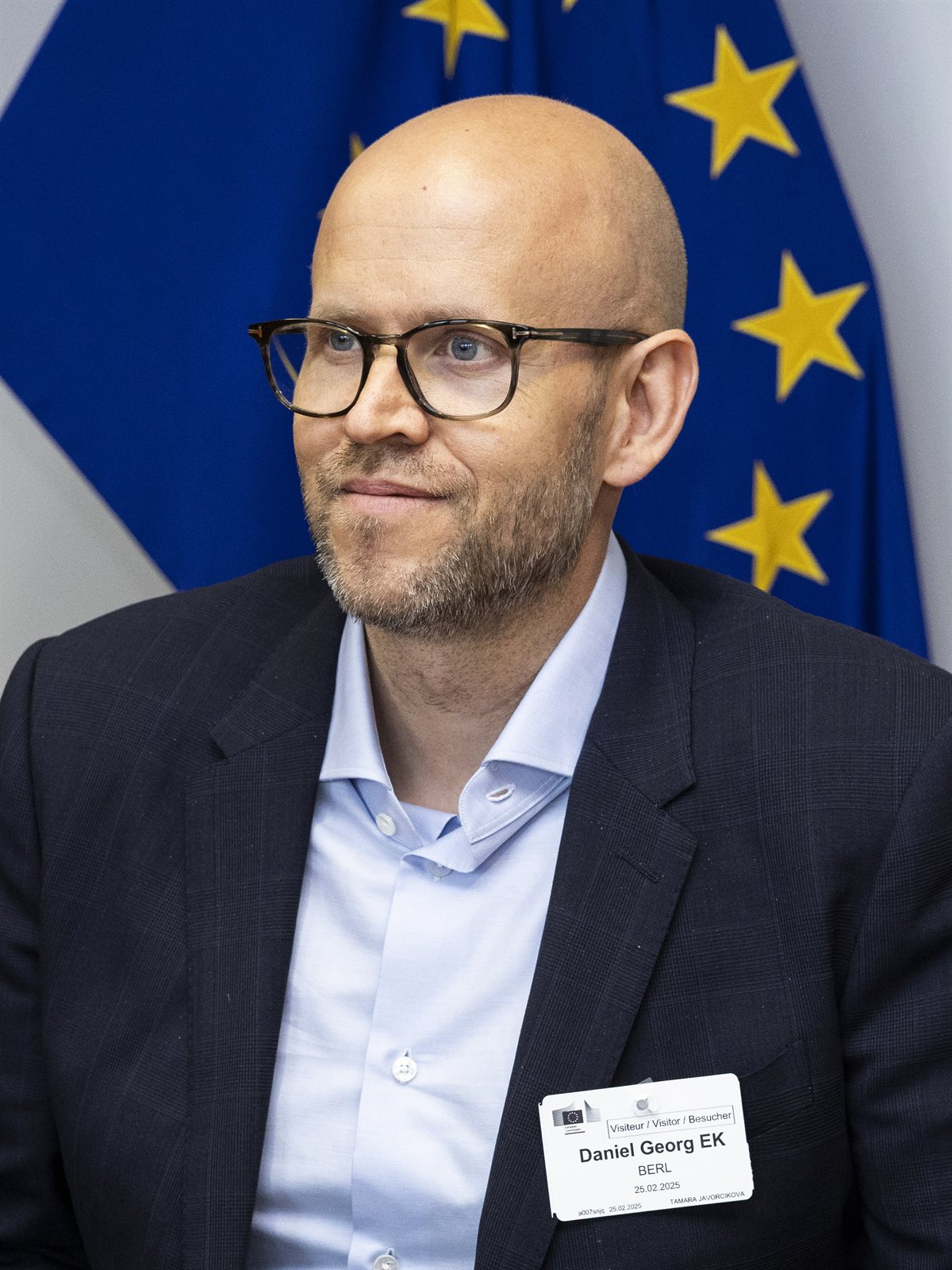
Daniel Ek: The Swede Who Beat Piracy by Building Something Better
A critically-neutral profile of Spotify’s Daniel Ek: how he beat music piracy not with lawsuits but with a freemium product better than free, endured two years of label negotiations and sixteen more before profit, and built a 675M-user streaming giant — alongside the artist-payment, Rogan and defence-tech controversies.
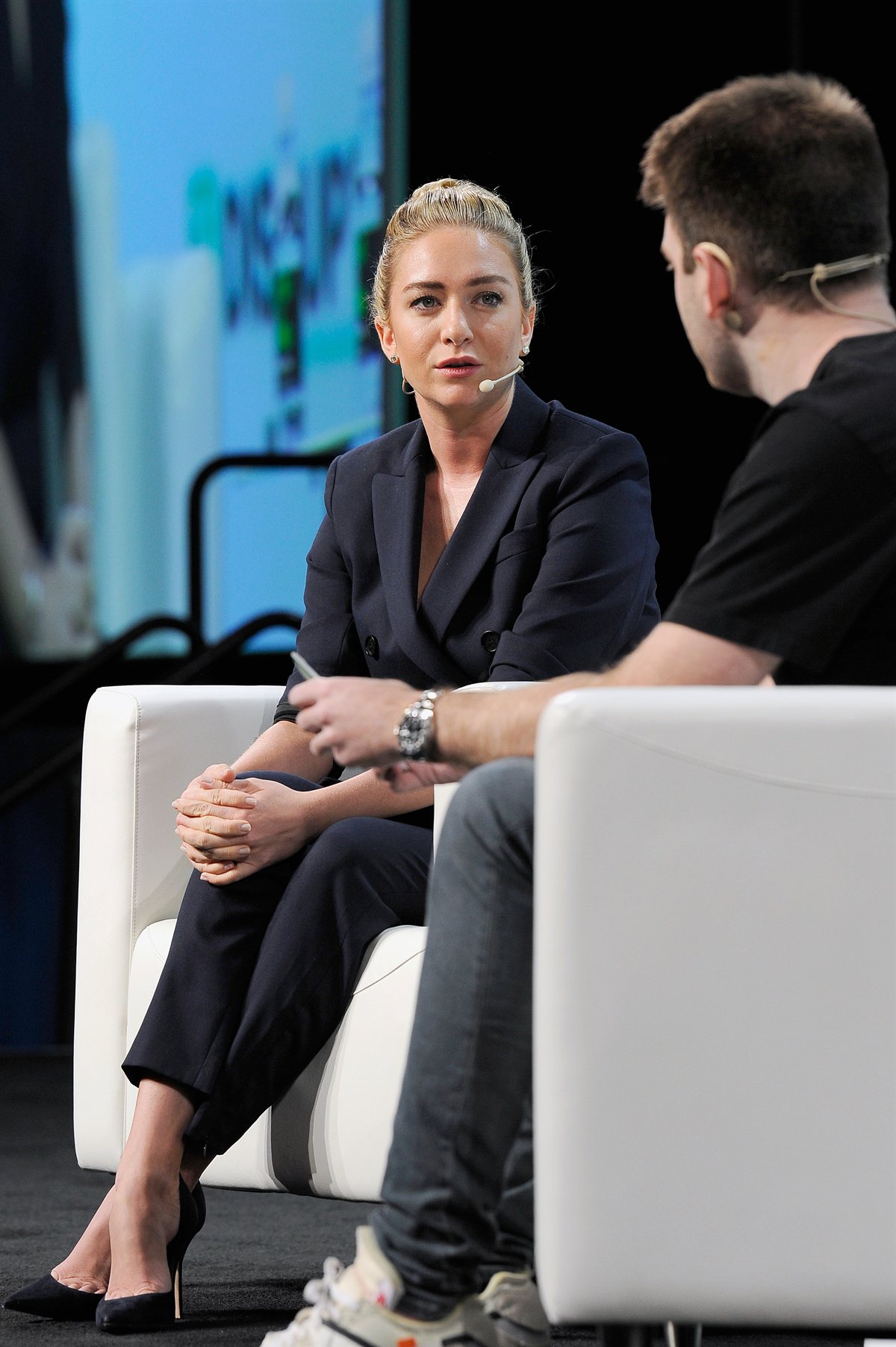
Whitney Wolfe Herd: The Founder Who Turned Being Pushed Out Into Bumble
A critically-neutral profile of Bumble’s Whitney Wolfe Herd: how she converted her ordeal at Tinder into the "women make the first move" thesis, took Bumble public at 31, and now fights to sustain it through a ~94% stock decline — the founding triumph and the hard aftermath, held honestly together.
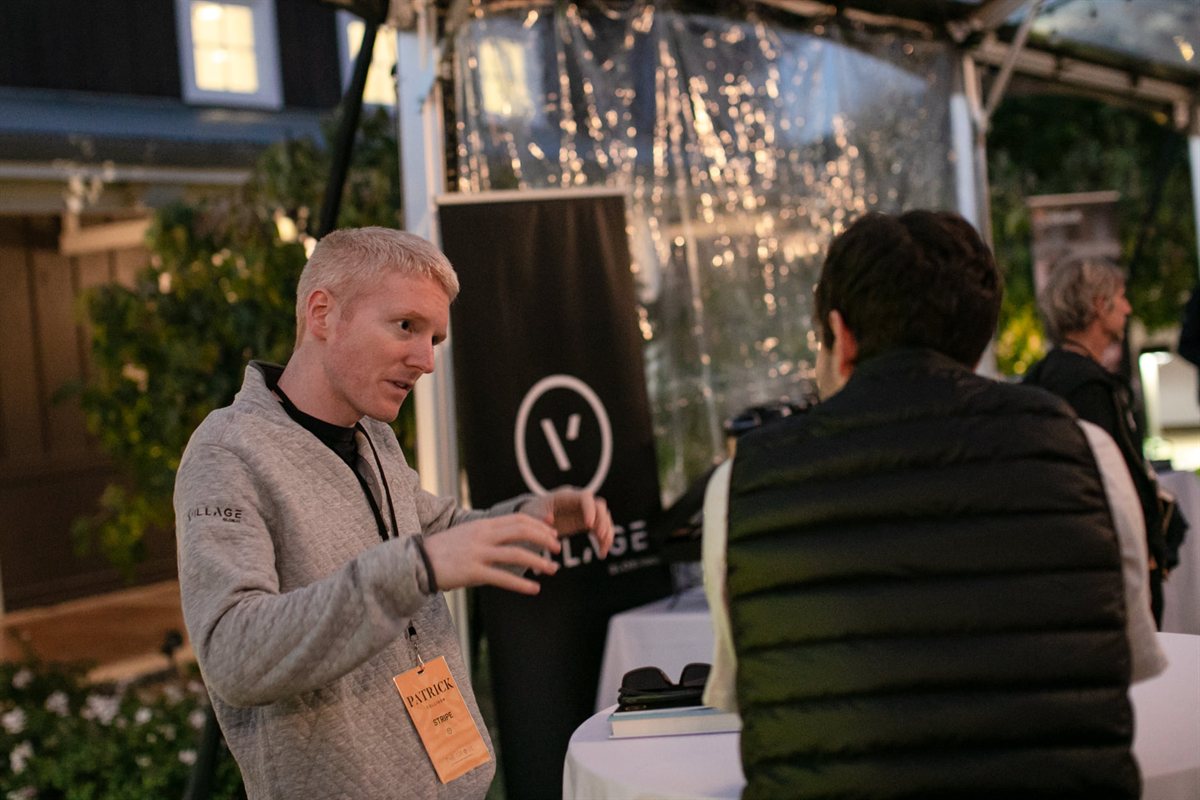
Patrick Collison: The Irish Teenager Who Built the Internet’s Payment Rails
A critically-neutral profile of Stripe’s Patrick Collison: the teenage prodigy who sold his first startup at 19, reduced online payments to a few lines of developer code, and built the financial infrastructure of the internet — through a bubble, a markdown, and a full recovery past its old peak to ~$159B.