Whitney Wolfe Herd: The Founder Who Turned Being Pushed Out Into Bumble
She helped build Tinder, left amid a harassment dispute and a wave of online abuse, then turned the exact source of her pain into a product thesis — and at 31 became the youngest woman to take a US company public.
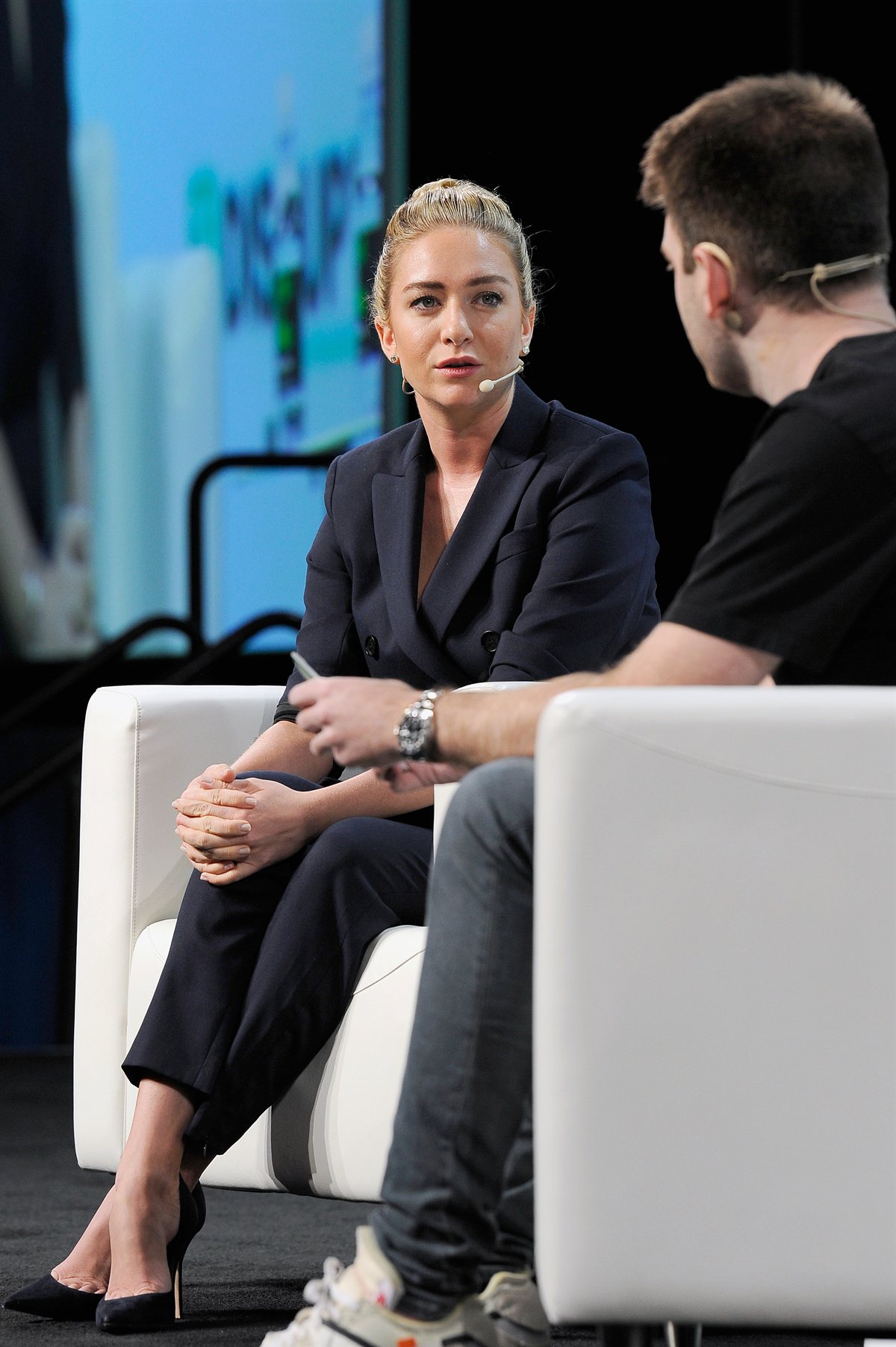
Every founder profile on HustleMemo asks the same two questions: how did they actually do it, and why did it work? Whitney Wolfe Herd's answer is one of the most unusual in modern technology, because her company was born directly out of the worst moment of her career. She helped build Tinder, the app that arguably defined a decade of dating, then left it amid an ugly harassment dispute and a wave of online abuse. Most people would have retreated. Instead she took the exact source of her pain — the way digital dating could be hostile to women — and turned it into the founding principle of a rival product. Bumble, where women must make the first move, made her, at thirty-one, the youngest woman ever to take an American company public. The story since has been harder, and an honest profile has to hold both the triumphant founding and the bruising aftermath at once. The real lesson is about converting a personal wound into a product thesis — and about how much harder it is to sustain a company than to launch one.
Salt Lake City to the campaign that named Tinder
Whitney Wolfe was born in 1989 in Salt Lake City, Utah, the daughter of a property developer; she grew up comfortably and spent a childhood year abroad in Paris. At Southern Methodist University in Dallas she studied international studies, joined a sorority, and showed her instinct for marketing early: while still a student, around the age of twenty, she co-founded a small venture selling bamboo tote bags to raise money for areas hit by the 2010 Deepwater Horizon oil spill in the Gulf of Mexico. It was a small thing, but it revealed a knack for attaching a product to a cause and a story — the skill that would later define her companies.
In 2012 she joined a startup incubator led by Sean Rad and ended up on the team building the dating app then code-named MatchBox. Wolfe is widely credited with two pivotal contributions: she suggested the name Tinder — the spark, the combustible material that starts a fire — and, as the app's marketing lead, she drove its early growth with a now-legendary campus strategy, seeding the app at sororities and fraternities until it caught fire among American college students. Tinder's explosive early adoption owed a great deal to her. She became its vice-president of marketing and, by many accounts, one of its most important early builders.
The departure that became the founding
In April 2014, Wolfe left Tinder. In June, she filed a sexual-harassment and discrimination lawsuit against Tinder and its parent company, IAC. This is the part of the story that must be told with precision and fairness to everyone involved, because it has often been flattened into myth.
In the suit, Wolfe alleged that Justin Mateen — then Tinder's chief marketing officer, with whom she had previously been in a relationship — had sent her a stream of abusive messages, and that the leadership, including chief executive Sean Rad, had failed to address her complaints; she also alleged that her co-founder title had been stripped because she was a woman. In September 2014, the matter was settled. The exact, verified framing is the one to use: it was resolved, in IAC's words, "with no admission of wrong doing," and in Wolfe's counsel's words, "without admission of wrongdoing," with Wolfe stating she was proud of her work as a co-founder of Tinder. The settlement amount was not officially disclosed; it was reported to be more than a million dollars, but that figure should be treated as reported, not confirmed. Mateen was suspended and subsequently left the company. Crucially, the allegations against the individuals were plaintiff's allegations resolved without any admission or finding of liability, and they should be read that way — the presumption of innocence applies to all sides.
What is not in dispute is the aftermath for Wolfe personally. The case became tabloid fodder; with the settlement's terms binding her, she could not freely respond publicly, and she has described enduring a wave of online harassment and threats that, by her account, triggered panic attacks and depression. She was, by her own telling, in a dark place — a young woman who had helped build one of the most successful apps in the world and had been pushed out of it and then abused for speaking up.
Turning the wound into a thesis
Out of that low point came the idea. Wolfe met Andrey Andreev, the Russian-born entrepreneur behind the international dating app Badoo, who saw her talent and backed her. Her initial instinct was not even a dating app — she has said she first wanted to build a women-only social network organised around compliments and kindness, an antidote to online cruelty. Andreev steered her toward dating, where her expertise lay, and the two combined her vision with Badoo's infrastructure and capital. At founding, Andreev's company held the large majority stake — around seventy-nine percent for an investment of roughly ten million dollars — and Wolfe Herd was chief executive with about a fifth of the company.
Bumble launched in December 2014, and its signature mechanic was the wound turned into a feature: in heterosexual matches, only the woman can send the first message, and she has twenty-four hours to do it before the match expires. It was, at once, a genuine product differentiator in a crowded post-Tinder market and a direct expression of Wolfe Herd's own experience. The design put women in control of the opening interaction — reducing the barrage of unsolicited messages that made dating apps hostile — and the mission and the mechanic reinforced each other. The "women make the first move" rule was both a UX decision and a brand, and that fusion of product and purpose is precisely what made Bumble more than another swiping app.
It is fair to note both halves of that. The empowerment framing was authentic — it came straight from what she had lived — and it was also a marketing asset of enormous power, giving Bumble a story and a moral position that Tinder could not claim. The honesty is in saying it was both, not pretending it was only one.
Building the brand, and the business
Bumble grew quickly, and Wolfe Herd extended the "women first" model beyond romance into Bumble BFF, for finding friends, and Bumble Bizz, for professional networking, positioning the brand as a broader platform for women-centred connection. She leaned into the mission publicly, testifying before a Texas legislative committee in 2019 in support of a bill to criminalise sending unsolicited explicit images, and building safety features — photo verification, bans on lewd images — into the product as both protection and positioning.
The corporate structure shifted decisively in 2019. Andreev sold his controlling stake to the private-equity giant Blackstone, in a deal valuing the parent group at around three billion dollars, and Wolfe Herd was elevated to chief executive of the whole group, her own stake rising to roughly a fifth. Here a piece of context must be handled with care. In July 2019, Forbes published an investigation alleging a toxic, sexist culture at Badoo and around Andreev — allegations by former employees about the London headquarters. It is essential to be exact: those allegations concerned Andreev and Badoo, not Wolfe Herd and not Bumble's Austin operation. The reporting preceded, and is widely linked to, Andreev's exit via the Blackstone sale, but it should be presented as reporting and allegations investigated internally, not as adjudicated fact, and certainly not as anything attributed to Wolfe Herd. In 2020, Bumble Inc. became the parent of both apps.
The IPO, and the peak
The triumphant chapter came on the eleventh of February, 2021, when Bumble went public on the Nasdaq. The shares were priced at forty-three dollars, above the expected range, raising more than two billion dollars; they opened around seventy-six and closed the first day up more than sixty percent. At the offer price the company was worth somewhere above eight billion dollars; after the first-day pop, north of thirteen billion — both figures are correct depending on the basis, and it is worth saying which.
The image that defined the day was Wolfe Herd ringing the opening bell with her young son on her hip. At thirty-one, she had become the youngest woman ever to take a US company public and, on paper, one of the youngest self-made women billionaires in the world, with Forbes pegging her fortune around a billion and a half dollars. It was a genuine milestone — a founder who had been pushed out of one company and abused for it had built a rival, taken it public, and done so as a young mother on her own terms. The symbolism was real, and so was the achievement.
The aftermath, told honestly
This is where the profile has to resist the temptation of the clean ending, because the years since the IPO have been hard, and an honest account must say so.
Bumble's stock, after its euphoric debut, fell — and kept falling. From the peak it has declined roughly ninety-four percent, and Wolfe Herd lost her paper billionaire status within about a year. The core business has struggled: revenue has been declining, paying users have proven hard to grow, and the dating-app category as a whole has faced fatigue. In late 2023 Wolfe Herd announced she would step back from the chief-executive role, becoming executive chair at the start of 2024 and handing the top job to Lidiane Jones, the former chief executive of Slack. That transition did not arrest the decline. In early 2025 Wolfe Herd announced she would return as chief executive, taking the reins again in March 2025 after Jones departed; under her return the revenue slide continued, and 2025 brought significant layoffs.
None of this erases the founding achievement, but it reframes it. Launching a company on a powerful thesis and a brilliant brand is one kind of feat; sustaining it through a maturing market, a falling stock, and the grind of running a public company for years is another, and the second has proven harder than the first. Wolfe Herd's net worth today, no longer in the billions, is estimated by the kind of aggregators that should be cited cautiously to be in the hundreds of millions — and notably, most of any remaining fortune derives from earlier share sales and the IPO, not from her current stake, which at the depressed stock price is worth only single-digit millions. The honest picture is of a founder still fighting to turn around the company she built, with the outcome genuinely unresolved.
The criticisms, kept honest: PROVEN vs ALLEGED
Documented. The Tinder lawsuit was settled with no admission of wrongdoing; the amount was not officially disclosed (reportedly more than a million dollars). The post-IPO stock collapse (around ninety-four percent from peak), the declining revenue, the leadership handoff and return, and the 2025 layoffs are all matters of public market record. These are not in dispute.
Alleged or contested. The harassment allegations against Mateen and Rad were plaintiff's allegations resolved without any finding of liability — present them as such, for all parties. The 2019 Forbes reporting on Badoo's culture concerned Andreev and Badoo, not Wolfe Herd or Bumble Austin; it was reporting and former-employee allegations, investigated internally, not adjudicated. And the sharpest editorial critique — that Bumble's empowerment narrative outran its business reality, a mission-driven brand attached to a stock that lost most of its value — is exactly that: critical commentary and opinion, fair to raise but not a fact about wrongdoing. There is no fraud, no scandal of her making, in this story. There is a powerful founding, a real personal ordeal handled with discretion, and a hard, ongoing fight to sustain the company.
What Bumble changed
Even with the business struggling, it is worth being clear about what Wolfe Herd's company actually changed, because the cultural footprint is larger than the share price. Before Bumble, the dominant grammar of mobile dating — set largely by Tinder, the app she had helped build — placed no particular constraint on who initiated contact, and for many women that meant an unrelenting stream of unsolicited messages, much of it crude. Bumble's single rule, that women send the first message, did not just differentiate a product; it reframed a norm. It made "who has control of the opening move" a design question with a moral answer, and it forced the entire category to reckon with women's experience as a first-order concern rather than an afterthought. Competitors added safety features; the industry's conversation shifted. That a single mechanic could move an entire category's defaults is a real achievement, and it is independent of whether the stock recovers.
There is also the matter of representation, which Wolfe Herd's IPO crystallised in a single image. When she rang the Nasdaq bell in February 2021 with her toddler on her hip, she made visible something the technology industry had almost never shown: a young woman founder, a mother, taking her own company public on her own terms. The numbers around female founders remain bleak — women receive a tiny fraction of venture funding, and the roster of women who have taken companies public is short — so the symbolism was not empty. For a generation of women builders, Wolfe Herd became proof that the path existed, even as her later struggles became, just as instructively, proof that the path is no easier to walk than anyone else's once the company is public and the market turns. Both lessons matter, and she has now lived both. The honest assessment is that her cultural and symbolic impact is secure regardless of what happens to Bumble's valuation; whether her business legacy matches it depends entirely on the turnaround she returned to lead, and that verdict is still being written.
Why it actually worked
Strip it down and the founding engine is the conversion of a wound into a thesis. Bumble worked, at launch, because Wolfe Herd took the precise thing that had made digital dating painful — its hostility to women — and made the solution to it the core mechanic and the entire brand. "Women make the first move" was simultaneously a product feature that solved a real problem and a mission that gave the company a moral identity no competitor could copy. That fusion of utility and meaning is what let a new entrant carve a defensible position in a market already dominated by the very app she had helped build. And her marketing genius — the same instinct that had named Tinder and seeded it on campuses — made the brand land.
But the harder, more honest lesson is in the aftermath, and it is about the difference between founding and sustaining. A great thesis and a great brand can launch a company and even take it public; they do not guarantee that it compounds. Sustaining a business through a maturing category, public-market scrutiny, and shifting user behaviour demands a different and less romantic set of capabilities, and the jury on that chapter is still out. Wolfe Herd's story is a reminder that the launch is the beginning of the test, not the end of it.
It is worth being precise about why the second act has been so hard, because the difficulty is not simply mismanagement. The dating-app category has structural headwinds that no founder fully controls: a built-in churn problem, since the product's success means users leave when they find a partner; a younger generation increasingly fatigued by swiping; and a small number of large platforms, several owned by a single conglomerate, competing for the same finite pool of singles. Bumble's mission-driven brand was a genuine asset in acquiring users, but a brand cannot by itself defeat category fatigue or fix unit economics. Some of what has gone wrong is execution, and some of it is simply the weather of a maturing market — and disentangling the two is exactly the problem Wolfe Herd returned to solve. Whether the answer is a reinvented product, a new growth engine, or a hard acceptance of a smaller, steadier business, the founder who once redefined the category is now being tested on the far less glamorous skill of operating within its limits.
The honest close
Whitney Wolfe Herd did something rare: she took the worst professional experience of her life and built a company out of it, turning the way digital dating had failed women into a product thesis sharp enough to challenge the app she had helped create. The "how did she do it" answer is that she converted a personal wound into a feature and a brand, and used a marketer's gift to make it resonate. The "why did it work," at least at first, is that the mission and the mechanic reinforced each other into a position no rival could occupy.
What her story adds to this site is both an inspiration and a caution. The inspiration is the alchemy — pain transmuted into purpose, a pushed-out employee becoming a founder who rang the bell with her child on her hip. The caution is everything after: that a brilliant founding does not insulate a company from the long, unglamorous difficulty of staying alive and growing in a hard market. Wolfe Herd is now in the second fight, the harder one, trying to sustain what she so memorably launched. How that fight ends is unwritten — and pretending otherwise would betray the honesty her own story demands.
Editor's note: HustleMemo profiles real founders and operators. This is a critically-neutral, fact-checked profile. Disclosures per the record: the Tinder/IAC lawsuit (June 2014) was settled (Sept 2014) "with no admission of wrongdoing," the amount not officially disclosed (reportedly >$1M); the allegations against Justin Mateen and Sean Rad were resolved without any finding of liability and are presented as plaintiff's allegations, with the presumption of innocence for all parties; the 2019 Forbes investigation concerned Andrey Andreev and Badoo, not Wolfe Herd or Bumble's Austin operation, and is attributed to that reporting, not adjudicated; IPO valuation is given two ways (~$8.2B at offer, ~$13B+ after the first-day pop); the ~94% stock decline, leadership changes, and 2025 layoffs are market record; sub-billion net-worth figures are aggregator estimates and are hedged. The cover photograph is from Wikimedia Commons (TechCrunch Disrupt SF 2018, Steve Jennings / TechCrunch), tagged CC BY 2.0; the file also carries a "Getty Images for TechCrunch" credit — a known licensing gray area, disclosed here. Corrections: editorial@hustlememo.com.
Sources
- Biography (born 1989, Salt Lake City; SMU; the "Help Us Project" tote bags for the 2010 Deepwater Horizon spill); joining Tinder, naming it, the campus-growth strategy, VP Marketing, and the April 2014 departure: Wikipedia (Whitney Wolfe Herd); TIME.
- The lawsuit (June 2014) and settlement (Sept 2014, "no admission of wrongdoing," amount undisclosed / reportedly >$1M; Mateen suspended then left): TechCrunch (primary, Sept 2014); TIME; NBC News; Inc./Business Insider.
- Bumble founding (Dec 2014, "women message first"), the Andreev/MagicLab backing (~79% /
$10M), BFF/Bizz, the 2019 Blackstone deal ($3bn), and the 2020 Bumble Inc. parent: Wikipedia; Fortune. - The 2019 Forbes investigation into Badoo/Andreev's culture (allegations re: Andreev/Badoo, not Wolfe Herd/Bumble Austin; investigated internally): Forbes (2019) via TechCrunch; Fortune (2020).
- IPO (11 Feb 2021, $43/share; ~$8.2B at offer, ~$13B+ first-day; youngest woman to take a US company public; ~$1.5B paper net worth): TechCrunch; Fortune; Fox Business; Business Standard.
- Aftermath — ~94% stock decline; step-back to Exec Chair (Jan 2024, Lidiane Jones CEO); return as CEO (Mar 2025); 2025 revenue declines and layoffs; current users/revenue: Bumble SEC 8-K filings; stockanalysis.com; Bumble IR; TIME.
More from this category

Daniel Ek: The Swede Who Beat Piracy by Building Something Better
A critically-neutral profile of Spotify’s Daniel Ek: how he beat music piracy not with lawsuits but with a freemium product better than free, endured two years of label negotiations and sixteen more before profit, and built a 675M-user streaming giant — alongside the artist-payment, Rogan and defence-tech controversies.
Patrick Collison: The Irish Teenager Who Built the Internet’s Payment Rails
A critically-neutral profile of Stripe’s Patrick Collison: the teenage prodigy who sold his first startup at 19, reduced online payments to a few lines of developer code, and built the financial infrastructure of the internet — through a bubble, a markdown, and a full recovery past its old peak to ~$159B.

David Vélez: The Banker Who Attacked Brazil’s Banking Oligopoly
A critically-neutral profile of Nubank’s David Vélez: the outsider venture capitalist who read Brazil’s broken banking oligopoly as a roadmap, built a no-fee phone-first bank that incumbents couldn’t copy, scaled to 100M+ customers and an NYSE listing — and answered the profitability skeptics by 2023.