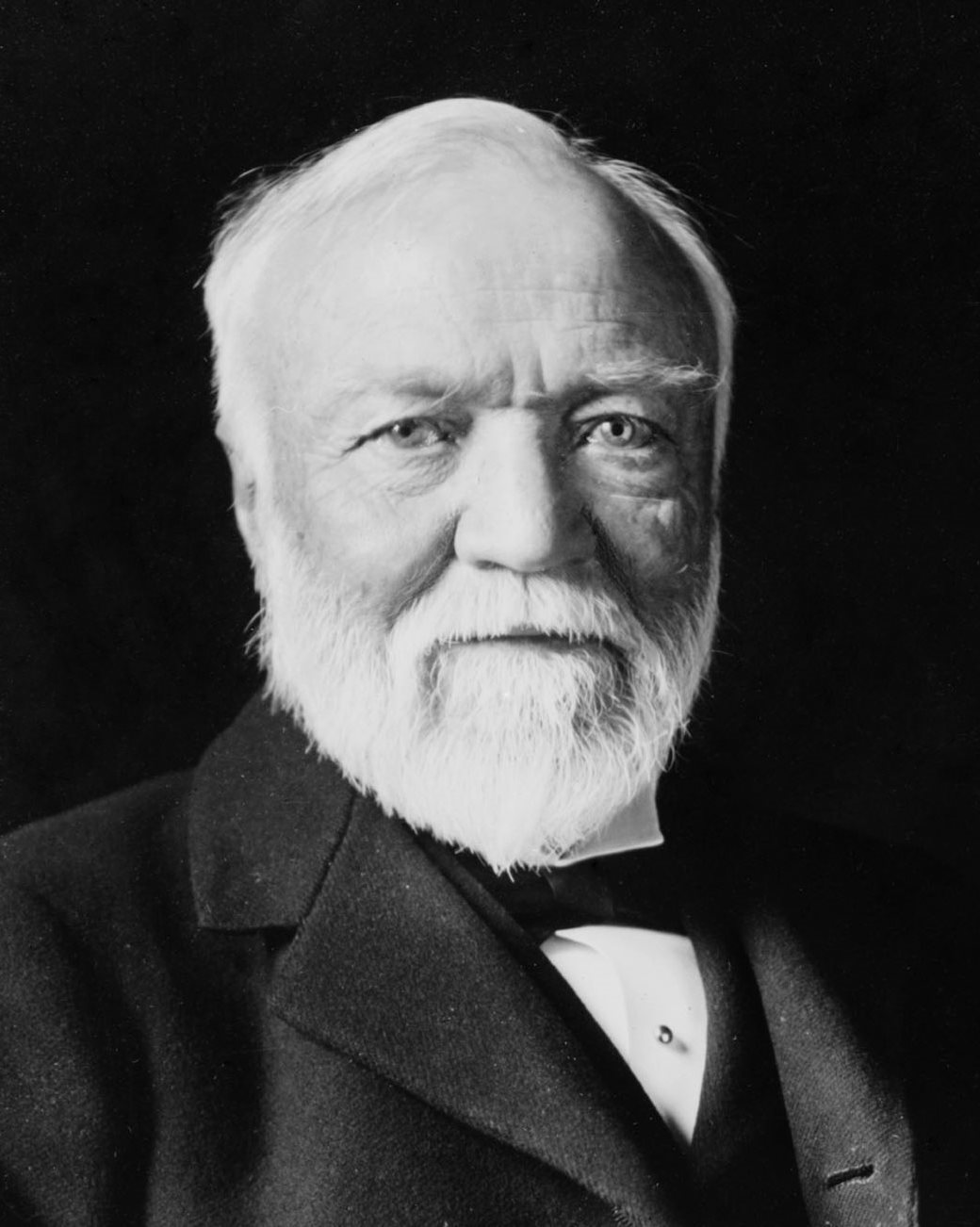
Andrew Carnegie
The penniless Scottish immigrant who became the master of American steel, sold out to J. P. Morgan for $303.45M, and gave away ~90% of his fortune — while breaking the union at Homestead.
Carnegie Steel Company · Steel, heavy industry · est. 1892Born in Dunfermline, Scotland in 1835; emigrated to Allegheny, Pennsylvania in 1848 aged 12. Rose from bobbin boy and telegraph messenger through the Pennsylvania Railroad, then built a steel empire (Carnegie Steel Company, 1892). Sold to J. P. Morgan in 1901 for $303,450,000, the basis of U.S. Steel. Author of "The Gospel of Wealth" (1889); funded ~3,000 libraries and gave away ~$350M. The 1892 Homestead Strike, run by his partner Henry Clay Frick, left about 10 people dead. Died 1919.
Notable achievements
- Built Carnegie Steel into the dominant force in American steel.
- Sold to J. P. Morgan in 1901 for $303,450,000, the basis of U.S. Steel.
- Wrote "The Gospel of Wealth" (1889), the founding text of modern philanthropy.
- Funded ~3,000 public libraries and gave away ~$350M (about 90% of his fortune).
Find them online