Taavet Hinrikus: Wise and the Honest Insurgent
Skype’s first employee built the Estonian fintech that exposed banks’ hidden FX markups and listed in London at ~$11 billion. A fact-checked look at the disruption — and the limits of the “honest insurgent” story.
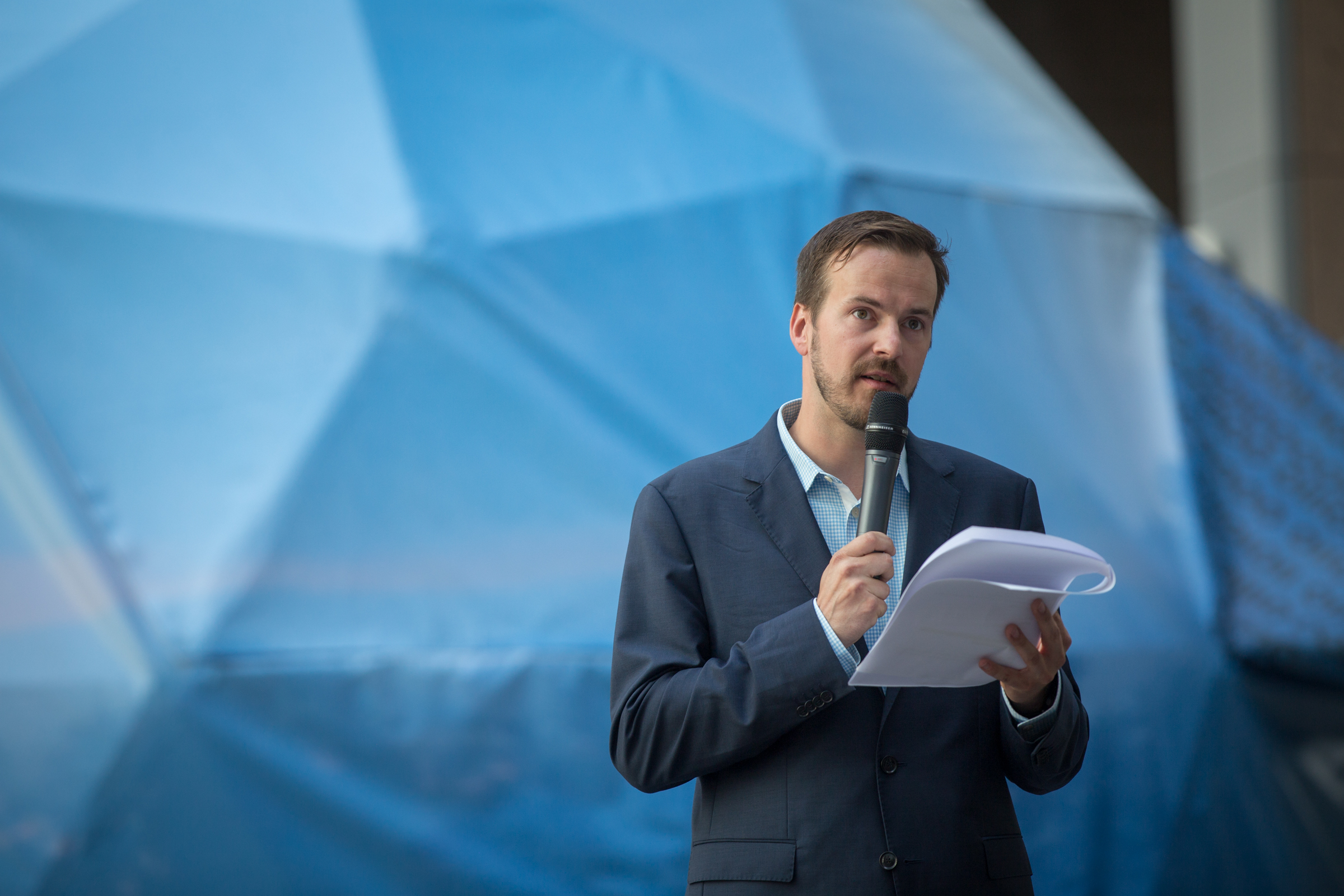
Taavet Hinrikus is the kind of founder a small country tells stories about. He was Skype's first hired employee, watched a Tallinn startup become a global verb, and then did the rarer thing: he left the rocket ship and built his own. The company he co-founded, originally TransferWise and now simply Wise, attacked one of the most boring and most lucrative rackets in modern finance — the hidden markup that banks charge ordinary people to move money across a border — and grew it into a business that listed on the London Stock Exchange at a valuation of roughly eleven billion dollars. In the process Hinrikus became, alongside his co-founder, one of Estonia's first billionaires. His story is a clean illustration of how a tiny post-Soviet state with fast internet and a chip on its shoulder produced an outsized share of Europe's fintech, and it is also a useful case study in the limits of the "disruption" narrative, because the company he built has had its own brushes with regulators even as it positioned itself as the honest alternative to a dishonest industry.
It is worth being careful from the outset about what belongs to whom. The most quotable controversies attached to Wise — a tax fine for its chief executive, a regulator's penalty over fee advertising, an early ruling that a savings claim was misleading — are matters at the level of the company or of Hinrikus's co-founder, Kristo Käärmann, and not allegations of personal misconduct against Hinrikus himself. No personal-misconduct controversy specific to Hinrikus is documented. A fair profile keeps that distinction sharp, because the temptation in fintech writing is to collapse a company's regulatory record into a single founder's character, and that collapse is exactly the kind of imprecision this series tries to avoid.
A Tartu childhood and the Skype rocket
Hinrikus was born on 2 June 1981 in Tartu, Estonia's university city, in the last decade of Soviet rule. He grew up through the extraordinary hinge moment of Estonian history: a child of the dying USSR who came of age in a newly independent republic that decided, almost as a matter of national strategy, to leapfrog into the digital era. He attended the Miina Härma Gymnasium, a selective Tartu school, and the conventional next step would have been a degree. Instead he left university to join a startup — a decision that, in most times and places, would have been a footnote, but in his case put him at the center of the company that would define Estonian technology for a generation.
That company was Skype. Hinrikus joined as its first salaried employee, working from around 2002, and stayed until 2008, eventually serving as its director of strategy. It is hard to overstate what Skype meant to Estonia. The product's core engineering was built by Estonian developers, and its global success — free voice and video calls over the internet, at a time when international telephony was still expensive — became the founding myth of the country's startup scene. When eBay acquired Skype in 2005 for billions of dollars, it minted a cohort of Estonian engineers and operators with money, confidence, and a template. That cohort, often called the "Skype mafia," seeded a remarkable share of the companies that followed. Hinrikus was at the front of that wave, and the experience gave him two things that mattered later: a close-up education in building software for the whole world from a country of barely more than a million people, and the network and credibility to raise money when he had his own idea. After Skype he went on to earn a business master's degree at INSEAD, the European business school — an unusual move for a founder who had already helped build a global product, and a sign of the deliberate, strategy-minded cast of mind that would shape his next act.
The annoyance that became a company
The origin story of TransferWise is, like most good origin stories, a problem the founders had themselves. Hinrikus, working in London, was paid in euros but needed pounds; his future co-founder Kristo Käärmann, also an Estonian in London, was paid in pounds but needed euros to pay a mortgage back home. Each time they used a bank to convert and send money, they lost a chunk to the spread between the real mid-market exchange rate and the worse rate the bank actually gave them, plus assorted fees — money that vanished into the bank's margin for no service either man could see. So they arranged a private workaround: Hinrikus put euros into Käärmann's euro account, Käärmann put pounds into Hinrikus's pound account, each using the real exchange rate they looked up online, and the banks' markup was cut out entirely.
That informal swap is the entire conceptual seed of the company. The insight was that for every person trying to move money from currency A to currency B, there is, somewhere, someone trying to move it the other way — and if you can match those flows, most money never actually has to cross a border at all. You simply pay out locally on each side from a local pool. The customer gets the real mid-market rate plus a small, transparent fee, and the fat hidden FX markup that banks had relied on for generations disappears. They co-founded TransferWise in January 2011 to turn that swap into a product. The framing they chose was as much moral as technical: not "a cheaper money-transfer app" but "an exposé of how banks rip you off," with a transparent fee shown up front against the hidden costs of the incumbents. That positioning — the honest insurgent against an opaque establishment — would power the company's marketing for a decade, and, as we will see, it also raised the bar against which the company's own advertising would later be judged.
Building Wise
The peer-to-peer matching model was elegant, but the company that grew from it became something larger and more conventional than the original swap suggests. As volumes grew, pure one-to-one matching gave way to managing large pools of currency in many countries, building the licensing and compliance apparatus to operate as a regulated money-transfer business across dozens of jurisdictions, and layering on products: multi-currency accounts, debit cards, business accounts, and the infrastructure to let other companies plug into the payment rails Wise had built. The business that listed in 2021 was not a clever consumer hack; it was a regulated financial institution with global reach, which is a far harder and less romantic thing to build than a matching algorithm.
On 22 February 2021 the company rebranded from TransferWise to Wise, signaling the expansion beyond simple transfers into a broader money-management platform. Then, on 7 July 2021, it went public — and chose to do so through a direct listing on the London Stock Exchange rather than a conventional initial public offering. The choice was significant on two counts. A direct listing meant the company was not raising fresh capital or relying on banks to underwrite and price the offering, which fit a company whose entire brand was about cutting out intermediary financial markups. And it was a landmark for London: one of the largest technology listings the exchange had seen, and a rare European fintech that chose London over New York. The listing valued Wise at roughly eleven billion dollars and made Hinrikus and Käärmann among the first billionaires Estonia had produced — a milestone that, for a country that had spent the previous generation rebuilding from the Soviet collapse, carried real symbolic weight.
Stepping back, and the next act
What Hinrikus did after the listing is as telling as what he did before it. He stepped down as chairman after the company went public, progressively sold down his shares, and turned to a new role: investor. He co-founded a venture-capital firm, Plural, aimed at backing European founders — an attempt to do for the next generation of European startups what the Skype alumni network had once done for him. By 2023 his net worth was reported at around 861 million pounds, the kind of figure that places him firmly among Europe's wealthy tech founders without quite the stratospheric scale of the American giants.
The arc is coherent: first employee at a company that defined Estonian tech, then founder of the company that defined Estonian fintech, then capital allocator trying to compound that legacy across the continent. It is the closest thing Europe has to the canonical Silicon Valley founder-to-investor pipeline, executed from a base in Estonia and London rather than the Bay Area. Whether Plural produces another Wise is unknowable; what is already clear is that Hinrikus has spent his career inside, and then helping to extend, a single dense network of European technology talent.
The controversies — at the company and the co-founder, not the man
A critically neutral profile has to address the regulatory record honestly, and equally honestly has to attribute each item to the right party. The most prominent controversy attached to Wise is, in fact, about Hinrikus's co-founder rather than Hinrikus. In June 2022 the UK Financial Conduct Authority fined Kristo Käärmann — Wise's chief executive — around 365,000 pounds in connection with a deliberate unpaid tax bill of roughly 720,000 pounds, a personal tax-compliance failure on Käärmann's part that the regulator treated as relevant to the standards expected of a senior person in a regulated firm. That matter belongs to Käärmann, the CEO, and not to Hinrikus, and any account that pins it on Hinrikus is simply wrong.
At the company level, two further matters are documented and proven. In February 2025 the United States Consumer Financial Protection Bureau ordered Wise to pay a penalty of roughly 2.5 million dollars over misleading fee advertising and failures in its exchange-rate disclosures — a finding that cut directly against the company's founding pitch as the transparent alternative to opaque banks. And, earlier, in May 2016 the UK Advertising Standards Authority ruled that a "save up to 90%" claim used in TransferWise/Wise advertising was misleading. These are real, proven regulatory findings, and they sit in pointed tension with the brand's anti-establishment, full-transparency positioning: a company that built itself by accusing banks of hiding the true cost of moving money was itself found, on more than one occasion, to have advertised its own costs and savings in ways regulators judged misleading.
The fair reading is twofold. On one hand, none of this involves any documented personal misconduct by Hinrikus, and by the time of the 2022 and 2025 matters he had already stepped back from the chairmanship; attributing a company's later regulatory penalties to a co-founder who had moved into an investor role would be unfair. On the other hand, the pattern is genuinely instructive about the limits of disruption narratives. The "honest insurgent" story is powerful precisely because it is morally clean, and a company that markets itself as the truth-teller in a dishonest industry sets itself up to be judged by an exacting standard — a standard that, on the specific question of how it advertised its own fees and savings, regulators on both sides of the Atlantic found it had not always met. That is not hypocrisy unmasked so much as a reminder that scale, marketing incentives, and the messy reality of disclosure rules eventually catch up with even the most idealistic positioning.
What the model actually changed
It is worth being precise about what Wise did and did not do, because the marketing and the substance are not identical. What it genuinely changed was transparency and price on a specific, real problem. For decades, banks and money-transfer firms quoted customers an exchange rate that quietly embedded a markup over the true interbank rate, so that the advertised "no fee" or "low fee" transfer concealed a much larger cost in the spread. Wise's central, durable contribution was to drag that hidden cost into the open: to show the real mid-market rate, charge a separate visible fee, and let customers see exactly what the transfer cost. Even competitors and incumbents were pushed, over the following decade, toward more transparent pricing, and regulators increasingly expected it. On that core point, the disruption was real and beneficial to consumers.
What it did not do was abolish the economics of moving money. Wise still has to make money, still has to fund compliance and licensing across dozens of jurisdictions, and still operates in a world where currency, liquidity, and risk cost something. The company's own run-ins with the ASA and the CFPB are, in part, evidence of how hard it is to translate a clean "we are transparent" promise into advertising that satisfies regulators on every specific claim about fees and savings. The honest verdict is that Wise meaningfully improved a genuinely exploitative corner of consumer finance, that this improvement was both a real public good and a successful business, and that the company's self-image as the perfectly honest alternative was always going to be more aspirational than literal once it operated at the scale of a listed, multi-jurisdiction financial institution.
The direct listing, and why the method mattered
The mechanics of how Wise went public are worth dwelling on, because the choice was not incidental — it was an expression of the company's whole worldview. Most high-profile technology companies go public through a conventional initial public offering, in which investment banks underwrite the deal, build a book of institutional demand, and effectively set the opening price, taking substantial fees and, critics argue, frequently underpricing the stock so that their favoured clients enjoy a first-day "pop" at the expense of the company and its existing owners. A direct listing dispenses with that machinery: existing shares simply begin trading on the open market, the price is discovered by buyers and sellers rather than set by a syndicate, and the company raises no new capital and pays no underwriting spread.
For a company whose entire founding argument was that financial intermediaries quietly extract a markup that customers cannot see, choosing a direct listing was almost a thesis statement. Wise was, in effect, applying to its own flotation the same logic it had applied to cross-border payments: cut out the intermediary's hidden take and let the true price be visible. It was also a notable vote of confidence in London as a venue for a major technology listing at a moment when European tech companies were frequently choosing New York, and at the time it ranked among the largest tech listings the London exchange had hosted. Whether or not the method delivered a better outcome than a traditional IPO would have, the symbolism was unmistakable and entirely on-brand — a company that had spent a decade telling customers to distrust opaque financial pricing declined to pay the financial industry's most famous opaque pricing on the way to the public markets.
The Skype mafia and the network effect of a small country
It is tempting to treat Hinrikus's career as a sequence of individual decisions, but the more accurate frame is a network. The single most important fact about Estonian technology after the Skype acquisition is that a relatively small group of people who had built and sold one globally successful company stayed in the ecosystem, reinvested their money, mentored the next founders, and lent their credibility to fundraising rounds. This "Skype mafia" — a deliberate echo of the "PayPal mafia" in Silicon Valley — is the connective tissue that turned a single success into a self-sustaining scene, and Hinrikus is one of its most visible nodes. He was inside the company when it succeeded, which gave him capital and standing; he used that standing to raise money and recruit for TransferWise; and he then closed the loop by co-founding Plural to back the founders who came after him.
What this illustrates is a structural truth about small ecosystems that is easy to miss when admiring an individual founder. In a country of barely more than a million people, the same density that makes the network powerful — everyone knows everyone, capital and talent recirculate fast, reputations carry far — also concentrates the ecosystem's fortunes and its reputation on a handful of companies and individuals. The upside is the remarkable productivity Estonia has shown relative to its size. The corresponding fragility is that the whole national story rides on a few names, which is part of why the regulatory record of a flagship company like Wise matters beyond the company itself: in an ecosystem this concentrated, the credibility of the leading companies is, to a degree, the credibility of the brand "Estonian tech" as a whole. Hinrikus's career is the best single illustration of both the strength and the concentration of that model.
Estonia's outsized fintech, in one career
Step back and Hinrikus's career reads almost like a guided tour of why Estonia punches so far above its weight in technology. The country emerged from the Soviet collapse in 1991 with little legacy infrastructure and made a deliberate national bet on building a digital state from scratch — early universal internet access, online banking, digital ID, e-government, and eventually the celebrated e-residency programme that lets foreigners register and run an EU company entirely online. That environment produced a population fluent in doing serious things over the internet and a government that treated software as core infrastructure rather than novelty. Skype was the first global proof that this tiny country could build something the whole world used, and the wealth and confidence it generated recirculated into a dense founder network. Hinrikus rode that wave at every stage: educated in the new republic, employed first at its defining company, founder of its defining fintech, and finally an investor recycling capital into the next cohort.
The cautionary half of the story is just as real. The same forces that make a small, tightly networked, marketing-savvy ecosystem so productive also concentrate enormous reputational weight on a handful of companies and founders, and they reward the clean, disruptive narrative that sells. Wise's regulatory record is a useful corrective to the temptation to treat that narrative as the whole truth. A founder can build something genuinely better than what came before, can improve outcomes for millions of ordinary customers, and can still be part of a company that regulators find oversold its own honesty — and all of those things can be true at once without any of them being a personal indictment of the man. That, in the end, is the most accurate frame for Taavet Hinrikus: an exceptionally well-placed and capable builder, a central node in Europe's most surprising tech success story, and a useful reminder that even the cleanest disruption stories are messier than their slogans.
The honest verdict
Taavet Hinrikus did something that very few people manage: he was present at the creation of a defining company, recognised a real and specific injustice in everyday finance, and built the durable institution that fixed a meaningful part of it. The hidden FX markup he set out to expose was a genuine, widespread cost borne disproportionately by ordinary people sending money across borders, and the company he co-founded made that cost visible and forced an industry toward greater transparency. That is a real achievement, and the eleven-billion-dollar listing and the personal fortune that followed were earned on the back of a product that left consumers better off.
The qualifications are the ones a serious account must keep in view. The company's own regulatory record — the CFPB penalty over fee advertising, the ASA ruling on a savings claim — shows that the perfectly transparent insurgent was, at scale, still a financial institution subject to the same exacting standards it had once invoked against the banks. The most attention-grabbing controversy, the FCA tax fine, belongs to his co-founder and CEO, not to him. And no personal misconduct specific to Hinrikus is documented at all. The fair conclusion is neither hagiography nor takedown: a genuinely consequential builder, central to Estonia's improbable rise, whose company proved both that disruption can deliver real consumer good and that no disruptor stays perfectly clean once it grows large enough to be regulated like the incumbents it set out to replace.
Editor's note: HustleMemo writes founder-led case studies grounded in public reporting. Company- and co-founder-level matters — the FCA tax fine against CEO Kristo Käärmann (2022), the CFPB penalty against Wise (2025), and the ASA ruling (2016) — are attributed to the company or to Käärmann, not personally to Taavet Hinrikus, against whom no personal-misconduct controversy is documented. Corrections: editorial@hustlememo.com.
Sources
- "Taavet Hinrikus," Wikipedia (born 2 June 1981, Tartu; Miina Härma Gymnasium; left university to join Skype as first salaried employee from 2002, director of strategy until 2008; business master's at INSEAD; co-founded TransferWise in January 2011 with Kristo Käärmann; co-founded VC firm Plural; net worth ~£861 million in 2023).
- Reporting on TransferWise/Wise: the peer-to-peer model matching currency flows to skip bank FX markups; the rebrand to Wise on 22 February 2021; the direct listing on the London Stock Exchange on 7 July 2021 valuing the company ~$11 billion; Hinrikus and Käärmann among Estonia's first billionaires; Hinrikus stepping down as chair after the listing and selling down shares.
- The June 2022 UK Financial Conduct Authority fine of ~£365,000 against CEO Kristo Käärmann over a deliberate ~£720,000 unpaid tax bill (a co-founder/CEO matter, not Hinrikus personally).
- The February 2025 US Consumer Financial Protection Bureau order requiring Wise to pay a ~$2.5 million penalty over misleading fee advertising and exchange-rate disclosure failures (company-level).
- The May 2016 UK Advertising Standards Authority ruling that a Wise/TransferWise "save up to 90%" claim was misleading (company-level).
- General context: Estonia's post-Soviet digital-state strategy (e-government, digital ID, e-residency), Skype's Estonian engineering roots and the "Skype mafia," and the EU fintech landscape.
More from this category
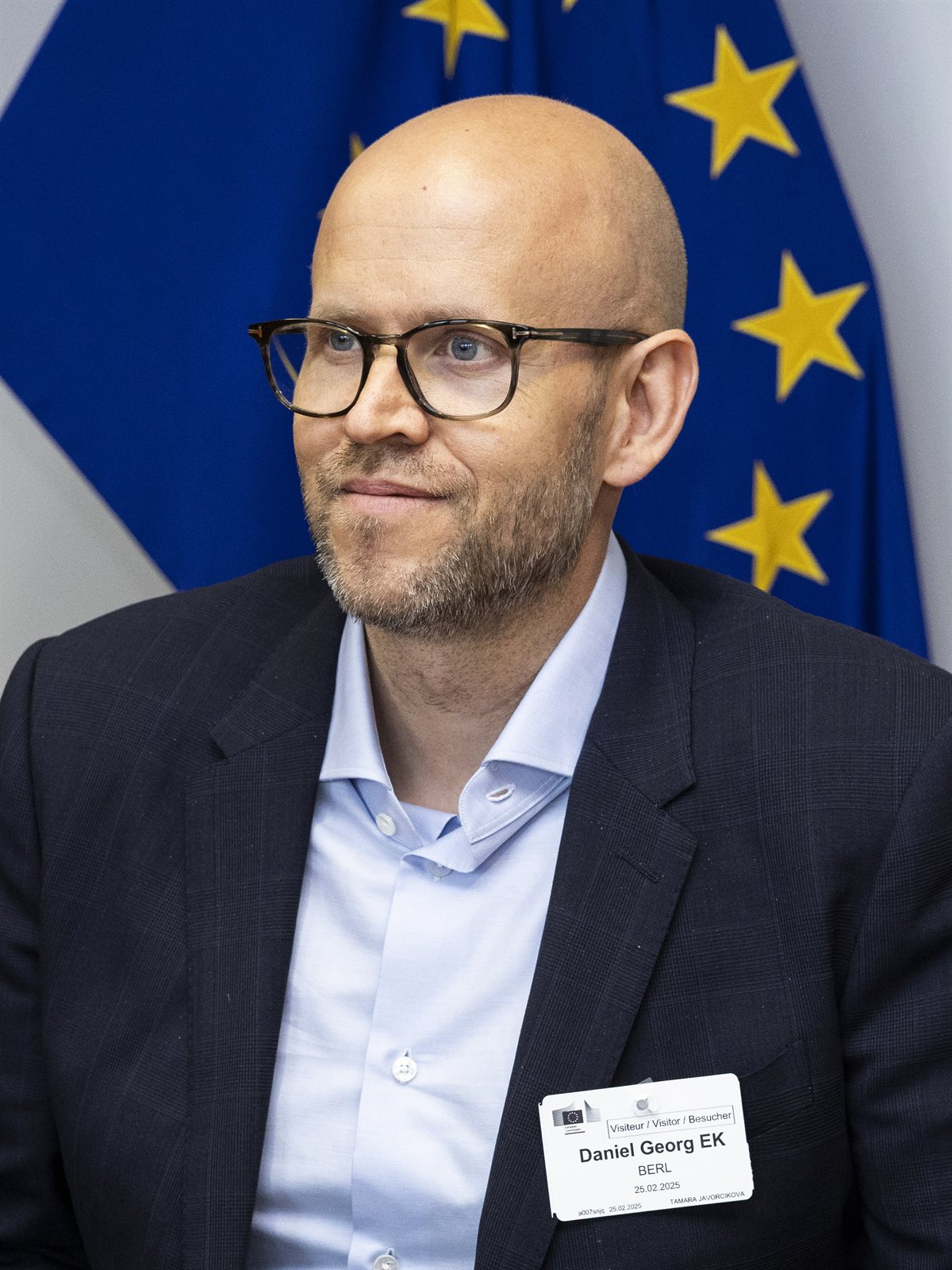
Daniel Ek: The Swede Who Beat Piracy by Building Something Better
A critically-neutral profile of Spotify’s Daniel Ek: how he beat music piracy not with lawsuits but with a freemium product better than free, endured two years of label negotiations and sixteen more before profit, and built a 675M-user streaming giant — alongside the artist-payment, Rogan and defence-tech controversies.
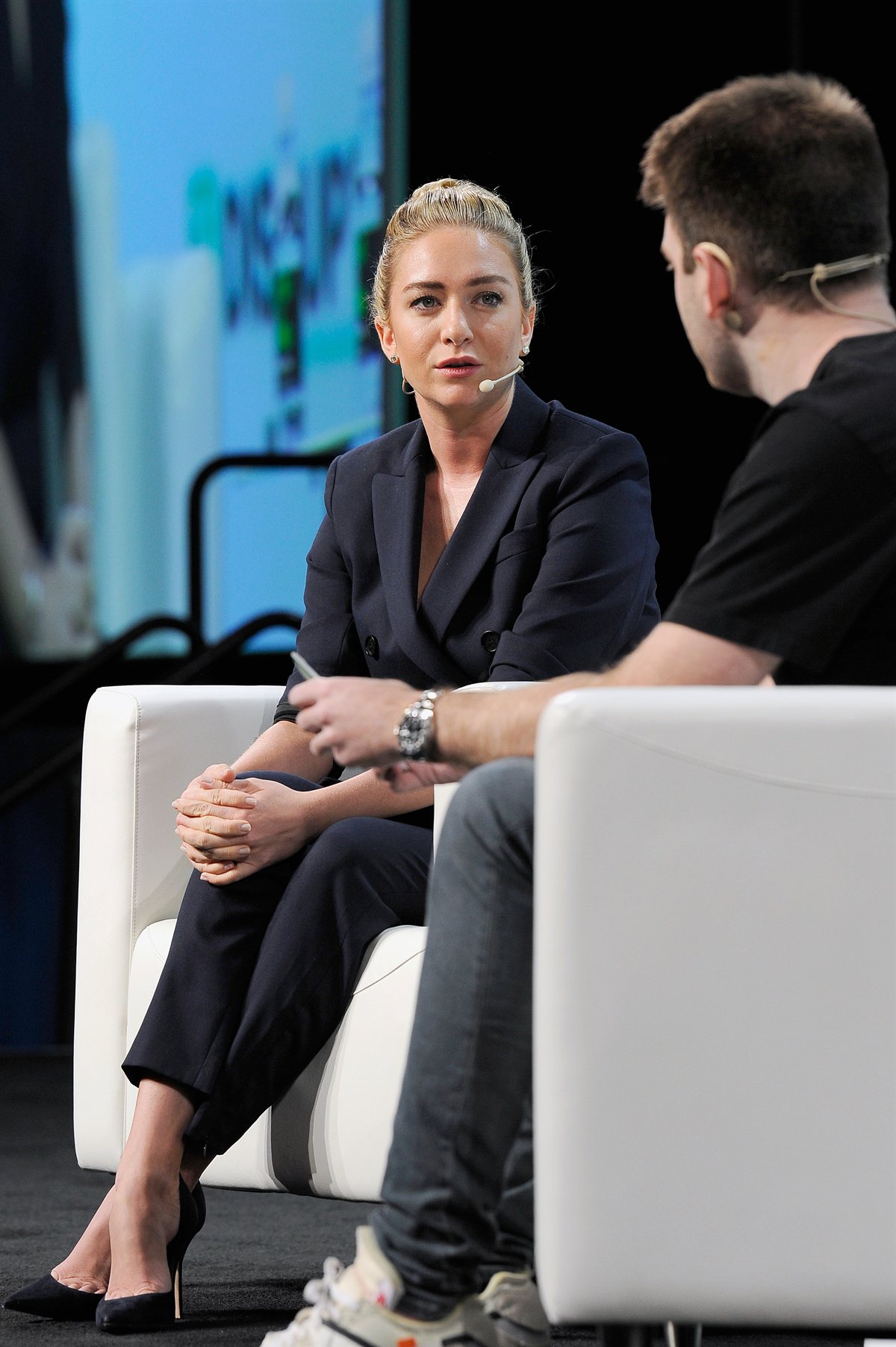
Whitney Wolfe Herd: The Founder Who Turned Being Pushed Out Into Bumble
A critically-neutral profile of Bumble’s Whitney Wolfe Herd: how she converted her ordeal at Tinder into the "women make the first move" thesis, took Bumble public at 31, and now fights to sustain it through a ~94% stock decline — the founding triumph and the hard aftermath, held honestly together.
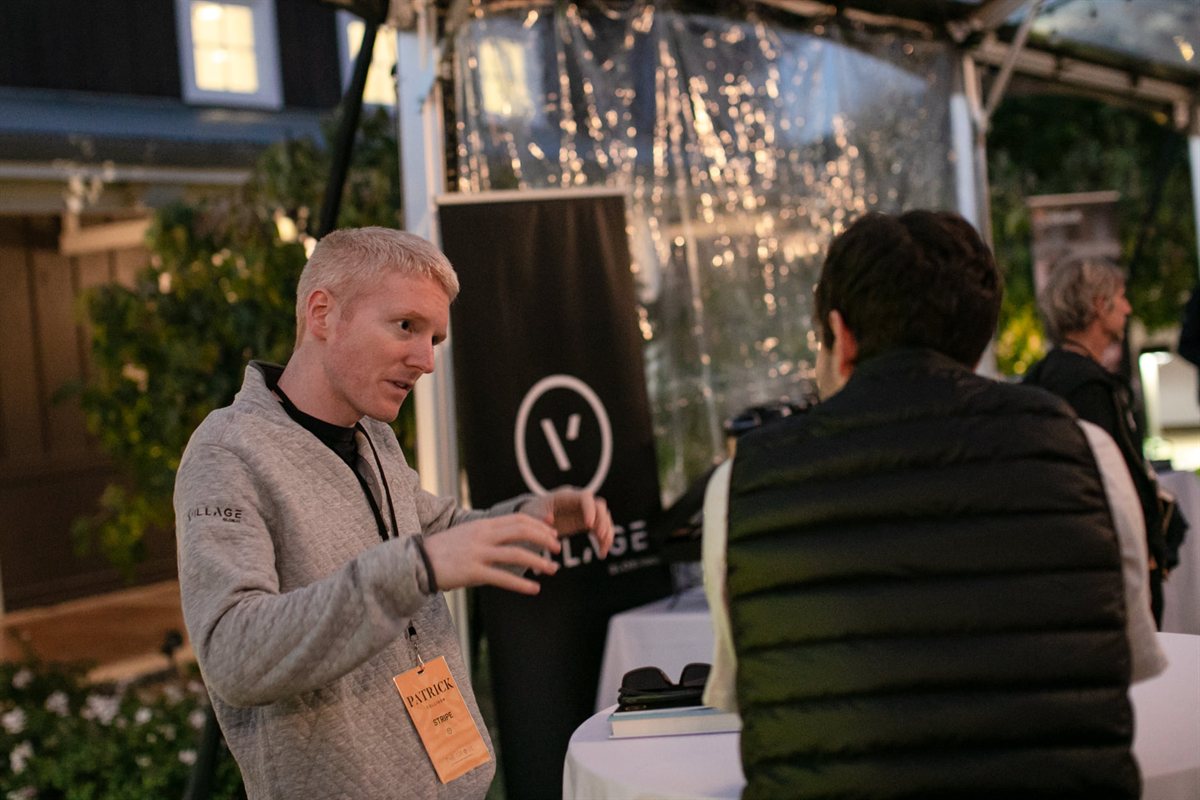
Patrick Collison: The Irish Teenager Who Built the Internet’s Payment Rails
A critically-neutral profile of Stripe’s Patrick Collison: the teenage prodigy who sold his first startup at 19, reduced online payments to a few lines of developer code, and built the financial infrastructure of the internet — through a bubble, a markdown, and a full recovery past its old peak to ~$159B.