Parag Agrawal: The Engineer Who Ran Twitter for Eleven Months
A database researcher climbed Twitter’s engineering ladder for a decade, was handed the top job almost no one expected, spent nearly his whole tenure refereeing Elon Musk’s takeover, was marched out on closing day — and then quietly built an AI-infrastructure company on his own terms.
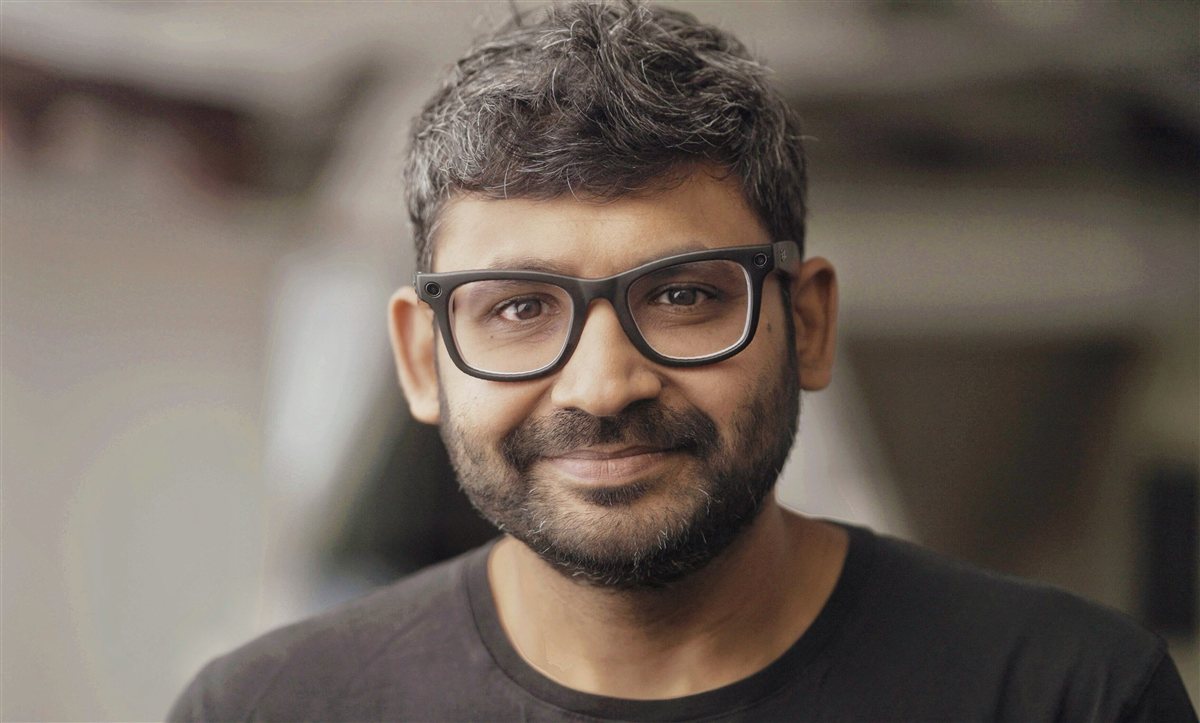
Every founder profile on HustleMemo asks the same two questions: how did they actually do it, and why did it work? Parag Agrawal forces a harder, third one — what does it mean to "succeed" at a job you held for less than a year, during which almost nothing was in your control? The honest answer is the point of this piece. No hagiography, no hit job. The real version.
The real version of Parag Agrawal is not the meme of "the guy Elon Musk fired." It is the story of a database researcher who climbed Twitter's engineering ladder for a decade, was handed the top job almost no one expected him to get, spent nearly his entire tenure refereeing a hostile takeover he never asked for, was marched out of the building the day the deal closed — and then, instead of disappearing, quietly built one of the more talked-about infrastructure companies of the AI era.
The résumé that looked inevitable in hindsight
Agrawal was born in 1984 in Ajmer, Rajasthan, into a family steeped in the Indian professional middle class — a father who worked as a senior official tied to India's atomic-energy establishment, a mother who taught economics. It is the kind of household where academic excellence is not encouraged so much as assumed.
He delivered. As a teenager he won a gold medal at the International Physics Olympiad in 2001. He went to IIT Bombay for a B.Tech in Computer Science and Engineering, graduating in 2005, and then to Stanford for a PhD in computer science, where he worked under the database luminary Jennifer Widom on the deeply unglamorous, deeply important problem of managing uncertainty in data. Before and during graduate school he did research stints at Microsoft and Yahoo. None of this is the stuff of magazine covers; all of it is the stuff that builds an engineer whose judgment other engineers trust.
That distinction matters, because Agrawal's entire career was made inside engineering, not inside the spotlight. When he joined Twitter in 2011, the company had roughly a thousand employees and a famously unstable infrastructure — the "fail whale" era, when the site fell over under its own popularity. He was, by every account, a builder's builder. He worked on advertising and revenue relevance, then on the machine-learning systems that decide what you actually see — the ranked timeline, the recommendation models, the quiet algorithmic plumbing that determines what hundreds of millions of people read each day. He rose to become one of the company's most senior engineers and, in October 2017, its Chief Technology Officer. In December 2019 he was put in charge of Bluesky, Twitter's exploratory effort to build a decentralized standard for social networking.
For ten years, in other words, Agrawal was the opposite of a public figure. He was the person the public figures relied on to make the thing work.
The coronation nobody predicted
On 29 November 2021, that changed in a single press release. Jack Dorsey — Twitter's co-founder, its on-again, off-again chief executive, and one of the most recognizable figures in technology — stepped down as CEO. The board, unanimously, named Parag Agrawal his successor, effective immediately.
It was a genuine surprise. Agrawal was not on the short lists the press had been circulating. He had given few interviews and cultivated no public persona. Dorsey's endorsement was unusually personal: "My trust in Parag as Twitter's CEO is deep," he wrote. "His work over the past 10 years has been transformational. I'm deeply grateful for his skill, heart, and soul. It's his time to lead." Dorsey framed the move as part of a deliberate philosophy — that a company should get out from "founder-led" dependence and let the builders run it.
There is a version of this story where it is a triumph: a quiet engineer who joined as employee number ~1,000 ascends, on merit, to the chief executive's chair of a globally significant company. For the IIT-to-Silicon-Valley pipeline — the same pipeline that produced Sundar Pichai at Google and Satya Nadella at Microsoft — Agrawal's appointment was another data point in one of the more remarkable talent stories of the last two decades: Indian-origin engineers, many of them first-generation immigrants on H-1B visas, running the most valuable companies on earth.
But Agrawal inherited a hard hand. Twitter had spent years as Wall Street's problem child — culturally enormous, financially underwhelming, its user growth and share price chronically lagging the influence the platform wielded over global conversation. Activist investors were circling. Dorsey's split attention (he simultaneously ran the payments company Square) had drawn fire. The new CEO's mandate was to do what a decade of leadership had not: make Twitter grow up. He began reorganizing the company and consolidating control over product and engineering. He barely got the chance to start.
The tweet from 2010
Within hours of his appointment, Agrawal got his first taste of running a company whose entire business is public speech: a tweet of his from 2010 resurfaced and went viral among critics.
Here the discipline of a fair profile matters. What is documented is the tweet itself. In October 2010, Agrawal — then an anonymous graduate student — tweeted, in quotation marks: "If they are not gonna make a distinction between muslims and extremists, then why should I distinguish between white people and racists." What is also documented is that minutes later he clarified he was quoting a satirical bit by the Daily Show comedian Aasif Mandvi, riffing on the controversy over NPR firing the commentator Juan Williams.
What is contested — and should be labelled as such — is the interpretation. Conservative commentators seized on the line as evidence of anti-white bias in Twitter's new leadership. Defenders pointed out that it was a quoted joke about Islamophobia, lifted from its context more than a decade later. A neutral reading is simply this: the very first crisis of Agrawal's CEO tenure was a demonstration of the platform he now ran — a fragment of speech, stripped of context, weaponized at scale. He would spend the rest of his short tenure inside exactly that dynamic.
Enter Musk
In early 2022, Elon Musk began quietly buying Twitter stock, and by April he had agreed to acquire the company outright for roughly $44 billion — about $54.20 a share. For Agrawal, it was the beginning of the end, and the beginning of the saga that would define how the public remembers him.
The mechanics were dramatic in their own right. When Musk disclosed a large stake and then made his unsolicited bid, Twitter's board initially moved to defend the company — adopting a so-called "poison pill," a shareholder-rights plan designed to make a hostile accumulation of stock prohibitively expensive — before reversing course and accepting the offer once it was clear the price was one shareholders wanted. That set up one of the strangest stretches any chief executive has had to manage: months of limbo in which Twitter was a company with a signed buyer who was visibly trying not to follow through. Agrawal had to keep a workforce motivated, ship product, and hold a business together while its prospective owner publicly disparaged it, its stock gyrated on his tweets, and the whole enterprise drifted toward a courtroom. Running a company in that state — neither independent nor acquired, its fate narrated in real time on its own platform — is a management problem with almost no precedent.
The relationship curdled fast. According to widely reported accounts — including Walter Isaacson's biography of Musk — Agrawal at one point asked Musk to ease off tweeting criticism that was distracting and demoralizing Twitter's staff. Musk's reply, by these accounts, was a text that has since become Silicon Valley folklore: "What did you get done this week?" He followed it by concluding that taking a board seat was "a waste of time" and that he would instead buy the company and take it private. Isaacson reported that Musk privately judged Agrawal "too nice" to run Twitter — a remark that says as much about Musk's theory of leadership as about Agrawal's.
It is worth being precise about what these anecdotes are and are not. They are documented as things Musk said or is reported to have believed. They are not objective performance reviews. "Too nice" is a characterization by the man trying to take the company from its CEO; a more sympathetic framing of the same trait is "a measured engineer who declined to win a tweeting contest with the most prolific tweeter alive." Both readings are available. The neutral fact is the friction itself.
By mid-2022, Musk was trying to get out of the deal he had signed, arguing that Twitter had understated the prevalence of spam and bot accounts. Twitter's long-standing public position was that fake or spam accounts were under 5% of its monetizable daily active users; Musk's camp claimed the real figure was vastly higher. The dispute became a public spectacle. Agrawal posted a measured technical thread explaining why estimating spam is genuinely hard and why Twitter's internal methods could not simply be reproduced from the outside. Musk's response was a single emoji — a smiling pile of poop — and, soon after, a public challenge to debate Agrawal on the bot numbers. For a CEO who had spent a decade in the engineering trenches, it was a surreal demotion of the office: the chief executive of a public company, reduced to a foil in someone else's performance.
The matter was headed for trial in Delaware's Court of Chancery — Twitter sued to force Musk to honor his signed agreement — when Musk abruptly reversed course in October 2022 and agreed to close on the original terms rather than risk a courtroom loss.
The day the deal closed
On 27 October 2022, the acquisition closed. Reporting at the time indicated Musk moved the closing up by hours, in part to fire Twitter's top executives before certain stock awards could vest. Agrawal, chief financial officer Ned Segal, chief legal officer Vijaya Gadde, and general counsel Sean Edgett were terminated that day; Agrawal was reportedly escorted out of the building. His tenure as chief executive of Twitter had lasted just under eleven months.
What followed was the money fight. Agrawal's exit package — the "golden parachute" triggered by a change of control and his removal — was reported at roughly $57 million, the largest of the departing executives. The point of such packages is precisely this scenario: they exist so that executives negotiating a sale are not personally incentivized to block a deal that is good for shareholders. Musk's position, however, was that the executives had been fired "for cause" — which, if it held, would let the company avoid paying out.
In March 2024, Agrawal and the three other former executives sued, seeking more than $128 million in unpaid severance. Their complaint alleged that Musk had manufactured "fake cause" as an act of "revenge" and to avoid the bill — a man, they argued, who "does not pay his bills, believes the rules do not apply to him, and uses his wealth and power to run roughshod over anyone who disagrees with him." The suit wound through the courts and, by reported accounts, was settled in 2025; the terms were not disclosed. So the final chapter of Agrawal's Twitter story closed the way so much of modern corporate conflict does — quietly, confidentially, and without a public verdict on who was right.
How to judge eleven months
This is where a profile has to resist the easy narrative in both directions.
The triumphalist version — "merit-made immigrant runs a global platform" — is true but incomplete, because he barely got to run it. The dunk version — "the CEO who lost Twitter" — is lazier still, because almost nothing about losing Twitter was his decision. Musk decided to buy it; the board (and shareholders being offered a large premium) decided to sell it; Agrawal's job, for most of his tenure, was to keep a company functioning while its ownership was contested in public and in court.
The fairest assessment is also the least satisfying: we genuinely do not know what kind of CEO Parag Agrawal would have been, because the experiment was never run. He had a few weeks of normal operation before Musk's stake turned everything into a takeover drama. Critics who blame him for Twitter's stagnant stock are pointing at a problem that long predated his promotion and that he was given no real runway to solve. Boosters who imagine he would have transformed the company are speculating just as much. The honest verdict is a shrug — not because he was unremarkable, but because the circumstances erased the test.
What the episode did reveal is a temperament. Through the most public humiliation a CEO can endure — being challenged to a debate by his own acquirer, mocked with emojis, fired on closing day — Agrawal did not melt down, did not wage war on Twitter, did not become a cable-news fixture. He litigated his contract and otherwise went quiet. In an industry that rewards noise, the most interesting thing about his Twitter exit may be how little noise he made.
The second act
The far more revealing chapter is what he did next, because this time the choices were his.
In 2023, Agrawal began building a new company, eventually named Parallel Web Systems — branded simply as Parallel. Its problem is one only a former CTO of a data-and-relevance company would gravitate toward: as AI systems and autonomous "agents" proliferate, they need to read the live web — to search, retrieve, and reason over the open internet at machine speed and machine scale, far beyond what consumer search engines were designed to serve. Parallel builds the web-search and research infrastructure for that world: APIs that let AI agents query the internet reliably and at volume. It is picks-and-shovels for the agent era — unglamorous, foundational plumbing, which is exactly the kind of thing Agrawal spent his career building.
The bet rests on a real shift. For two decades the web was organized around humans typing queries into a search box and clicking blue links; the emerging pattern is software agents issuing programmatic queries by the million, reading pages, and synthesizing answers with no human in the loop. Consumer search engines were never built for that load or that use case, and their terms often forbid it outright. Parallel's wager is that the infrastructure layer for machine-scale web access — fast, permitted, structured, and reliable — will be as load-bearing for the AI era as content-delivery networks and managed databases were for the web era. It is a thesis only a former relevance-and-data CTO would frame quite so precisely, and it puts Agrawal back where he has always been most effective: several layers beneath the headlines, building the part that everything else quietly depends on.
The market has taken it seriously. The company raised an early round of around $30 million in 2024 from investors including Khosla Ventures, Index Ventures, and First Round Capital, and after a public launch in 2025 its valuation climbed quickly — reported funding rounds led by firms including Kleiner Perkins and, later, Sequoia carried Parallel to a reported $2 billion valuation by 2026, on the order of $230 million raised in total, with named customers spanning AI and software companies. (Coverage of the exact round labels has been inconsistent; the trajectory — from a modest seed to a multibillion-dollar valuation in roughly two years — is the part that is clear.)
There is a tidy symmetry to it. The man who spent a decade building the systems that decided what humans see on the internet is now building the systems that decide what machines see on the internet. And the framing of his public identity has quietly shifted with it: less "the executive Musk fired," more "the founder building infrastructure for the thing every company now claims to be doing." Whether Parallel becomes a durable business or a well-funded footnote is unknown — it is early, and the AI-infrastructure market is crowded and brutal. But as a second act, it reframes the first. Getting fired from Twitter looks different when it turns out to be the thing that freed you to build.
What the story is actually about
Strip away the Musk theatrics and Parag Agrawal's career is a meditation on a kind of person Silicon Valley both depends on and underrates: the technical operator. He is not a charismatic founder-showman. He did not will a company into existence through force of personality. He is the other archetype — the one who understands the machine deeply enough to be trusted with it, who rises through competence rather than noise, and who, when handed a chaotic situation, tries to keep the system running rather than to dominate the narrative.
That archetype is the backbone of the Indian-origin tech-leadership story, and Agrawal belongs to it even though his CEO run was the briefest and most turbulent of the bunch. The Olympiad medal, the IIT degree, the Stanford doctorate, the decade of quiet building before the top job — it is the same template as the executives who now run Google and Microsoft, just interrupted by an acquisition no template could have survived.
It is also a study in the limits of control. You can do everything an engineer is supposed to do — build the skills, earn the trust, climb the ladder, win the unanimous vote of the board — and still find that the most consequential events of your tenure are decided by a billionaire's whim, a signed contract, and a Delaware courtroom. Agrawal's Twitter chapter is a reminder that competence is necessary but not sufficient, and that sometimes the variable that determines your fate is simply who decides to buy the company you run.
The honest close
A profile written to flatter would end on the $2 billion valuation. A profile written to wound would end on the day he was escorted out. The honest one ends on the ambiguity, because that is what is true.
Parag Agrawal is neither the failure his critics enjoy nor the martyr his defenders prefer. He is a serious technologist who got eleven months at the helm of a company in the middle of being sold out from under him, conducted himself without spectacle through an extraordinarily public ordeal, took his fight over the bill to court, and then went back to doing the thing he was always best at — building infrastructure that other people's ambitions run on top of.
The Twitter chapter made him famous for something he didn't choose. The chapter he is writing now — quieter, on his own terms — is the one that will actually answer the question this site keeps asking. We just don't know the answer yet. Neither, in fairness, does he.
Editor's note: HustleMemo profiles real founders and operators. This is a critically-neutral, fact-checked profile of a living person involved in still-recent disputes. Documented facts (titles, dates, the acquisition, the lawsuit) are stated as such; contested interpretations (the meaning of the 2010 tweet, blame for Twitter's performance, characterisations made by Elon Musk) are labelled as claims or opinion, not findings. Popular but unverified details have been omitted. The cover photograph is by Lukaslevert, used under CC BY-SA 4.0 via Wikimedia Commons. Corrections: editorial@hustlememo.com.
Sources
- Biography, education, and Twitter career: Wikipedia, "Parag Agrawal"; ThePrint, "Who is Parag Agrawal"; NPR profile (Nov 2021).
- Appointment as CEO: Twitter/PR Newswire press release (29 Nov 2021); CNBC and NPR coverage of Jack Dorsey stepping down and his endorsement.
- The 2010 tweet and its context: The American Independent; News9 — including Agrawal's same-day clarification that he was quoting Aasif Mandvi.
- The Musk acquisition, the "What did you get done this week?" exchange, and the "too nice" characterisation: ABC News; Fortune (drawing on Walter Isaacson's Musk biography); CNBC (the public bot-debate challenge).
- Closing day and firings (27 Oct 2022): Wikipedia; ABC News.
- Severance (~$57M) and the 2024 executives' lawsuit seeking $128M+: The Washington Post; NPR (4 Mar 2024). Reported 2025 settlement (terms undisclosed): CNN; Deadline.
- Parallel Web Systems (focus, customers, and funding to a reported $2B valuation by 2026): TechCrunch; SiliconANGLE; AI Magazine.
- Cover photograph: "ParagAgrawal.png" by Lukaslevert, licensed CC BY-SA 4.0, via Wikimedia Commons.
More from this category
Daniel Ek: The Swede Who Beat Piracy by Building Something Better
A critically-neutral profile of Spotify’s Daniel Ek: how he beat music piracy not with lawsuits but with a freemium product better than free, endured two years of label negotiations and sixteen more before profit, and built a 675M-user streaming giant — alongside the artist-payment, Rogan and defence-tech controversies.
Whitney Wolfe Herd: The Founder Who Turned Being Pushed Out Into Bumble
A critically-neutral profile of Bumble’s Whitney Wolfe Herd: how she converted her ordeal at Tinder into the "women make the first move" thesis, took Bumble public at 31, and now fights to sustain it through a ~94% stock decline — the founding triumph and the hard aftermath, held honestly together.
Patrick Collison: The Irish Teenager Who Built the Internet’s Payment Rails
A critically-neutral profile of Stripe’s Patrick Collison: the teenage prodigy who sold his first startup at 19, reduced online payments to a few lines of developer code, and built the financial infrastructure of the internet — through a bubble, a markdown, and a full recovery past its old peak to ~$159B.