Mian Muhammad Mansha: Nishat, MCB, and the Art of Proximity
Pakistan’s richest man didn’t invent a product — he read the state better than anyone. A fact-checked, critically neutral look at inherited advantage, the MCB privatisation, and crony-capitalist concentration.
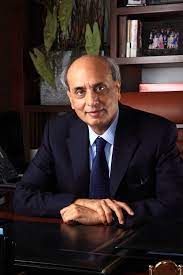
There is a particular kind of fortune that does not announce itself with a single dramatic invention or a viral product, but accumulates quietly, over decades, through an exact reading of how a country's economy is actually wired — who grants the licences, who privatises the banks, who decides which industries get protected and which get exposed. Mian Muhammad Mansha, for most of the last twenty years the richest man in Pakistan, built exactly that kind of fortune. To understand him is to understand how capital, family, and the state braid together in a developing economy where the rules are written and rewritten in rooms that ordinary entrepreneurs never enter.
The flattering version of Mansha's story is the one his admirers tell: a Chiniot trader's son who turned a mid-sized textile business into a conglomerate spanning banking, cement, power, and automobiles, and became the first Pakistani ever to appear on the Forbes list of dollar billionaires. The critical version, told by his detractors, is that his defining asset was never a loom or a turbine but a phone book — proximity to whichever government held power, and a genius for being on the right side of privatisation. Neither version is complete on its own. The honest account needs both, and it needs the economic history that made both possible.
The country that shaped the fortune
You cannot read Mansha without reading Pakistan's economic arc, because his career maps onto it almost exactly. In the 1960s, under Ayub Khan, Pakistan pursued a state-guided industrialisation that famously concentrated wealth in what the economist Mahbub ul Haq memorably called the "twenty-two families" — a small cluster of industrial houses that controlled a startling share of the country's industrial assets, banking, and insurance. The Chiniot Sheikh trading families, Mansha's milieu, were prominent among the rising commercial class of that era.
Then came the whiplash. In the early 1970s, Zulfikar Ali Bhutto's government nationalised banks, insurance companies, and large swathes of heavy industry, gutting many of those family fortunes overnight. For a young businessman returning to run a family textile concern, the lesson of that decade was unforgettable and formative: in Pakistan, the state is not a backdrop to business — it is the single largest variable in whether you keep what you build. The entrepreneurs who would thrive in the decades that followed were the ones who internalised that lesson most deeply. Mansha internalised it more deeply than anyone.
The launchpad: a trading family, not a slum
Mansha was born in 1941 in Chiniot, a town in Punjab famous for producing two things in abundance — fine furniture and shrewd Sheikh trading families. His own clan was among them. This is the first fact that the self-made framing tends to soften: Mansha did not begin in poverty. He came from a mercantile family with capital, connections, and the expectation that its sons would run businesses. He was educated at the Sacred Heart institution in Faisalabad and then sent to England, where he studied business administration at a college in London. A young Pakistani able to take a degree in London in the early 1960s was, by definition, starting several rungs up the ladder from the overwhelming majority of his countrymen, for whom secondary schooling itself was a luxury.
When his father died in 1969, Mansha returned and stepped into the family textile concern, which had been founded by his father and uncles a decade or so earlier. Here the genuine ability begins. Inheriting a business is common; turning a regional textile operation into Pakistan's largest industrial group is not. In 1979 he built what became one of the country's biggest textile complexes at Nishatabad near Faisalabad, betting heavily on scale at a moment when most Pakistani manufacturers thought small and feared the kind of nationalisation that had so recently flattened their peers. Through the late 1970s and 1980s, Nishat Mills grew into the spine of an emerging empire, exporting yarn and fabric and learning the rhythms of global textile demand. The foundation was inherited; the building on top of it was unmistakably his.
It is worth pausing on what kind of skill this was. Textiles in Pakistan were a protected, quota-shaped, export-rebate-driven business — a sector where success depended as much on navigating import duties, export entitlements, and the international Multi-Fibre Arrangement quota regime as on the efficiency of your spinning. Mansha learned, in textiles, the core competency that would define everything after: how to make the policy environment work for you, legally and aggressively, at a scale that compounded.
The move that made him: MCB, 1991
If there is a single transaction that separates Mansha the successful textile baron from Mansha the wealthiest man in Pakistan, it is the privatisation of Muslim Commercial Bank in 1991.
Pakistan's banks had been nationalised under Bhutto. By the start of the 1990s, the government of Nawaz Sharif — himself from a Punjabi industrialist family, the Ittefaq Group, and thus a man who understood the industrial class from the inside — launched an aggressive privatisation programme, and MCB was one of the first major banks put up for sale. A consortium led by Mansha's Nishat Group acquired it. Almost overnight, a textile industrialist controlled one of the country's largest commercial banks, and with it the single most powerful lever in any economy: the allocation of credit.
This is the episode that fuels the critical reading of Mansha, and it deserves to be handled precisely rather than rhetorically. Critics have long alleged that the bank was sold too cheaply, that the process favoured insiders, and that Mansha's well-documented closeness to the Sharif establishment of the era smoothed the transaction. These were allegations and enduring political talking points; the privatisation was challenged and debated for years, scrutinised by successive governments and commentators, but it was ultimately upheld, and no court overturned it or convicted Mansha of wrongdoing in connection with it. What is not in dispute is the outcome: control of MCB transformed Nishat from a large industrial house into a financial-industrial complex, and Mansha proved a genuinely capable bank owner, professionalising MCB and building it into one of Pakistan's most profitable and best-run banks over the following three decades. You can hold both facts at once — that the acquisition was enormously advantageous in ways critics found suspicious, and that he then ran the asset extremely well.
The MCB deal is also the clearest illustration of the Mansha flywheel. A bank is not just a profit centre; it is an engine for funding everything else you own. With a major bank inside the group, the cost and availability of capital for Nishat's other ventures changed character. The conglomerate could think bigger, move faster, and underwrite risks that an ordinary industrialist, dependent on the goodwill of state-owned lenders, simply could not.
Backward, forward, and outward: building the conglomerate
With a bank and a textile base, Mansha did what the most effective industrialists in protected economies do: he integrated into every adjacent profitable sector and used the group's combined balance sheet to keep expanding.
He moved into cement through DG Khan Cement, riding Pakistan's chronic construction demand and the structural shortage of building materials. He moved aggressively into power generation — Nishat Power, Lalpir, Pakgen and other plants — during the era of independent power producers (IPPs). This deserves its own scrutiny, because the IPP regime is one of the most criticised features of Pakistan's modern economy: to attract investment into chronically short electricity generation, the state offered independent producers dollar-indexed, government-guaranteed returns and "capacity payments" that obliged the state to pay whether or not the power was used. The result, over time, was a crushing burden of so-called circular debt and electricity tariffs that ordinary Pakistanis still struggle to pay. Mansha was not the architect of that regime, and the criticism applies to the whole IPP class rather than to him specifically — but he was among its most successful participants, and his power fortune is, in large part, a fortune underwritten by guarantees extracted from the public purse. That is not an accusation of illegality. It is a description of where the money comes from.
He brought Hyundai vehicle assembly to Pakistan through Hyundai Nishat Motors, entering an auto sector shaped entirely by import tariffs and localisation rules. He acquired Adamjee Insurance, deepening the financial side of the group. He built the Emporium Mall in Lahore, one of the country's largest, and acquired the prestigious St James's Hotel and Club in London — a trophy asset that announced his arrival on the global stage. He brought his sons, Umer and Hassan Mansha, into senior roles across the group, building the kind of dynastic structure that characterises the great family houses of South Asia. By 2010 he had become the first Pakistani on the Forbes billionaires list, with wealth later estimated around US$2.5 billion, and he was routinely among the country's highest individual taxpayers — a fact his defenders cite, fairly, against the cartoon of the tax-dodging tycoon.
The pattern, stated plainly
Step back and the Mansha method comes into focus. It is not the Silicon Valley pattern of inventing a product the world didn't know it needed. It is the developing-economy pattern of reading the state with extraordinary accuracy and positioning capital exactly where policy is about to create value — a protected textile sector, a privatising bank, a guaranteed-return power regime, an import-substituting auto-assembly deal. Every one of these was a legitimate business. Every one of them was also, to a meaningful degree, a creature of government policy, and the entrepreneur who won was the one closest to understanding — and, his critics would argue, influencing — that policy.
This is why Mansha is such an instructive figure, far beyond Pakistan. He is not corrupt in the cartoonish sense; he is the logical, lawful, highly intelligent endpoint of an economy in which the state is the largest single determinant of who gets rich. In a country with cleaner, more contestable markets, his exact talents — discipline, scale, patience, an unmatched feel for risk — might have produced a large but ordinary fortune. In Pakistan's actual economy, with its licences and privatisations and guaranteed returns, those same talents, applied to proximity rather than to invention, produced the single largest fortune in the country.
It is also why the "follow Mansha's example" advice that fills business supplements is close to useless for an ordinary striver. You cannot replicate a bank privatisation. You cannot manufacture three decades of relationships with the people who run a state. What you can learn from him is colder and more honest: that in economies like Pakistan's, the binding constraint on great wealth is not effort or even talent in the abstract, but access — and access is distributed by birth, class, and proximity long before merit gets a vote.
The controversies, weighed honestly
The most-cited mark against Mansha in the international record is his appearance in the 2017 Paradise Papers, the leak of offshore financial documents handled by the law firm Appleby and others. It is important to be exact about what this is and is not. Appearing in the Paradise Papers reflects the use of offshore financial structures; it is a disclosure, not a finding of illegality, and no conviction or regulatory penalty against Mansha arose from it. Offshore structuring is widely used by the global wealthy and is frequently entirely legal. It belongs in the record as a fact about how his wealth is organised — and as a reasonable prompt for questions about tax efficiency and capital flight from a poor country — not as proof of a crime.
The deeper, more legitimate criticism is structural rather than legal: that the concentration of a major bank, large swathes of the power sector, cement, insurance, and manufacturing in a single family's hands is precisely the kind of crony-capitalist concentration that makes an economy less competitive and more captured, regardless of whether any individual transaction broke a law. When the same family that owns a leading bank also owns large industrial borrowers, the potential for conflicts of interest is structural, not hypothetical, and it is a fair subject for public scrutiny. That is a legitimate critique of the system, and Mansha is its most successful product. It is not the same as an accusation of fraud, and conflating the two does the analysis no favours — it lets the genuinely difficult structural question hide behind an easy moral one.
It is worth contrasting him, briefly, with the Pakistani businessman he is often mentioned alongside in the same breath of public suspicion — Malik Riaz of Bahria Town, the property developer whose empire became the subject of a landmark Supreme Court order to pay hundreds of billions of rupees to regularise land, and who was later declared a proclaimed offender. The contrast is instructive precisely because it is sharp: whatever the criticisms of Mansha, he has operated within the law, paid substantial taxes, and built durable, productive industrial assets. The lazy populist instinct to file every tycoon under the same heading of "corruption" flattens a distinction that actually matters. Concentration and capture are real problems; they are not the same as adjudicated fraud, and a serious account keeps the categories separate.
Surviving every season
The most underrated thing about Mansha is not how he got rich but how he stayed rich, across a sequence of political upheavals that would have destroyed a less careful operator. Pakistan in his lifetime has been a carousel of regimes: the Bhutto nationalisations, the Zia military years, the alternating Benazir Bhutto and Nawaz Sharif governments of the 1990s, the 1999 Musharraf coup, the Pakistan Peoples Party government under Asif Ali Zardari, the Pakistan Tehreek-e-Insaf government under Imran Khan, and the turbulence that followed. Each transition rewrote the rules and reshuffled who was in favour. Fortunes tied too tightly to a single patron tend to collapse when that patron falls.
Mansha's durability suggests a more sophisticated strategy than simple loyalty to one camp. He built a relationship with the institution of the state rather than with any one government — diversified, in effect, across the political spectrum the way he diversified across industries. That is not a flattering observation, exactly; it is precisely the adaptability that critics find unsettling about big capital in a fragile democracy, the sense that the tycoons outlast the elected and so are never fully accountable to any of them. But it is also a genuine skill, and an honest account should name it as both. When relations with a particular government cooled — as was periodically rumoured during the PTI years, when populist anti-elite rhetoric ran hot — the group weathered it, leaning on the breadth of its assets and its international footprint rather than betting everything on the next election.
That international footprint matters to the succession story, too. By bringing his sons Umer and Hassan Mansha into senior positions, acquiring assets abroad like the St James's Hotel in London, and listing and professionalising the group's companies, Mansha has tried to build something that survives him — to convert a founder's fortune into a dynastic institution. Whether the Nishat empire proves as durable in the second generation as the great industrial houses elsewhere in South Asia is one of the open questions of Pakistani business. The Ambani succession in India and the messy splits that have fractured other family conglomerates are cautionary tales he will have studied closely.
The reputation he cultivates
For a man so often cast as the face of crony capitalism, Mansha has been unusually deliberate about cultivating the opposite image: the responsible patriot-industrialist who pays his taxes, employs tens of thousands, brings foreign investment into a capital-starved country, and reinvests rather than expatriates his wealth. There is real substance to the claim — Nishat's factories, plants, and the MCB branch network are genuine productive assets that generate employment and export earnings, not paper fortunes. He has periodically been floated, only half in jest, as the kind of figure who could "run Pakistan like a company," a fantasy that says as much about the public's despair with its politicians as it does about him.
The harder truth sits underneath the public-relations gloss. A country can have responsible industrialists and a captured economy at the same time; the two are not mutually exclusive. Mansha can be, simultaneously, a tax-paying employer who builds real things and the living embodiment of an economic structure in which a handful of families sit astride banking, energy, and industry while the broader economy stays stunted, informal, and starved of competition. The reputation he cultivates is not false. It is just incomplete — a single true clause in a longer, more uncomfortable sentence about how wealth and power actually work in Pakistan.
The honest verdict
Mian Muhammad Mansha is neither the pure self-made hero of the business-page profiles nor the simple crook of the populist denunciations. He inherited a real business and a real head start; he then displayed genuine, sustained skill in scaling it, and ran a major bank well for thirty years through political upheavals that would have sunk a lesser operator. He also built that empire by reading and working the Pakistani state more effectively than anyone of his generation, in ways that were lawful, advantageous, and — to his critics — emblematic of everything that keeps such economies concentrated and closed.
The most useful lesson from Mansha is not "work hard and you too can build Nishat." It is colder and more accurate: in an economy where the state allocates the biggest prizes, the supreme entrepreneurial skill is not invention but proximity — and the person who masters it can build a fortune that quietly outlasts governments, rivals, and the very controversies that trail it. That is a lesson about Pakistan as much as about the man. He is the mirror its economy holds up to itself.
Editor's note: HustleMemo writes founder-led case studies grounded in public reporting. Where a claim is disputed — such as the criticism of the MCB privatisation — we mark it as an allegation and note that it was legally upheld. Paradise Papers exposure is reported as a disclosure, not a crime. Corrections: editorial@hustlememo.com.
Sources
- "Mian Muhammad Mansha," Wikipedia (born 1941 Chiniot; business administration in London; took over the family business in 1969; Nishatabad textile complex 1979; MCB privatisation 1991; first Pakistani on the Forbes billionaires list, 2010; net worth ~US$2.5B).
- Mahbub ul Haq and the "twenty-two families" thesis on the concentration of industrial and financial wealth in 1960s Pakistan; the Bhutto-era nationalisations of the 1970s.
- Reporting on Pakistan's 1990s bank privatisation programme under Nawaz Sharif and the long-running debate over the MCB sale (upheld; no conviction).
- Coverage of the Nishat Group's diversification into cement (DG Khan Cement), the independent power producer (IPP) regime and its guaranteed-return/capacity-payment structure, Hyundai Nishat Motors, Adamjee Insurance, Emporium Mall, and the St James's Hotel & Club, London.
- ICIJ Paradise Papers (2017) — Mansha named among those using offshore structures (disclosure, no finding of wrongdoing).
- Contrast reference: the Pakistan Supreme Court's Bahria Town Karachi judgment and Malik Riaz's later status, used only to distinguish adjudicated findings from structural critique.
More from this category
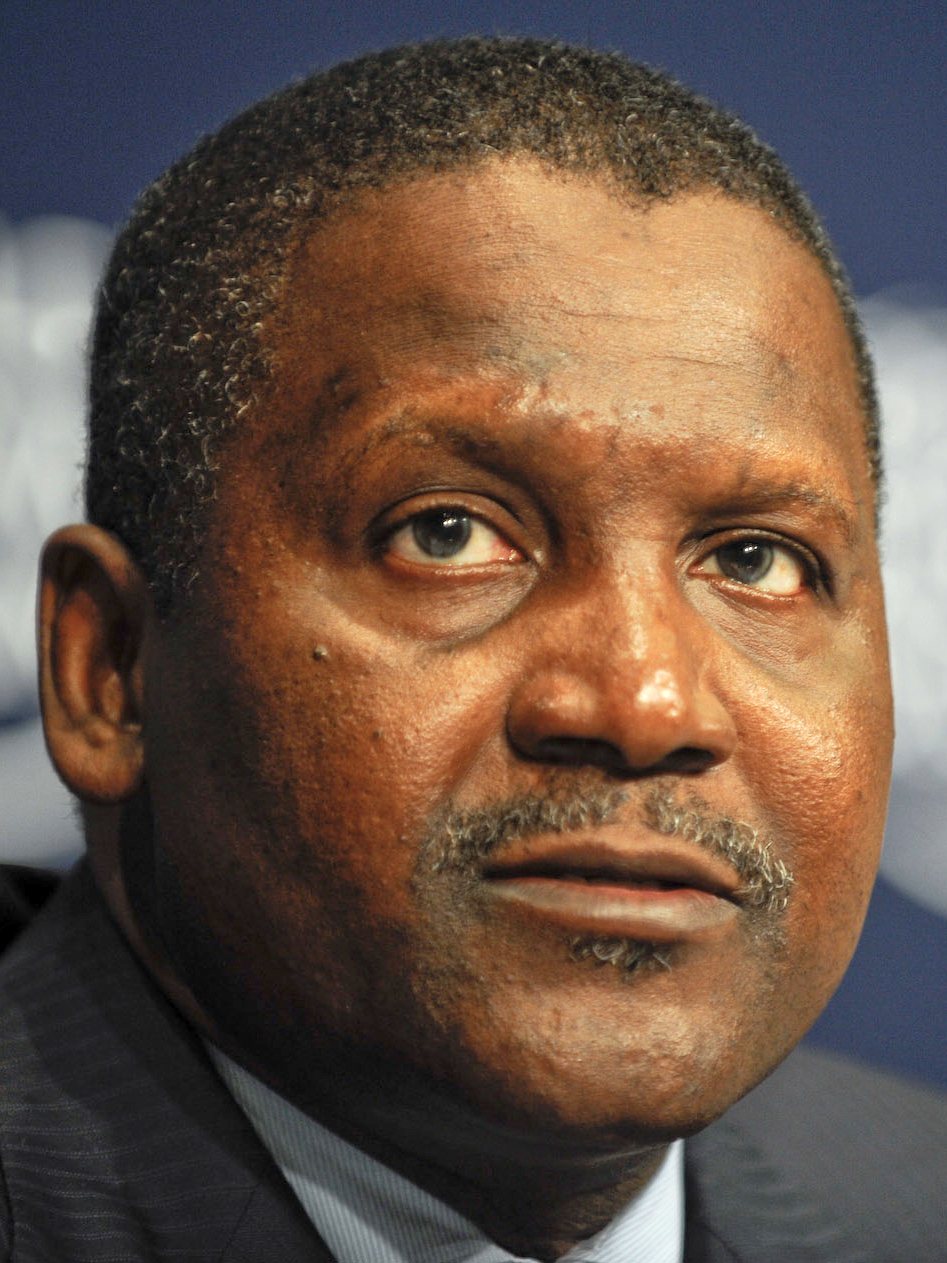
Aliko Dangote: The Trader Who Built Africa’s Biggest Industrial Empire
A critically-neutral profile of Aliko Dangote: heir to a trading dynasty who built Africa’s biggest industrial empire through backward integration and scale, rode Nigeria’s protectionist policy, bet ~$20bn on a giant refinery — and faces genuine, unresolved questions about market concentration and government ties.

Sir Brian Souter: Stagecoach and the Fortune Built on a Policy
Sir Brian Souter co-founded Stagecoach and turned the deregulation of Britain’s buses into a transport empire. A sourced, critically neutral look at genuine industrial achievement, the proven "predatory" competition findings, the controversial "Keep the Clause" campaign, and the disputed claims about his SNP donations.
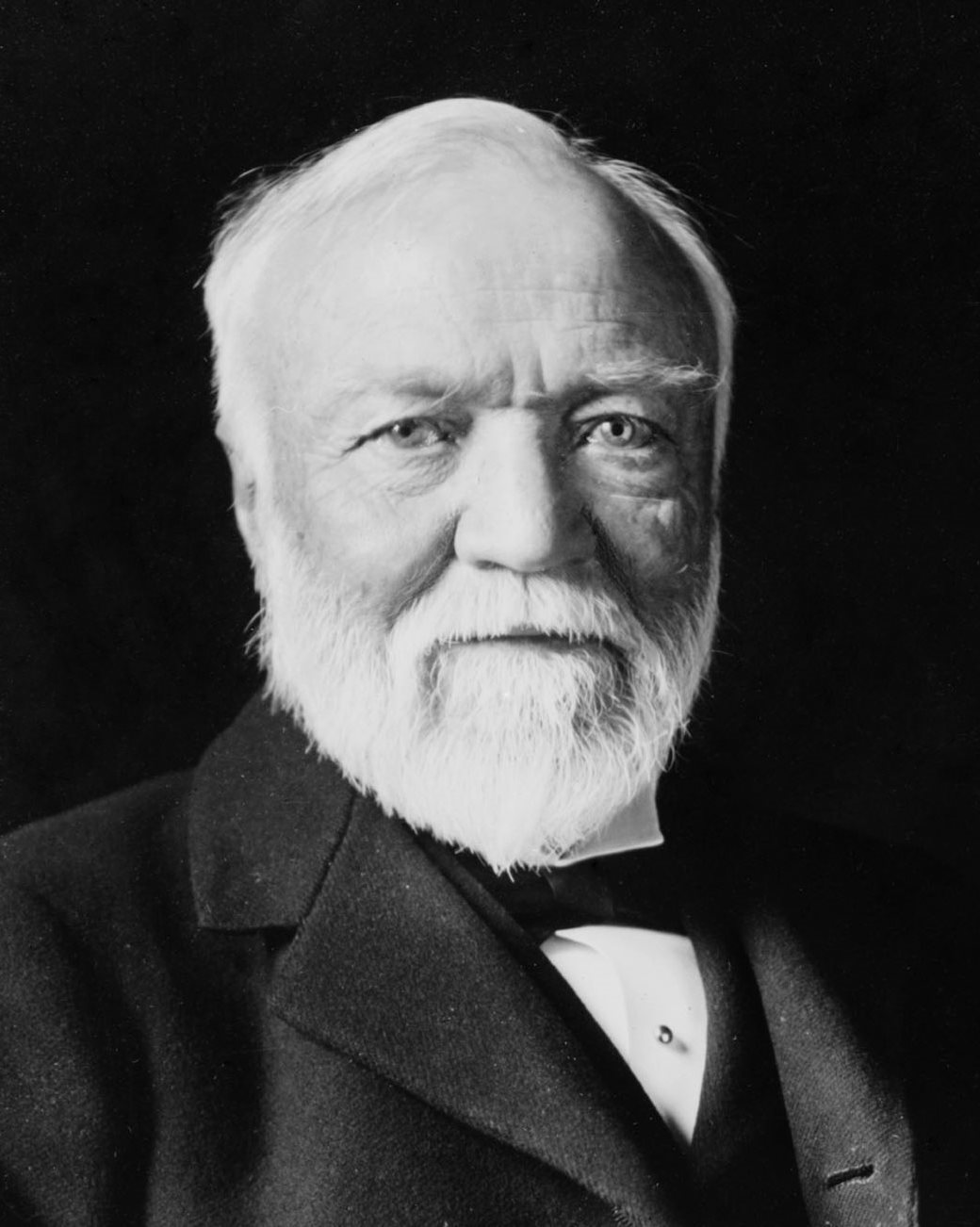
Andrew Carnegie: Steel, the Gospel of Wealth, and Homestead
Andrew Carnegie rose from a penniless Scottish immigrant boy to the master of American steel, sold out to J. P. Morgan for $303.45M, and gave away roughly 90% of his fortune. A sourced, critically neutral case study that holds his vast philanthropy and the violent 1892 Homestead Strike together, without resolving the contradiction.