Jorma Ollila: The Man Who Made (and Unmade?) Nokia
He bet Nokia’s future on mobile phones and built the world’s biggest handset maker — then watched the iPhone era undo it. A fact-checked look at a textbook triumph, a textbook collapse, and a disputed question of blame.

Jorma Ollila is the man who made Nokia, and — depending on whom you ask — also the man who set the stage for its undoing. For most of the 1990s and 2000s he was arguably the most important business figure in Finland, the chief executive and then chairman who took a sprawling old industrial conglomerate that made rubber boots, cables, paper, and electronics and reforged it into the largest mobile-phone manufacturer on the planet. For a stretch of years, roughly one in three phones sold worldwide carried the Nokia name, and that name became, for a small Nordic country, a source of national pride out of all proportion to its size. Then the iPhone arrived, and the empire Ollila had built came apart with a speed that still serves as a cautionary tale in every business school. His career is the rare one that contains both a textbook triumph and a textbook collapse, and the argument over how much of each belongs to him is not yet settled.
This profile treats both halves with the same scrutiny. The triumph was real and should not be diminished by hindsight; the collapse was real and should not be excused by nostalgia. And the controversies that trail Ollila — over a disputed account of Nokia's downfall, over a climate-era decision at Shell, over a personal disclosure fine — deserve to be stated precisely, with the proven separated cleanly from the disputed.
The making of a polymath
Jorma Ollila was born on 15 August 1950 in Seinäjoki, Finland. His education was, by any standard, extraordinary in its breadth and internationalism — unusual for a Finn of his generation and a clue to the cosmopolitan, globally minded executive he became. As a teenager he attended the United World College of the Atlantic in Wales, one of a network of international schools founded on the idea of education across national lines. He then accumulated an almost improbable collection of advanced degrees: a Master of Science in political science from the University of Helsinki, a Master of Science in economics from the London School of Economics, and a Master of Science in engineering physics from Helsinki University of Technology. Politics, economics, and hard science — the three intellectual cultures that a technology executive at the highest level must somehow bridge — were each, formally, his.
He began his career in international banking at Citibank before joining Nokia in 1985. The Nokia he joined bore little resemblance to the company the world would later know. It was a diversified industrial conglomerate with roots stretching back to the nineteenth century, a company that at various points made paper, rubber products including tyres and boots, cables, televisions, and a growing but still secondary line of telecommunications and electronics gear. It was a respectable Finnish industrial group, not a global technology icon, and nothing about it in the mid-1980s announced the future.
The breadth of Ollila's education is worth pausing on, because it is genuinely unusual and it shaped the kind of leader he became. Most senior executives are specialists who broaden with experience; Ollila was, on paper, a generalist from the start, formally trained in the three distinct disciplines — political science, economics, and engineering physics — that sit at the corners of the modern technology business. A company like Nokia at the moment of its transformation needed someone who could read a balance sheet, understand the physics and engineering of the products, and navigate the politics of standards, regulators, and national governments that shape the telecommunications industry. Ollila's polymathic credentials, together with his early years in international banking, gave him an unusually wide field of vision, and the international schooling that began at the United World College of the Atlantic gave him a comfort operating across borders that would matter enormously as Nokia went global. None of this guaranteed success, but it is part of why he, rather than someone else, was the figure who saw what Nokia could become.
The bet on mobile
Ollila rose quickly. He became head of finance in 1986 and, in a pivotal move, took over Nokia's mobile-phones division in 1990 — just as the cellular industry was poised to shift from a niche for executives and early adopters into a genuine mass market. In 1992 he was appointed chief executive of the whole company, and from that position he made the defining strategic bet of his career: that Nokia's future lay not in the comfortable diversity of its old conglomerate but in a focused, all-in commitment to mobile telephony.
The decision required dismantling much of what Nokia had been. Under Ollila, the company shed the old industrial businesses — the rubber, the cables, the paper, the consumer electronics — and concentrated its capital, talent, and identity on mobile phones and the networks behind them. This was not an obvious or safe move at the time; it meant betting the entire company on a young and unproven industry and walking away from established, profitable lines. But the timing proved close to perfect. The 1990s saw mobile telephony explode from a luxury into a near-universal consumer product, and Nokia, focused and fast where rivals were distracted or slow, rode the wave to the top.
The achievement that followed is genuinely one of the great corporate growth stories of the late twentieth century. Through the 1990s and into the 2000s, Nokia became the largest mobile-phone manufacturer in the world by a wide margin. Its phones were renowned for reliability, intuitive design, and durability — the brand became shorthand for a device that simply worked. For Finland, the effect was transformative: Nokia became the engine of the national economy and a symbol of what the country could be, accounting at its peak for a remarkable share of Finnish exports, research spending, and stock-market value. Ollila, who handed over the chief-executive role in 2006 while remaining chairman from 1999, was the public face of that ascent — proof that a small country on Europe's northern edge could produce a world-conquering technology champion.
To grasp how improbable the achievement was, it helps to remember the scale of the competition Nokia overtook. The mobile-phone market of the 1990s was contested by some of the largest and most storied electronics companies in the world — American, Japanese, and European giants with deep pockets, established brands, and decades of consumer-electronics experience. That a company recently best known in some markets for rubber boots and cables should outrun all of them to become the global leader was not a foregone conclusion; it required Nokia to be faster at reading consumer taste, better at manufacturing and logistics at vast scale, and more disciplined in its focus than rivals who were spread across many businesses. The strategic clarity of abandoning the conglomerate and concentrating everything on mobile was the foundation, but execution over more than a decade — designing phones people wanted, building them by the hundreds of millions, and distributing them to nearly every country on earth — was what turned the strategy into dominance.
There is also a national dimension to the success that is hard to overstate and that complicates the later story. Nokia did not merely succeed in Finland; for a time it more or less was the Finnish economy's growth story. Its research-and-development spending helped anchor a whole ecosystem of engineering talent and supplier companies; its share of the stock market meant ordinary Finnish savers and pension funds were heavily exposed to its fortunes; and its brand carried Finland's name into pockets on every continent. This concentration was a triumph while it lasted and a vulnerability when it ended, and it is part of why Nokia's later decline was experienced in Finland not just as a corporate setback but as something closer to a national trauma. Ollila, as the architect and public face of the rise, was inseparable from both the pride and, later, the reckoning.
The collapse
Then came 2007, and the iPhone. The story of Nokia's fall is, in outline, brutally simple. Apple's iPhone, launched in 2007, and Google's Android operating system, which followed shortly after, redefined what a mobile phone was: no longer a communications device with some software bolted on, but a pocket computer defined by its software, its touchscreen, and its ecosystem of third-party applications. Nokia, the master of the hardware-centric feature phone, was caught flat-footed. Its software platforms struggled against the new paradigm, its organisation — vast, successful, and accustomed to winning — proved slow to adapt, and within a few short years the company that had defined the mobile phone watched its smartphone position collapse.
It is important to be careful about timing and responsibility here, because the collapse and Ollila's tenure overlap only partly. Ollila had stepped down as chief executive in 2006, before the iPhone launched, though he remained chairman of the board. The steepest part of the decline unfolded under his successors in the chief-executive role, even as he continued as chairman until he stepped down in May 2012. The endgame came soon after: Nokia's struggling handset business was sold to Microsoft in a deal agreed and completed across 2013 and 2014, ending Nokia's run as a maker of consumer phones and closing one of the most dramatic rise-and-fall cycles in modern business. (Nokia the company survived, repositioned around telecommunications-network equipment, but the phone business that had made it famous was gone.)
The reasons the disruption proved so hard to answer are worth spelling out, because they explain why a company that had done so much right struggled so badly. The shift the iPhone triggered was not a faster horse but a different animal: where Nokia had won by being the best in the world at designing and manufacturing hardware, the new competition was fought on software, on the smoothness of a touchscreen interface, and on the depth of an ecosystem of third-party applications that turned a phone into a platform. These were areas where Nokia's traditional strengths counted for less, and where the very scale and success that had made it dominant could become a liability — a large, intricate organisation optimised for one way of competing is, almost by definition, slow to reinvent itself for another. The company's software platforms struggled to match the new entrants, decisions about which direction to take consumed precious time, and competitors with a head start in the new paradigm pulled away. By the time the strategic direction was settled, the market had moved, and a position that had once looked unassailable had eroded with startling speed. This is the classic shape of disruption as business scholars describe it, and Nokia became one of its most cited examples precisely because the company was so strong, so well run by the standards of its old game, and still so unable to escape the trap.
Who is responsible? (DISPUTED)
The central, unresolved argument about Ollila concerns how much blame for the collapse he deserves, and it is genuinely disputed rather than settled — which is precisely why a neutral account must lay out the competing positions rather than pick a winner.
The most prominent critique came from inside Nokia itself. Risto Siilasmaa, who became chairman of Nokia after Ollila and oversaw the sale of the handset business, published a 2018 book, "Transforming NOKIA," that portrayed a board and management culture which, in his telling, had grown dysfunctional — a culture of fear, of optimistic reporting that obscured hard truths, and of strategic complacency that left the company unprepared for the smartphone era. While the book is framed around Siilasmaa's own turnaround work, its account of the years before his chairmanship has been widely read as implying that the leadership of the Ollila era, by allowing those dynamics to take root, helped lay the groundwork for the downfall. Ollila has disputed this characterisation, regarding such accounts as exaggerated and as unfair to the people who built one of the most successful companies in European history.
A fair assessment holds several things in tension. On one side, the strategic and organisational seeds of a company's failure are often planted during its years of greatest success, when the incentives to change are weakest; a leader who built a dominant hardware culture cannot be wholly insulated from responsibility for that culture's later inability to pivot to software. On the other side, hindsight makes the iPhone's disruption look more inevitable than it felt at the time, and it is genuinely hard to assign personal blame for a paradigm shift that blindsided an entire industry, not just one company. The honest verdict is that the question is contested, that reasonable and well-informed people disagree, and that anyone offering a confident single answer is overstating what the evidence supports. The builder of the empire is not obviously the architect of its fall, but he is not obviously absolved of it either.
There is one more dimension to the responsibility question that a careful account should name: the distinction between the chief-executive role and the chairman's role, and what each can and cannot control. As chief executive from 1992 to 2006, Ollila held direct, operational command of the company's strategy and execution, and the rise happened squarely on his watch. As chairman from 1999 to 2012 — a period that overlapped his final CEO years and extended six years past them — his role was different in kind: a chairman leads the board, oversees and appoints the chief executive, and shapes governance and broad direction, but does not run the company day to day. Critics who hold Ollila partly responsible for the fall tend to emphasise the chairman years and the board culture over which he presided; defenders emphasise that the operational decisions of the smartphone era belonged to the chief executives who succeeded him. Both points are legitimate, and neither fully settles the matter, because the truth is that a long-serving chairman who was also the company's most revered figure exercised an influence that no organisational chart fully captures. The honest reader holds the ambiguity rather than resolving it artificially in either direction.
Shell, and a climate-era controversy (PROVEN fact / DISPUTED framing)
After Nokia, Ollila took on one of the most senior roles in global business. From 2006 to 2015 he served as chairman of Royal Dutch Shell, the Anglo-Dutch energy supermajor — notably the first chairman of that company who was neither Dutch nor British, a marker of his international standing.
His Shell chairmanship intersected with the intensifying climate debate, and it generated a controversy worth stating with care to separate the proven fact from the disputed framing. The proven fact is that, during his chairmanship, Shell wound down its wind-power development activities, stepping back from a renewable-energy line in favour of its core oil-and-gas business. That decision is documented. The move came during a decade in which large oil-and-gas companies were repeatedly weighing how much to invest in renewables against the far larger and more familiar returns of their hydrocarbon businesses, and Shell, like several of its peers at the time, pulled back from a renewable line it had been developing. The bare facts of that retreat are not seriously contested. The disputed part is the framing: climate critics have cited the retreat from wind power as emblematic of a fossil-fuel major prioritising hydrocarbons over the energy transition during a decade when the urgency of that transition was becoming clear, and have pointed to Ollila's chairmanship as a period in which Shell could have moved faster and chose not to. Whether that framing is fair — whether the wind-power wind-down reflected a defensible commercial judgment of the time or a failure of foresight and responsibility — is a matter of interpretation and values, not of disputed fact. The decision happened; what it means is argued.
The disclosure fine (PROVEN)
There is one further controversy, smaller in scale but proven rather than disputed, and a neutral profile should not omit it simply because it is awkward. In 2014, Ollila was fined 3,000 euros for failing to disclose a Luxembourg-based investment company, Kestrel SA, holding assets of roughly 8.2 million euros. This is a documented legal fact: a fine, for a disclosure failure, in connection with an offshore investment vehicle. It is modest in financial terms and concerns a reporting lapse rather than any finding of broader wrongdoing, and it should be reported in proportion — neither inflated into a scandal it was not nor quietly dropped because it complicates the portrait of an establishment statesman. It belongs in the record as exactly what it was.
The later roles
Ollila's post-Nokia life extended well beyond Shell. He held board roles at the Finnish forestry company UPM-Kymmene and at Otava, a Finnish publishing house, among others, and he was a member of the steering committee of the Bilderberg Group, the private annual gathering of political and business elites whose secrecy has long made it a magnet for speculation and conspiracy theory alike. Mentioning the Bilderberg role requires a note of restraint: participation in such a forum is, in itself, simply a marker of a person's standing in the transatlantic establishment, and it carries none of the sinister implications that the group's mythology attaches to it. For Ollila it is best understood as one more sign of how thoroughly, in his post-Nokia years, he had become a fixture of the European business and policy elite — a Finnish engineer-banker who ended up in the rooms where the continent's establishment talks to itself.
The honest verdict
Jorma Ollila built one of the defining companies of his era and, in doing so, lifted the economic and psychological horizons of an entire country. The bet he made in the early 1990s — to abandon a comfortable conglomerate and stake Nokia's future entirely on mobile telephony — was bold, well-timed, and brilliantly executed, and it produced a decade and more of dominance that earned every bit of the admiration it received. That achievement is not retroactively cancelled by what came after, and the temptation to read his whole career backward through the lens of the collapse should be resisted.
But the collapse is also part of the record, and a critically neutral account cannot file it solely under his successors. The culture and strategy that left Nokia unable to meet the smartphone era took shape over many years, including his, and the disputed question of his responsibility is exactly that — disputed, not closed. Add a documented Shell-era decision that climate critics read as a missed moment, and a small but proven disclosure fine, and the portrait that emerges is not of a villain or a saint but of a consequential, complicated executive: a genuine builder whose greatest creation outran him, and whose record rewards neither hero-worship nor easy condemnation. The most useful lesson of his career may be the oldest one in business — that the conditions of a company's downfall are often manufactured, invisibly, in the years of its greatest success.
Editor's note: HustleMemo writes founder-led case studies grounded in public reporting. Nokia's rise and fall and Ollila's roles are reported as documented fact; Risto Siilasmaa's 2018 portrayal implying Ollila helped lay the groundwork for the downfall is presented as a disputed account that Ollila has rejected. Shell's wind-power wind-down is reported as fact with the climate framing labelled as interpretation; the 2014 €3,000 disclosure fine over Kestrel SA is a proven fact. Corrections: editorial@hustlememo.com.
Sources
- "Jorma Ollila," Wikipedia (born 15 August 1950 in Seinäjoki; United World College of the Atlantic; M.Sc. political science, Helsinki; M.Sc. economics, LSE; M.Sc. engineering physics, Helsinki University of Technology; joined Nokia from Citibank in 1985; head of finance 1986; head of mobile phones 1990; CEO 1992–2006; chairman 1999–2012).
- Reporting on Nokia's transformation from a diversified conglomerate (rubber, cables, paper, electronics) into the world's largest mobile-phone maker, and on the post-2007 smartphone collapse following the iPhone and Android; the sale of the handset business to Microsoft (2013–2014).
- Risto Siilasmaa, "Transforming NOKIA" (2018), and reporting on its portrayal of board/management dynamics; Ollila's disputing of such accounts as exaggerated.
- Ollila's chairmanship of Royal Dutch Shell (2006–2015), first non-Dutch/non-British chairman; reporting that Shell ended its wind-power development during his chairmanship, cited by climate critics.
- The 2014 €3,000 fine for failing to disclose the Luxembourg investment company Kestrel SA (~€8.2M); later board roles (UPM-Kymmene, Otava) and Bilderberg steering-committee membership.
More from this category
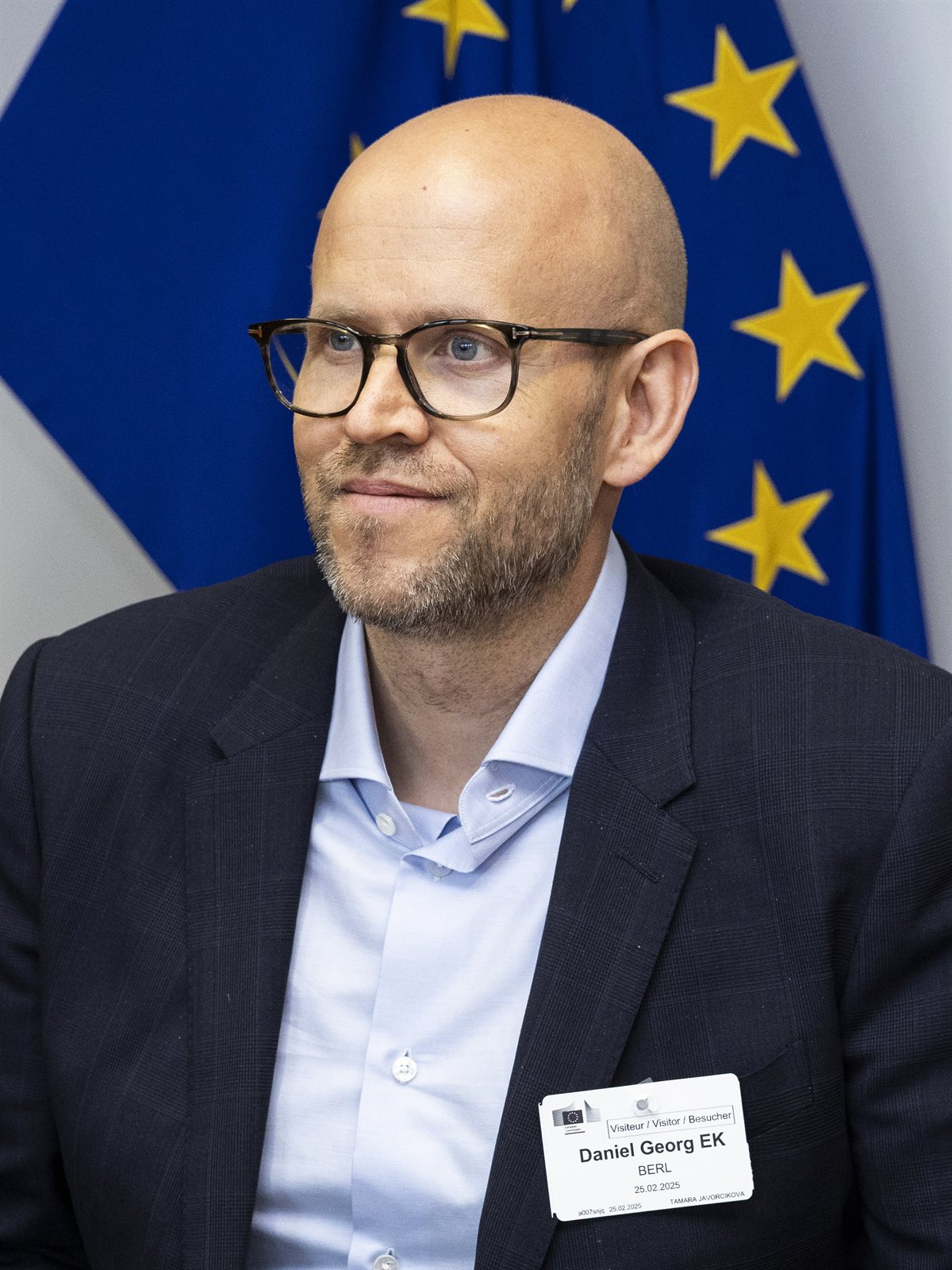
Daniel Ek: The Swede Who Beat Piracy by Building Something Better
A critically-neutral profile of Spotify’s Daniel Ek: how he beat music piracy not with lawsuits but with a freemium product better than free, endured two years of label negotiations and sixteen more before profit, and built a 675M-user streaming giant — alongside the artist-payment, Rogan and defence-tech controversies.

Whitney Wolfe Herd: The Founder Who Turned Being Pushed Out Into Bumble
A critically-neutral profile of Bumble’s Whitney Wolfe Herd: how she converted her ordeal at Tinder into the "women make the first move" thesis, took Bumble public at 31, and now fights to sustain it through a ~94% stock decline — the founding triumph and the hard aftermath, held honestly together.

Patrick Collison: The Irish Teenager Who Built the Internet’s Payment Rails
A critically-neutral profile of Stripe’s Patrick Collison: the teenage prodigy who sold his first startup at 19, reduced online payments to a few lines of developer code, and built the financial infrastructure of the internet — through a bubble, a markdown, and a full recovery past its old peak to ~$159B.