Sir Jim Ratcliffe: INEOS and the Industrialist in Monaco
He built one of the world’s biggest chemical companies in private through debt-fuelled buyouts, championed Brexit and British industry — then took tax residence in Monaco and applied his cost discipline to Manchester United. A fact-checked case study.
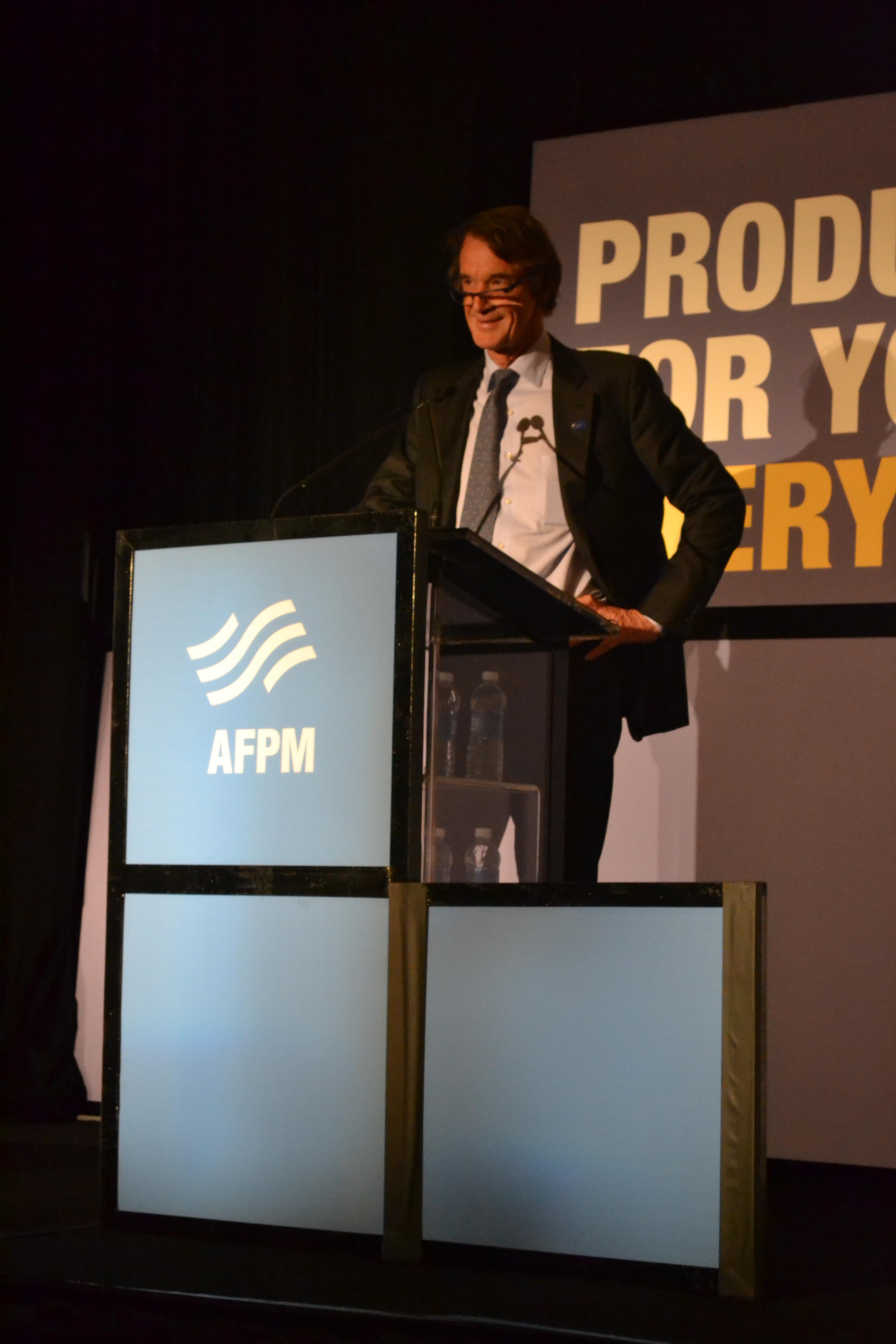
Sir Jim Ratcliffe is the most powerful British industrialist most British people had never heard of until he bought a stake in their favourite football club. For two decades he assembled, almost invisibly, one of the largest chemical companies on earth — INEOS — through a relentless, debt-fuelled strategy of buying the unglamorous, undervalued assets that bigger companies wanted to shed. He did it largely in private, away from the public markets and the press, and it made him, by some estimates, one of the wealthiest people in Britain. Then, in 2024, he bought into Manchester United, and the quiet chemicals billionaire became a household name and a lightning rod overnight. His career is a case study in a particular kind of capitalism — opportunistic, leveraged, unsentimental — and in the friction between the pro-British, pro-Brexit public voice he adopted and the Monaco tax residence he took up. As with every subject in this series, the task is to separate what is documented from what is contested.
Grammar school to chemical engineering
Jim Ratcliffe was born on 18 October 1952 in Failsworth, Lancashire, in the industrial north-west of England. His background was ordinary and his ascent was meritocratic in the classic post-war British mould: he attended Beverley Grammar School, then read chemical engineering at the University of Birmingham, and later earned an MBA at London Business School. That combination — a hard technical degree in the discipline he would build an empire in, capped by a finance and management education — is the precise toolkit that his later career exploited. He understood chemical plants as an engineer and he understood balance sheets and leveraged acquisitions as a financier, and the genius of INEOS was the fusion of those two literacies in a single person.
Before founding his own company he worked in the industry and in private equity, learning the trade of buying, financing, and running industrial assets. By his mid-forties he was ready to stop doing it for other people and start doing it for himself.
The INEOS machine
INEOS was founded in 1998. The starting point was the acquisition of Inspec, together with a former BP Chemicals site in Antwerp, and from that base Ratcliffe executed one of the most aggressive expansion strategies in modern industrial history. The model was consistent and it was clever. The big integrated oil and chemical majors — ICI, BP, Norsk Hydro, and others — were under pressure from their shareholders to focus on core businesses and shed "non-core" chemical operations. Those operations were often unloved, undervalued, and capital-intensive, exactly the kind of asset the market wanted to be rid of. Ratcliffe bought them, frequently using large amounts of debt to finance the purchases, then ran them harder and leaner than their previous corporate owners had bothered to.
The transformational deal came in 2006, when INEOS acquired BP's Innovene division — a petrochemicals business many times INEOS's own size at the time — in a deal that vaulted the company into the front rank of global chemical producers. It was the boldest expression of the strategy: a relatively small, privately held buyer swallowing a major asset from one of the world's largest oil companies, financed with debt, on the bet that focused, cost-disciplined ownership could extract value the seller could not. The bet largely paid off, and INEOS grew into one of the largest chemical companies in the world, sprawling across petrochemicals, polymers, and specialty products. The whole edifice was built on a contrarian premise: that the assets everyone else considered boring liabilities were, in disciplined hands and with the right capital structure, enormously valuable.
Tax, and the move to Switzerland and then Monaco
Ratcliffe's relationship with tax is where the documented facts and the contested judgements collide most sharply, and it is essential to keep the two apart. The first relevant move is corporate. In 2010, INEOS relocated its headquarters to Switzerland, a step widely understood to be motivated substantially by tax, in the aftermath of the financial crisis when the company's finances were under strain. Then, in 2015, the company opened a London headquarters, partially reversing the optics of the Swiss move and re-establishing a prominent British base. These are PROVEN corporate facts.
The more contentious move is personal. In September 2020, Ratcliffe changed his own tax residence to Monaco — the principality famous as a haven of zero personal income tax — in a step reported to be capable of saving him as much as around four billion pounds in tax. The change of residence is a PROVEN fact; the characterisation of it as "tax avoidance" carries the weight of criticism rather than any finding of illegality, and using a lower-tax residence is lawful. What made it land badly was the contrast with his public persona. Ratcliffe had positioned himself as a champion of British business and was a notable supporter of Brexit, presenting himself as a believer in Britain's industrial future. Moving his personal tax residence to Monaco shortly afterwards struck many critics as a flat contradiction — advocating for Britain while declining to pay British personal tax. Whether that is hypocrisy or simply the legal optimisation that any globally mobile billionaire might pursue is, once again, a matter of opinion. The fact is the move and its reported scale; the judgement is the inconsistency, and the British tax-domicile debate has raged around exactly this kind of case for years.
Brexit and the British-business voice
Ratcliffe's public political identity was built around British industry and around Brexit, and the friction with his later choices is the throughline of his reputation. He spoke as an industrialist who believed in Britain's capacity to thrive, and he was an outspoken supporter of leaving the European Union, lending the weight of a self-made manufacturing billionaire to the Leave argument. For a campaign often accused of lacking serious business backers, a figure like Ratcliffe was valuable precisely because he was a genuine industrialist rather than a financier or a politician.
The difficulty, as critics have repeatedly pointed out, is the apparent gap between the rhetoric and the personal choices: the British-business champion who headquartered his company in Switzerland for tax, then took personal residence in Monaco. It is the same structural tension that recurs throughout this series — a public identity rooted in national loyalty colliding with the borderless, tax-optimising behaviour of global capital. The fair point on Ratcliffe's side is that INEOS does employ large numbers of people in Britain, has invested in British industrial sites, and reopened a London HQ; the company's commitment to the UK is not fictional. The fair point against him is that the personal Monaco residence is hard to square with the patriotic framing, and he has not been able to make the contradiction disappear. Both points are true, and the reader is left to weigh them.
Shale gas and the "pathetic" tremor threshold
A distinct and well-documented area of controversy is environmental, and it splits into two strands: Ratcliffe's advocacy for shale gas, and his companies' regulatory compliance record. On the first, Ratcliffe was an outspoken and prominent advocate for developing a UK shale-gas industry through fracking, and INEOS became a major holder of shale-exploration licences in Britain. He argued that domestic shale gas was an economic and strategic opportunity that Britain was foolishly forgoing, and he was openly contemptuous of the regulatory regime that constrained it.
That contempt produced one of his most quoted moments. In 2019 Ratcliffe described the regulatory threshold that halted fracking operations after a tremor of 0.5 magnitude as "pathetic" — arguing that so low a seismic limit made commercial fracking impossible and reflected an irrationally cautious approach. The remark is a PROVEN, on-the-record position, and it captures his broader stance: that British environmental and planning caution was strangling industrial opportunity. Critics, including environmental campaigners and local communities opposed to fracking, saw the same comment very differently — as a powerful industrialist dismissing legitimate seismic and environmental safeguards because they were inconvenient to his business. Both readings draw on the same undisputed quote; the divergence is in the values brought to it.
The pollution-compliance record
The second environmental strand is harder for Ratcliffe to wave away, because it concerns documented regulatory breaches rather than rhetoric. Environment Agency data cited 176 permit violations between 2014 and 2017 at an INEOS plant, alongside broader compliance disputes over pollution rules. That figure — 176 documented permit violations across a roughly three-year span at a single facility — is a PROVEN matter of regulatory record, not an allegation, and it sits awkwardly against the picture of disciplined, well-run industrial ownership that the INEOS success story implies.
Context is owed here, as everywhere. Large chemical plants are complex, heavily regulated, and operate under permits with numerous specific conditions; a raw count of "violations" can range from serious pollution events to relatively technical or administrative breaches, and the number alone does not establish the severity of environmental harm. Heavy industry of this kind, run by anyone, generates a compliance record with infractions. But the volume is notable, and it feeds a coherent critique that ties the environmental strands together: a company whose owner publicly derided environmental regulation as "pathetic" also accumulated a substantial tally of documented permit breaches. One can accept that the violations vary in seriousness and still conclude that the compliance record is a legitimate mark against the operation, and that it complicates any portrait of INEOS as a model of disciplined stewardship. The proven fact is the count; the interpretation of how damning it is depends on detail that a headline number does not supply.
Knighthood, sport, and the building of a public profile
Before Manchester United there was a longer, quieter accumulation of public standing, and it is worth tracing because it sets up the collision that followed. Ratcliffe was knighted in 2018, formal recognition of an industrialist who had, by then, built one of the country's largest private companies — even if much of the public still could not have named him or his firm. The honour marked the moment a backroom acquirer of chemical plants began to step, deliberately, into the open. INEOS started attaching its name to high-profile sporting ventures, the kind of activity that buys visibility and goodwill in a way that owning ethylene crackers never could. The company sponsored cycling and sailing, backed an attempt at the sub-two-hour marathon, and moved into football on the continent before the United deal, building a portfolio of sporting interests under the INEOS banner.
This was, in part, ordinary corporate brand-building, and there is nothing improper in a successful company spending on sport. But it is relevant to the later story for two reasons. First, it shows that the move into Manchester United was not a whim but the culmination of a deliberate strategy to convert industrial wealth into public presence and sporting prestige. Second, it sharpened the contrast that critics would later seize on: a company and an owner spending visibly and lavishly on sporting glamour, while the same owner had taken personal tax residence in Monaco and the same company carried a documented environmental-compliance record at home. The sporting profile raised Ratcliffe's visibility precisely as it raised the stakes of every contradiction attached to him. By the time he reached for England's most famous football club, he was no longer an anonymous billionaire; he was a public figure whose every decision would be read against the patriotic, pro-British identity he had spent years projecting.
Manchester United and the austerity backlash
The chapter that made Ratcliffe famous to the general public is also the one that turned public sentiment most sharply against him, and it is a clean illustration of how a financier's logic collides with the emotional economy of sport. In February 2024, INEOS, through Ratcliffe, acquired roughly a quarter of Manchester United — about 25 percent, a stake later raised toward around 28.9 percent — and, crucially, took control of the club's football and sporting operations. He was not the majority owner, but he was now the man running the football side of one of the most famous and most scrutinised sports institutions on the planet.
What followed was the application of cost discipline to an organisation whose fans experience it not as a business but as a cultural inheritance, and the collision was immediate. After taking sporting control, Ratcliffe's regime oversaw the cutting of up to around 450 jobs across the club and ended perks such as free staff meals — measures presented as necessary financial discipline to repair a club that had, on the new ownership's account, become bloated and badly run. To Ratcliffe and his supporters this was exactly the unsentimental, cost-focused ownership that had built INEOS, now applied to an institution that needed it. To critics — including many fans, staff, and observers — it looked like harsh austerity imposed on ordinary employees and on the club's culture by a billionaire who could plainly afford otherwise, the small cruelties (cutting free meals for staff) generating particular anger precisely because they were so visible and so petty relative to his wealth. The PROVEN facts are the job cuts of up to roughly 450 and the ending of free staff meals; the framing as "harsh austerity" is the critics' characterisation, and the framing as "necessary discipline" is the ownership's. The episode matters beyond football because it took the operating philosophy that had been INEOS's hidden engine for twenty years — buy undervalued assets, strip cost, run lean — and played it out in the most public arena imaginable, where the same approach that markets reward is experienced by ordinary people as loss.
The leverage model, examined
It is worth slowing down on the financial engine of INEOS, because the debt-fuelled buyout model that Ratcliffe rode to enormous wealth is also the part of his record most worth understanding on its merits — neither to celebrate it uncritically nor to dismiss it as mere financial trickery. The strategy was, at its core, a bet against the prevailing wisdom of the large oil and chemical majors. Those companies, under pressure from their own shareholders and from a fashion for "focus," concluded that broad portfolios of chemical assets were a distraction from their core oil business and should be sold. Ratcliffe's contrarian view was that these assets were not bad businesses but badly owned ones — starved of attention, run by managers whose incentives lay elsewhere, and valued by sellers who simply wanted them gone.
Buying them with heavy borrowing did two things at once. It allowed a relatively small company to acquire assets far larger than itself, compounding INEOS's scale with each deal. And it imposed a brutal discipline: a debt-laden balance sheet leaves no room for slack, so the acquired plants had to be run leaner, with costs cut and cash generated to service the borrowing. In good times this is a wealth-multiplying machine, and for INEOS it largely was. But the model is not free of risk, and an honest account names the downside: heavy leverage magnifies losses as well as gains, and a debt-financed industrial group is acutely exposed to the cyclical swings of commodity chemical prices and to the cost of energy that feeds its plants. The 2010 move of the headquarters to Switzerland came in the aftermath of the financial crisis, when the company's finances were under strain — a reminder that the leverage which powered the rise also left INEOS vulnerable when conditions turned. The model worked, and worked spectacularly, but it was a high-wire strategy, not a low-risk one, and Ratcliffe's skill lay as much in managing that risk as in spotting the undervalued assets in the first place. It is a genuinely instructive piece of industrial finance, and it deserves to be understood as a deliberate, repeatable system rather than as luck.
The shape of the fortune
It is worth pausing on the scale and structure of what Ratcliffe built, because both are part of the story. By the measures commonly used, he became one of the wealthiest people in Britain, with net-worth estimates that have ranged widely — from roughly 17 billion pounds to as much as around 29 billion pounds depending on the year, the valuation method, and the price of the petrochemical assets that underpin the figure. That range is itself instructive: a fortune held in private industrial assets rather than public-market shares is harder to pin down, fluctuates with commodity cycles, and is reported with far less precision than the wealth of a public-company founder. The very privacy that let Ratcliffe build INEOS without scrutiny also means his fortune is an estimate rather than a quoted number.
The structure matters as much as the size. INEOS was built and held privately, away from the discipline and the disclosure of public equity markets, and financed heavily with debt. That model gave Ratcliffe enormous freedom — to move fast, to take contrarian bets, to avoid the quarterly theatre of listed companies, and to keep his own counsel — and it concentrated both control and risk in his hands. It is the same logic that runs through everything else about him: the leverage that powered the acquisitions, the privacy that kept him out of the headlines, the cost discipline that wrung value out of unloved assets. The fortune is the output of a coherent and aggressive system, not of a single lucky deal, and that coherence is the most impressive thing about him as an operator even for those most critical of his politics, his tax residence, or his stewardship of a football club.
The honest verdict
Jim Ratcliffe is, first and undeniably, a formidable industrialist. He built one of the world's largest chemical companies from a standing start in 1998, through a disciplined, contrarian, debt-financed strategy of buying the assets that giants like ICI and BP no longer wanted and running them better. The 2006 Innovene acquisition alone was a feat of nerve and execution, and the broader achievement — a private, self-made industrial empire of global scale — is real and rare. Whatever else is said about him, the operator's record is genuinely impressive.
The contested column is substantial too, and it is fair to set it down without exaggeration. He cultivated a pro-British, pro-Brexit public identity and then took personal tax residence in Monaco, reportedly to save billions — a PROVEN move whose characterisation as hypocrisy is opinion but a hard one to shake. His companies carried a documented record of permit violations even as he derided environmental regulation as "pathetic." And when he took control at Manchester United he applied the cost-cutting logic of his career to a beloved institution, with job losses and petty-seeming cuts that read to many as austerity from a man who could afford generosity. None of these is a finding of illegality; all are documented facts wrapped in legitimate criticism. The honest verdict is the one this series keeps reaching in different forms: a genuinely great builder of industrial value, whose globalised, leveraged, unsentimental methods sit in unresolved tension with the national loyalties he professed — and the tension, not any single scandal, is the truest measure of how he is seen.
Editor's note: HustleMemo writes founder-led case studies grounded in public reporting. Proven facts (the September 2020 Monaco residence move, the 176 permit violations 2014–2017, the "pathetic" tremor-threshold remark, the Manchester United job cuts and ended staff meals) are reported as such; "hypocrisy" and "harsh austerity" are identified as criticism and opinion rather than findings, and using a lower-tax residence is lawful. Net-worth figures are estimates that vary by source and year. Corrections: editorial@hustlememo.com.
Sources
- "Jim Ratcliffe," Wikipedia (born 18 October 1952 Failsworth, Lancashire; Beverley Grammar School, University of Birmingham chemical engineering, London Business School MBA; founded INEOS 1998 via Inspec and a former BP Chemicals Antwerp site; 2006 Innovene acquisition; INEOS HQ to Switzerland 2010 and London HQ 2015; knighted 2018; net-worth estimates ~17bn–29bn pounds).
- Reporting on the September 2020 change of personal tax residence to Monaco, the reported potential saving of up to ~4bn pounds, and the criticism in light of his pro-Brexit, pro-British-business advocacy.
- Reporting on INEOS as a major UK shale-gas/fracking licence holder and Ratcliffe's 2019 description of the 0.5-magnitude tremor regulation threshold as "pathetic."
- Environment Agency data cited for 176 permit violations between 2014 and 2017 at an INEOS plant, and the broader pollution-rule compliance disputes.
- Reporting on the February 2024 acquisition of ~25% of Manchester United (later raised toward ~28.9%), the assumption of control over football/sporting operations, and the subsequent cutting of up to ~450 jobs and ending of free staff meals.
More from this category
Aliko Dangote: The Trader Who Built Africa’s Biggest Industrial Empire
A critically-neutral profile of Aliko Dangote: heir to a trading dynasty who built Africa’s biggest industrial empire through backward integration and scale, rode Nigeria’s protectionist policy, bet ~$20bn on a giant refinery — and faces genuine, unresolved questions about market concentration and government ties.

Sir Brian Souter: Stagecoach and the Fortune Built on a Policy
Sir Brian Souter co-founded Stagecoach and turned the deregulation of Britain’s buses into a transport empire. A sourced, critically neutral look at genuine industrial achievement, the proven "predatory" competition findings, the controversial "Keep the Clause" campaign, and the disputed claims about his SNP donations.
Andrew Carnegie: Steel, the Gospel of Wealth, and Homestead
Andrew Carnegie rose from a penniless Scottish immigrant boy to the master of American steel, sold out to J. P. Morgan for $303.45M, and gave away roughly 90% of his fortune. A sourced, critically neutral case study that holds his vast philanthropy and the violent 1892 Homestead Strike together, without resolving the contradiction.