Sir James Dyson: The Inventor and the Lightning Rod
He failed 5,127 times before reinventing the vacuum, then beat the industry that rejected him — and became a British manufacturing icon whose Singapore HQ move and pandemic dealings made him a figure of contradiction. A fact-checked case study.
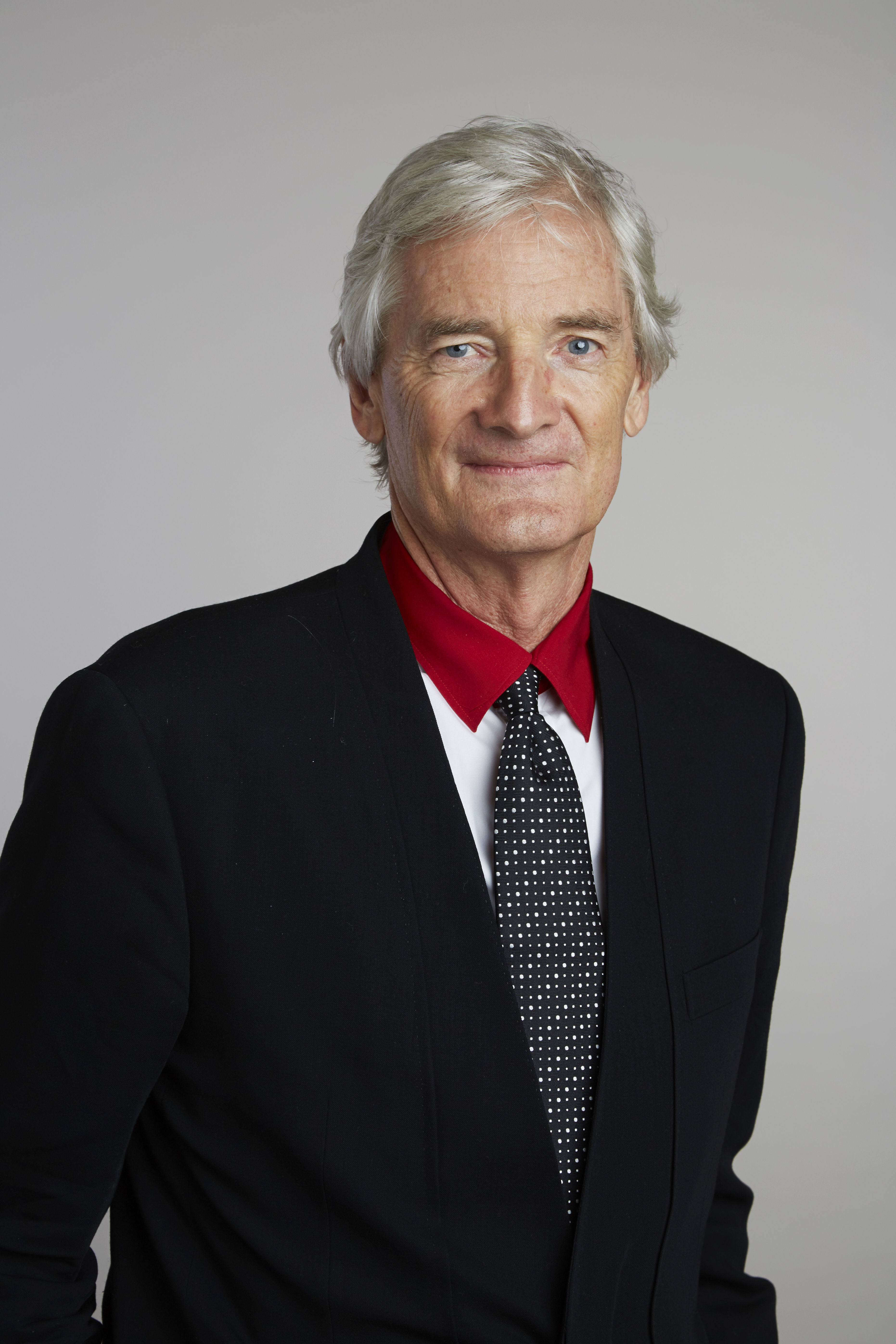
Sir James Dyson is the rare industrialist whose name became a verb for a kind of stubbornness. He built one of Britain's most admired engineering brands out of a vacuum cleaner that did not lose suction, and he did it the hard way: by failing, on his own account, more than five thousand times before he succeeded once. That story — the inventor who would not quit — is genuinely true and genuinely instructive, and it is the foundation of an enormous private fortune and a real industrial reputation. But Dyson is also, increasingly, a figure of contradiction in the British public imagination: a champion of British manufacturing who moved his factories abroad, a prominent backer of Brexit who relocated his global headquarters to Singapore, and a businessman whose pandemic-era dealings with the British state drew uncomfortable scrutiny. This is a study of both Dysons — the engineer and the lightning rod — and an attempt to keep the proven facts cleanly separate from the contested judgements stacked on top of them.
The art-school engineer
James Dyson was born on 2 May 1947 in Cromer, on the Norfolk coast of England. He was educated at Gresham's School, then studied at the Byam Shaw School of Art in London, before moving to the Royal College of Art, where between 1966 and 1970 he trained in industrial design. That trajectory matters more than it might seem. Dyson did not come up through a conventional mechanical-engineering faculty; he came through art and design schools, and the result was an unusual hybrid — a designer who taught himself engineering by doing it, with an instinct for how a product should look and feel as well as how it should function. The combination of aesthetic confidence and engineering obstinacy would define everything he later built.
His early career was spent learning the discipline of bringing physical products to market, including work on industrial and marine equipment. That apprenticeship matters to the legend, because it gave him something most lone inventors lack: a working knowledge of how a product actually gets manufactured, costed, and sold, not merely sketched. By the time he turned to the problem that would define him, he was not a hobbyist with a clever notion but a trained designer who already understood the long, unglamorous distance between an idea and a machine on a shop floor. But the formative episode of his life is the one every account returns to, because it is the origin of the entire Dyson enterprise: a vacuum cleaner that frustrated him at home, and a refusal to accept that its central flaw was inevitable.
Five thousand prototypes
The problem Dyson set out to solve was mundane and universal. Conventional vacuum cleaners relied on a bag, and as the bag filled, the pores clogged, and suction collapsed long before the bag was full. Dyson's insight was to borrow a principle from industrial cyclone separators — devices used in sawmills and factories to spin dust out of an airstream — and miniaturise it into a domestic appliance. A cyclonic vacuum would have no bag and would not lose suction as it filled. The idea was elegant. The execution was brutal.
What followed is the part of the legend that is both well documented and worth taking seriously, because it is the real lesson buried under the marketing. Dyson built, by his own count, roughly 5,127 prototypes before he arrived at one that worked the way he wanted. That number — over five thousand iterations — represents years of repetitive, demoralising, self-funded failure, each prototype a small adjustment on the last. It is the single most cited fact about him, and for once the most cited fact is also the most important one: the Dyson method is not a flash of genius but a willingness to fail thousands of times in pursuit of a single working machine. Whatever one concludes about the man's later politics or his manufacturing decisions, the engineering persistence at the foundation of the company is real and was extraordinary.
Rejected at home, funded abroad
The cruel irony of Dyson's breakthrough is that the British and American appliance establishment did not want it. The existing manufacturers made money selling replacement bags, and a bagless cleaner threatened that revenue stream; the big players turned him down. Dyson could not get the established industry to license or build his machine in its home markets.
So he went east. In 1983 he launched his cyclonic cleaner — the "G-Force" — in Japan, where it was sold as a premium, almost luxury, design object. The Japanese licensing income from the G-Force was what kept Dyson and his idea alive financially through the lean years; it funded the continued development that would eventually let him launch under his own name. This is a detail worth dwelling on, because it complicates the simple "British genius" narrative in an instructive way: the product that made Dyson was first commercialised abroad, and the capital that sustained him came from foreign licensing, not British backing. The man who would later become a symbol of British manufacturing succeeded, at the outset, precisely because he looked beyond Britain.
Malmesbury, and the best-selling machine in Britain
Vindication came in the 1990s. In 1993, Dyson opened his own factory and research operation at Malmesbury in Wiltshire, England, and began manufacturing under his own brand. The first machine, the DC01, went on to become the best-selling vacuum cleaner in the United Kingdom. The company that the industry had rejected now beat the industry on its own turf, in its own home market, with a product that consumers understood and wanted. It was a textbook vindication of the obstinate inventor.
The legal coda confirmed it. In 1999 Dyson won a patent-infringement case against Hoover — one of the very establishment names that had spurned cyclonic technology — over a bagless cleaner that Dyson argued copied his patented design. The case ended in a judgement in Dyson's favour, with damages reported at around four million pounds. For Dyson the win was more than money; it was a courtroom ratification of the idea that he had been right all along and the incumbents had been wrong. The Malmesbury years are the high point of the unambiguous, uncontested Dyson story: a British inventor, building in Britain, beating the giants. Almost everything controversial about Dyson's public image comes after this point.
The pivot abroad
Around 2002, Dyson made the decision that would shadow his reputation for the rest of his career: he moved the company's manufacturing out of Britain to Malaysia and Singapore. The rationale was the conventional one of global manufacturing — lower costs, proximity to Asian supply chains and component makers, and the operational logic that had already drawn most of the consumer-electronics industry to South-East Asia. In pure business terms it was an unremarkable decision; thousands of companies made the same calculation in the same era, and the broader decline of British manufacturing was a structural tide that Dyson was riding rather than creating.
But it landed differently for Dyson, and the reason is worth stating plainly. Dyson had become a symbol — a rare, celebrated example of British engineering success and home-grown manufacturing — and symbols are held to the standard they represent. When the man who embodied "made in Britain" moved production to Malaysia, the gap between the symbol and the businessman became a permanent feature of how he was discussed. It is important to be fair here: offshoring manufacturing is a normal commercial decision, the British manufacturing base was shrinking for reasons far larger than any one company, and Dyson retained significant research and development activity in the UK. The charge against him is not that he broke a law or even that he made an unusual choice; it is the softer, more contestable charge of inconsistency — of trading on a British identity while building abroad. Whether that amounts to hypocrisy or simply to pragmatism is a matter of opinion, and a fair reader can land on either side.
Brexit, and the Singapore headquarters
The inconsistency charge sharpened to its most intense pitch over Brexit. Dyson was a prominent and vocal backer of the Leave campaign, arguing that Britain would thrive outside the European Union and presenting himself as a confident voice for British independence and enterprise. Then, in January 2019 — with Brexit unresolved and the country still arguing about its future relationship with Europe — Dyson announced that the company was moving its global headquarters from the United Kingdom to Singapore.
The optics were, to put it mildly, difficult, and the criticism was immediate and fierce. Here was a man who had urged Britain to leave the EU on the promise of a brighter independent future, relocating his own corporate headquarters out of Britain to Asia at the very moment that future was being decided. To critics it looked like the purest hypocrisy — Brexit for thee, Singapore for me. Dyson and the company insisted the move was about being closer to the company's fastest-growing markets and manufacturing in Asia, and had nothing to do with Brexit or with avoiding British tax; the timing, they argued, was coincidental and commercial.
The honest framing requires separating two things. The PROVEN facts are not in dispute: Dyson backed Leave, and in January 2019 he moved the HQ to Singapore. The accusation of "hypocrisy" is an ALLEGED interpretation — an opinion about motive and consistency — not a finding of fact, and Dyson rejects it. Crucially, when a newspaper characterised the episode in terms he considered defamatory, he sued: in December 2023 Dyson won a libel claim against the Daily Mirror over how the move had been portrayed. That outcome does not settle the broader public argument about consistency, which remains a matter of opinion, but it does mean that at least one specific published characterisation was found, in a court of law, to have crossed the line into defamation. A responsible account records both the underlying facts and the limit a court placed on how they could be described.
The abandoned electric car
If Brexit is the controversy that defined Dyson's public image, the electric car is the episode that best reveals his appetite for risk — and its limits. Between 2017 and October 2019, Dyson pursued an ambitious project to build a Dyson-branded electric vehicle from scratch, leveraging the company's expertise in electric motors, batteries, and air-handling. This was not a modest side project. Dyson committed an enormous sum — reported at around 2.5 billion pounds — to electric-vehicle and battery research and development, betting that the company that had reinvented the vacuum cleaner and the hand dryer could reinvent the car.
In October 2019 he abandoned it. The reason given was straightforward and, by the standards of corporate face-saving, refreshingly blunt: the car was not commercially viable. Dyson concluded that he could build the vehicle but could not sell it at a profit against established and heavily subsidised competition, and he chose to cut the project rather than pour more money into a loss-making product. It was an expensive failure — billions committed, no car produced — but it is also, read fairly, a point in his favour as a businessman. He took a large, genuine technological risk with his own private capital, and when the numbers did not work he killed the project decisively rather than letting sunk cost drag him further in. The same obstinacy that produced 5,127 vacuum prototypes did not, in this case, tip into ruinous stubbornness; he knew when to stop. The battery and motor research was not entirely wasted, feeding back into the company's other products, but the headline remains a clean and instructive one: a multi-billion-pound bet, abandoned on commercial grounds, absorbed privately by a company that could afford the loss.
The "Dyson amendment"
The most serious of the proven controversies is also the least understood, because it sits at the intersection of a global emergency and the ordinary machinery of government access. In March 2020, at the very start of the COVID-19 pandemic, Britain faced a desperate shortage of ventilators, and the government issued an urgent call for manufacturers to help build them. Dyson, with its engineering capability, was among the companies that answered. The complication was logistical: Dyson's relevant operations were tied to Singapore, and bringing key staff into the UK for the project raised a tax question for those individuals.
What happened next is documented and uncomfortable. The then Prime Minister, Boris Johnson, personally texted James Dyson to reassure him, saying in effect that he would "fix" the tax issue so that Dyson staff coming from Singapore would not face an additional tax charge — and the relevant rule was subsequently changed. That sequence is PROVEN: a sitting Prime Minister intervened by private text message to resolve a tax problem for a specific wealthy businessman's company, and the government altered the rule accordingly. A report commissioned in connection with the official Covid Inquiry went further on the procurement side, describing the preferential treatment around the ventilator contract as an "affront" to normal procurement rules — strong language for the way one favoured supplier was handled relative to the standard process.
Two things must be held together to be fair. First, the context was a genuine national emergency in which the government was, reasonably, trying to mobilise any capable manufacturer at speed, and seeking to remove obstacles to that mobilisation. Second, the episode is nonetheless a textbook illustration of how privileged access works at the top: an ordinary company facing a tax obstacle does not get a reassuring text from the Prime Minister promising to fix it. The most deflating coda is that, for all the access and all the controversy, Dyson ultimately produced no usable ventilator — the company's design was not needed as the projected shortage eased and clinical requirements shifted. So the lasting record of the "Dyson amendment" is a proven instance of preferential treatment that yielded no public-health benefit, which is close to the worst possible combination for the reputations of everyone involved. None of this alleges illegality on Dyson's part — he answered a government call, as asked — but the episode rightly remains a case study in elite access rather than a story of crisis heroism.
The Malaysian supplier allegations
A separate and graver set of allegations concerns labour conditions deep in Dyson's supply chain, and here the presumption of innocence and the unresolved state of the litigation must govern the telling. Dyson did not own the factory in question; the issue arose at ATA IMS, a Malaysian contract manufacturer that supplied Dyson. Migrant workers at ATA IMS alleged forced-labour conditions — among them unlawful wage deductions and the retention of workers' passports, classic indicators of labour exploitation in South-East Asian manufacturing. These are ALLEGED and DISPUTED claims, not established findings.
Dyson's response was to act on the relationship: the company ended its contract with ATA IMS in 2021 after the concerns surfaced through an audit and external reporting, and Dyson has consistently denied the workers' allegations as they relate to the company. In 2022, twenty-four workers brought a legal claim, with the litigation pursued in England against Dyson entities on the theory that the company bore responsibility for conditions in its supply chain. That suit was reported to have been settled around February 2026. A settlement is not an admission of liability and does not constitute a finding that the allegations were true; it is a resolution of the dispute, and Dyson's denial stands on the record. The fair statement is therefore narrow: serious forced-labour allegations were made against a former Dyson supplier, Dyson terminated the supplier and denied the claims, workers sued, and the matter was reportedly resolved by settlement without any judicial finding of guilt. It is a real and serious chapter, and it is also, legally, an unproven one.
The tax-structuring history
The final controversy is the oldest and, in the scheme of things, the most ordinary — though "ordinary" is itself part of the point. In the 2014 disclosures known as the "Lux Leaks," which exposed the offshore tax-structuring arrangements of large numbers of multinationals, Dyson-related entities surfaced among the structures involving jurisdictions such as Malta, Luxembourg, and the Isle of Man. The use of such low-tax intermediary entities is a standard, legal feature of how globally operating companies arrange their affairs, and there is no suggestion of illegality. Dyson's position is that those particular entities were later dissolved.
This belongs in the record not because it is scandalous in itself — it is the routine architecture of international corporate tax planning, used by countless firms — but because it forms part of a pattern that gives the consistency critique its force. A businessman who is simply a private global operator attracts little comment for offshore structuring, Singapore headquarters, or Asian factories; those are normal. The friction in Dyson's case comes entirely from the contrast between those normal global behaviours and the strongly British, pro-Brexit, made-in-Britain identity he publicly projected. The tax history, like the HQ move and the offshoring, is individually unremarkable and collectively the raw material of the charge that the symbol and the operator were not the same man. Whether that charge is fair remains, as throughout, a matter of judgement rather than fact.
The honest verdict
The Dyson balance sheet has two columns, and intellectual honesty requires filling in both. On the achievement side, the case is overwhelming and largely uncontested: a self-trained engineer reinvented a household product through more than five thousand iterations of disciplined failure, beat an entrenched industry that had rejected him, built the UK's best-selling vacuum cleaner, won his patent fight in court, and grew a privately held company into a global brand and a multi-billion-dollar fortune. The persistence is real, the engineering is real, and the decision to kill a multi-billion-pound car project on honest commercial grounds shows a discipline that the legend's "never give up" framing does not fully capture. He knew both how to persist and when to stop.
On the controversy side, the proven facts are narrower and more nuanced than the loudest critics imply, but they are not nothing. He moved manufacturing abroad and relocated his HQ to Singapore while wearing a British, pro-Brexit identity; a Prime Minister personally intervened to fix a tax problem for his company during the pandemic, to no eventual public benefit; and serious labour allegations against a former supplier were settled without a finding. The recurring word in the criticism is "hypocrisy," and that word is an opinion, not a verdict — one Dyson has rejected, and on at least one published characterisation has defeated in a libel court. The fair conclusion is that James Dyson is a genuinely great engineer and entrepreneur whose globalised business behaviour sits awkwardly with the patriotic image he cultivated, and that the tension between those two facts — not any single scandal — is the real subject of his public reputation. Both columns are true at once, and the honest reader is not required to collapse them into a single judgement.
Editor's note: HustleMemo writes founder-led case studies grounded in public reporting. Proven facts (the Singapore HQ move, the Boris Johnson ventilator-tax intervention, the abandoned car project) are reported as such; "hypocrisy" over Brexit is identified as opinion, and Dyson won a 2023 libel claim over one characterisation. The Malaysian-supplier forced-labour allegations are reported as disputed and unproven, denied by Dyson and reportedly settled without a finding of liability. Corrections: editorial@hustlememo.com.
Sources
- "James Dyson," Wikipedia (born 2 May 1947 Cromer, Norfolk; Gresham's School, Byam Shaw School of Art, Royal College of Art 1966–70; ~5,127 cyclonic-vacuum prototypes; G-Force launched in Japan 1983; Malmesbury factory 1993 and the best-selling DC01; 1999 patent win against Hoover; manufacturing moved to Malaysia/Singapore ~2002; net worth ~13bn USD; company privately held by the Dyson family).
- Reporting on the Dyson electric-car project (2017–October 2019), the ~2.5bn-pound EV/battery R&D commitment, and its cancellation as not commercially viable.
- Reporting on the January 2019 relocation of the global headquarters to Singapore, the Brexit/Leave context, and Dyson's December 2023 libel win against the Daily Mirror over the characterisation of the move.
- Reporting and the Covid Inquiry-commissioned material on the March 2020 "Dyson amendment": Boris Johnson's text promising to "fix" the tax issue, the rule change, the "affront" to procurement rules, and the absence of any usable ventilator.
- Reporting on the ATA IMS Malaysian-supplier forced-labour allegations (wage deductions, passport retention), Dyson ending the contract in 2021 and denying the claims, the 2022 worker lawsuit, and its reported settlement around February 2026; and the 2014 "Lux Leaks" disclosures involving Malta/Luxembourg/Isle of Man entities later said to have been dissolved.
More from this category

Aliko Dangote: The Trader Who Built Africa’s Biggest Industrial Empire
A critically-neutral profile of Aliko Dangote: heir to a trading dynasty who built Africa’s biggest industrial empire through backward integration and scale, rode Nigeria’s protectionist policy, bet ~$20bn on a giant refinery — and faces genuine, unresolved questions about market concentration and government ties.

Sir Brian Souter: Stagecoach and the Fortune Built on a Policy
Sir Brian Souter co-founded Stagecoach and turned the deregulation of Britain’s buses into a transport empire. A sourced, critically neutral look at genuine industrial achievement, the proven "predatory" competition findings, the controversial "Keep the Clause" campaign, and the disputed claims about his SNP donations.
Andrew Carnegie: Steel, the Gospel of Wealth, and Homestead
Andrew Carnegie rose from a penniless Scottish immigrant boy to the master of American steel, sold out to J. P. Morgan for $303.45M, and gave away roughly 90% of his fortune. A sourced, critically neutral case study that holds his vast philanthropy and the violent 1892 Homestead Strike together, without resolving the contradiction.