Hasso Plattner: The Invisible Software That Runs the World
Five ex-IBM engineers built Europe’s most valuable tech company out of software no consumer ever sees. A fact-checked look at SAP, the founder who stayed for 50 years, and the difference between a company’s record and a man’s.

Most of the world's largest software companies are American, were founded in the second half of the twentieth century by people whose names are now household words, and make products that ordinary consumers touch every day. SAP is the great exception that proves how much that template leaves out. It is German, not American. Its product is almost entirely invisible to the public, because it runs the back offices of the largest companies on earth rather than the phones in their employees' pockets. And one of its co-founders, Hasso Plattner, became one of the wealthiest people in Germany and one of the most consequential figures in the entire history of enterprise software while remaining, outside the technology and business worlds, comparatively little known. His career is the story of how Germany built the most valuable technology company in Europe out of the deeply unglamorous business of helping enormous organisations run themselves.
It is also a useful case study in a distinction that matters and is often blurred: the difference between the conduct of an individual and the conduct of the vast institution he helped build. SAP, the company, has faced and settled documented legal matters — including United States foreign-bribery cases and scrutiny in a major South African corruption scandal. Hasso Plattner, the man, is not the same thing as SAP, the multinational, and a responsible account has to keep the two carefully apart while refusing to pretend the corporate record does not exist.
Five engineers leave IBM
Hasso Plattner was born on 21 January 1944 in Berlin, in the final, catastrophic year of the Second World War, into a Germany about to be divided and rebuilt. He trained as an engineer and went to work, as so many talented young technologists of his generation did, for IBM — then the dominant force in computing, the company that essentially defined what business computing was.
In 1972, Plattner and four other former IBM engineers — Dietmar Hopp, Klaus Tschira, Hans-Werner Hector, and Claus Wellenreuther — left to start their own company. The founding story is, in its way, a quintessential entrepreneurial parable: a group of insiders who could see a better way of doing something than their giant employer was willing to pursue, and who left to build it themselves. What they saw was the future of business software. At the time, large companies typically ran bespoke, custom-written programs for each separate function — one system for accounting, another for inventory, another for payroll — laboriously built and rebuilt for each customer. The SAP founders' insight was to build standardised, integrated business software that different companies could adopt and configure, with the various functions of an enterprise sharing a common system and processing data in real time rather than in isolated batches. That idea — standardised, integrated, real-time enterprise software — became the foundation of an entire industry.
Building the ERP empire
The category SAP came to define is enterprise resource planning, or ERP — the software that integrates and runs the core operational functions of a large organisation: finance, procurement, manufacturing, supply chain, human resources, and the rest, all on a single, coherent system. It is, in a sense, the central nervous system of the modern large corporation. When a multinational books revenue, orders parts, pays staff, or tracks inventory across dozens of countries, there is a very good chance that an SAP system, or one of its competitors', is the machinery underneath.
Over the following decades SAP grew from five engineers into the largest enterprise-software company in the world and Germany's most valuable technology firm. Its successive product generations became deeply embedded in the operations of a huge share of the world's biggest companies. The business model proved formidable: once an enormous organisation has built its core operations on a particular ERP system, the cost, risk, and disruption of ripping it out and replacing it are so great that customers stay for decades. This created exactly the kind of durable, recurring, high-margin business that investors prize, and it turned SAP into a European technology champion in a field otherwise dominated by American firms.
Throughout this rise, Plattner was a central technical and strategic force. He was not a passive co-founder who drifted into the background; he was a driving figure in the company's product direction and long-term strategy, closely associated with major architectural and technological bets the company made over the years. After stepping back from day-to-day executive leadership, he served for many years as the chairman of SAP's supervisory board — the senior governance role in the German two-tier corporate structure — and only stepped down from that chairmanship in 2024, more than half a century after the company's founding. Few people in the history of any major technology company have been so closely associated with it for so long.
The professor's institute
Plattner's wealth and influence did not stay confined to SAP. Like many great fortunes, his has been channelled substantially into philanthropy and institution-building, and the most significant of these efforts is the Hasso Plattner Institute, a computer-science institution he founded and funded in Potsdam, near Berlin. The institute became a serious centre for computer-science education and research in Germany, training engineers and conducting work in software and digital systems — in effect, an attempt by one of the founders of the enterprise-software industry to seed the next generations of German technologists.
This is genuinely substantial philanthropy, and it deserves to be recognised as such, but it also invites the same balanced reading that any large-scale giving by the ultra-wealthy deserves. On the generous side, founding and sustaining a real research and teaching institution is a meaningful, lasting contribution to a country's technological capacity — far more durable than mere donations, and aligned with the donor's genuine expertise. On the more skeptical side, large philanthropic institutions named after their funders also serve to convert private fortune into public prestige and legacy, to attach a businessman's name permanently to the prestige of science and education, and, depending on jurisdiction and structure, to carry tax and reputational benefits. Both readings are usually true together, and the Hasso Plattner Institute is a clear instance: a real and valuable contribution to German computer science that simultaneously functions as the legacy-building and reputation-burnishing that great philanthropy almost always involves. Noting the second half is not cynicism; it is the completeness a critical account requires.
The hockey team and the wealth
There is a more colourful side to Plattner's life that says something about the global, mobile character of modern technology wealth. He became the owner of the San Jose Sharks, a National Hockey League franchise in California — an unusual holding for a German software pioneer, and a reminder of how thoroughly the fortunes made in enterprise technology have become globalised, flowing across continents and into assets, like major-league sports teams, that have nothing to do with the business that generated them.
His wealth, accumulated over decades through his SAP holdings, placed him among the wealthiest people in Germany, with a net worth running into multiple billions. This is worth stating plainly because it frames everything else: the philanthropy, the sports ownership, the institute, and the governance role were all underwritten by one of the great private fortunes of the German economy, built on the most unglamorous software in the world. As with the other figures a study of business examines, the scale of the personal fortune is part of the story, and presenting the philanthropy without acknowledging the magnitude of the wealth that funded it would tell only half of it.
The character of that fortune is itself worth a moment's reflection, because it is a particular kind of wealth. It was not built on a consumer product that captured the public imagination, nor on a sudden speculative windfall, but on patient ownership of equity in a company that grew, compounded, and embedded itself ever more deeply into the global economy across half a century. That is the enterprise-software version of the slow, durable wealth-creation that recurs throughout German business history — value accumulated not in a flash but through the long, steady deepening of an infrastructural position. The fortune, the company, and the founder's own decades-long tenure all share the same quality of endurance, and noticing that gives a truer sense of how this particular billionaire's money was actually made: not by being seen, but by becoming indispensable to organisations the public never thinks about.
The corporate record: FCPA and "state capture"
Here a critically neutral account has to do the most careful work of all, because SAP — the company Plattner co-founded and long helped govern — has a documented record of legal trouble that any honest profile must address, while being scrupulous about what that record does and does not say about Plattner personally.
The clearest and best-documented matters concern foreign bribery. SAP has faced and settled cases under the United States Foreign Corrupt Practices Act — the FCPA, the American law that prohibits companies from paying bribes to foreign officials to win or keep business — over improper payments connected to its operations in a number of countries, including South Africa and Indonesia among others. These are documented enforcement matters that the company resolved, and they are facts that belong in any serious account of SAP's history. Relatedly, SAP was caught up in the sprawling South African "state capture" scandal — the term South Africans used for the systematic corruption of state institutions and state-owned enterprises during a period associated with the politically connected Gupta family — in which SAP's dealings to win business with South African state entities came under intense scrutiny.
Now the essential distinction, stated as plainly as possible. These are matters about SAP, the corporation — institutional findings and settlements concerning the conduct of a vast multinational with tens of thousands of employees operating in dozens of countries. They are not personal findings of wrongdoing against Hasso Plattner. To present them as Plattner's personal misconduct would be both inaccurate and unfair; the public record does not establish that. At the same time, to omit them entirely would be to whitewash the history of the institution he co-founded and helped to oversee for decades as supervisory-board chairman. The responsible course is the one taken here: report the corporate matters accurately as corporate matters, name them as documented settlements and scrutiny rather than as proven personal crimes, and leave the line between the company's record and the man's record exactly where the evidence leaves it — which is to say, distinct. A reader is entitled to know that the company had these problems; a reader is equally entitled not to have them misattributed to an individual against whom they were not found.
There is a broader and entirely legitimate observation embedded here, which is that very large multinationals operating across many jurisdictions, especially in markets with high corruption risk, have repeatedly run into foreign-bribery problems — SAP is one of many global technology and industrial firms to have settled FCPA matters. That pattern says something real about the compliance challenges of operating at global scale, and SAP's experience is an instance of it. It is fair to note that pattern without converting it into an accusation against any one founder.
The disputed critique: lock-in and complexity
Beyond the documented legal matters, there is a softer and more contested body of criticism that attaches not to SAP's integrity but to its products and its business model — and because it is genuinely disputed rather than proven, it should be labelled as such. The core of this critique is that enterprise software of the kind SAP pioneered creates powerful customer lock-in and that ERP implementations are notoriously expensive, complex, and prone to difficulty.
The lock-in argument runs like this: once a giant organisation has built its core operations on a particular ERP system, switching to a competitor becomes so costly, risky, and disruptive that the customer is effectively captive, which gives the vendor enormous pricing power and reduces the customer's leverage over time. Critics frame this as a structural feature that benefits the software company at the customer's long-term expense. The complexity argument is related: large ERP implementations are famously among the most difficult projects a big company can undertake, running for years, costing enormous sums, and sometimes failing or badly overrunning, with the blame contested between the software vendor, the implementation consultants, and the customer's own organisation.
The honest treatment of this critique is to present it as the disputed matter it is. Defenders of SAP and of enterprise software generally would respond that the lock-in is simply the natural consequence of a system genuinely integrated into the heart of an organisation — that the same depth of integration which makes switching costly is precisely what delivers the value — and that the cost and complexity of ERP projects reflect the inherent difficulty of reorganising the operations of a giant enterprise, not a defect in the software. Both sides have a point, and there is no neutral, settled verdict. This is a long-running debate within the business-technology world rather than an established failing, and it belongs in a profile only as exactly that: a genuine, unresolved criticism of the category SAP leads, not a proven charge against the company or its founder.
The real-time idea and the long architectural bets
It is worth slowing down on the technical substance of what SAP did, because it is easy to wave at "enterprise software" as a category without grasping why it was hard or why it mattered, and because the technical bets are where Plattner's particular contribution is clearest. The founding insight in 1972 was not merely that business software could be standardised and sold to many customers rather than custom-built for each; it was that the various functions of a company should operate on shared, integrated data processed in real time. In an era when computers largely ran in batches — collecting transactions and processing them overnight in a great lump — the ambition to have an enterprise's accounting, inventory, and other functions reflect changes as they happened, against a common store of data, was genuinely forward-looking. That orientation toward integration and immediacy became SAP's signature and the reason its systems lodged so deeply in the operations of the organisations that adopted them.
Across the company's history there were further large architectural bets, the kind of long-horizon technological gambles that define whether an enterprise-software firm thrives or fades, and Plattner was closely associated with the direction of those bets as both a technical force and, later, the chairman overseeing strategy. The pattern is characteristic of the man and of the German engineering culture he came from: a willingness to commit to deep, infrastructural rebuilds of the product over multi-year horizons, accepting the cost and disruption of re-architecting the core in pursuit of durability rather than chasing the quick, flashy feature. It is the software equivalent of the Mittelstand habit of investing patiently in industrial capacity, and it is part of why SAP endured for half a century in a field that has buried a great many once-dominant names.
The strategic significance of all this is that SAP built something with a very long half-life. Most technology products are ephemeral; the systems SAP sold became, by design, semi-permanent fixtures in the organisations that ran them — woven so tightly into operations that they outlived the careers of the people who installed them. That durability is the source of both the company's great strength and the lock-in criticism examined above. The two are inseparable: the same depth of integration that made customers captive is what delivered the operational value and what gave SAP its formidable, decades-long staying power. Plattner's long tenure mirrors that property of the product. A company built to last half a century was, fittingly, shaped for half a century by one of its founders.
Why SAP mattered, and what Plattner represents
Step back from the controversies, documented and disputed, and the historical significance of what Plattner co-founded comes into focus. SAP is the single most important counterexample to the idea that serious technology companies could only come from America. Built in Germany, by German engineers, in a field — enterprise software — that rewards exactly the qualities the German economy is known for: engineering rigour, long time horizons, deep integration into industrial processes, and durability rather than flash. SAP took the unglamorous, business-to-business, infrastructural layer of computing and built a global champion out of it, much as the German Mittelstand built champions out of unglamorous industrial niches. In that sense Plattner's company is the software-era expression of a deeper German economic pattern: dominance through depth and reliability in things the consumer never sees.
Plattner himself represents a particular and somewhat rare figure: the founder as long-term steward. Many technology founders flame brightly and then exit, sell, or are pushed out within a decade or two. Plattner stayed bound to SAP for more than fifty years, from co-founding it in 1972 to stepping down as supervisory-board chairman in 2024 — a span that encompasses essentially the entire history of the modern software industry. Whatever one concludes about the corporate record on his watch, the sheer continuity is itself remarkable and is part of what made SAP what it is: a company shaped, for half a century, by a stable founding hand rather than by a revolving door of hired managers.
The honest verdict
Hasso Plattner is one of the most consequential figures in the history of enterprise technology, and the architect, with his four co-founders, of Europe's most valuable technology company. He helped invent the standardised, integrated, real-time model of business software that became the central nervous system of the world's largest organisations; he drove SAP's technical and strategic direction for decades; he stewarded the company as supervisory-board chairman until 2024; and he turned the resulting fortune toward genuine philanthropy, most substantially the computer-science institute that bears his name, as well as toward the more idiosyncratic ownership of an American hockey team. The achievement is real, large, and durable, and it stands as the great counterexample to the assumption that world-class software could only be built in Silicon Valley.
The critical lens here is precise rather than sweeping. There is no documented personal scandal attached to Plattner himself; the serious legal matters — the US FCPA settlements and the South African "state capture" scrutiny — are documented facts about SAP the corporation, not personal findings against the man, and the most important duty of an honest account is to keep that distinction sharp in both directions: neither hiding the corporate record nor misattributing it to an individual. Beyond that, the disputed criticisms of enterprise-software lock-in and ERP complexity are real debates rather than settled failings, and the philanthropy, like all great philanthropy, both genuinely contributes and conveniently burnishes. Hold all of that together and the portrait that emerges is of a builder of enormous and legitimate significance, presiding over an institution that — like most multinationals operating at global scale in difficult markets — accumulated a real compliance record along the way, with the line between the company's conduct and the founder's own conduct left exactly where the evidence leaves it.
Editor's note: HustleMemo writes founder-led case studies grounded in public reporting. SAP's US FCPA settlements and the South-African "state capture" scrutiny are documented matters concerning the COMPANY and are reported as such — not as personal findings of wrongdoing against Hasso Plattner, against whom the public record establishes no such finding. The lock-in and ERP-complexity criticisms are presented as disputed industry debate. Corrections: editorial@hustlememo.com.
Sources
- "Hasso Plattner," Wikipedia (born 21 January 1944 in Berlin; in 1972 co-founded SAP with four other former IBM engineers — Dietmar Hopp, Klaus Tschira, Hans-Werner Hector, and Claus Wellenreuther; a driving technical and strategic force at SAP; chaired SAP's supervisory board for many years and stepped down from that role in 2024; founded the Hasso Plattner Institute in Potsdam; owner of the San Jose Sharks; among the wealthiest people in Germany).
- "SAP," Wikipedia and reference material (the world's largest enterprise-resource-planning / enterprise-software company and Germany's most valuable technology firm).
- Reporting on SAP's settlements of US Foreign Corrupt Practices Act (FCPA) matters concerning improper payments connected to business in South Africa, Indonesia, and other countries, and on SAP's involvement in the scrutiny surrounding the South African "state capture" / Gupta-linked controversy — all reported as corporate matters, not personal findings against Plattner.
- General industry commentary on enterprise-software customer lock-in and the cost and complexity of large ERP implementations, presented as disputed criticism.
- General context on the German Mittelstand, the postwar Wirtschaftswunder, and the development of enterprise software.
More from this category
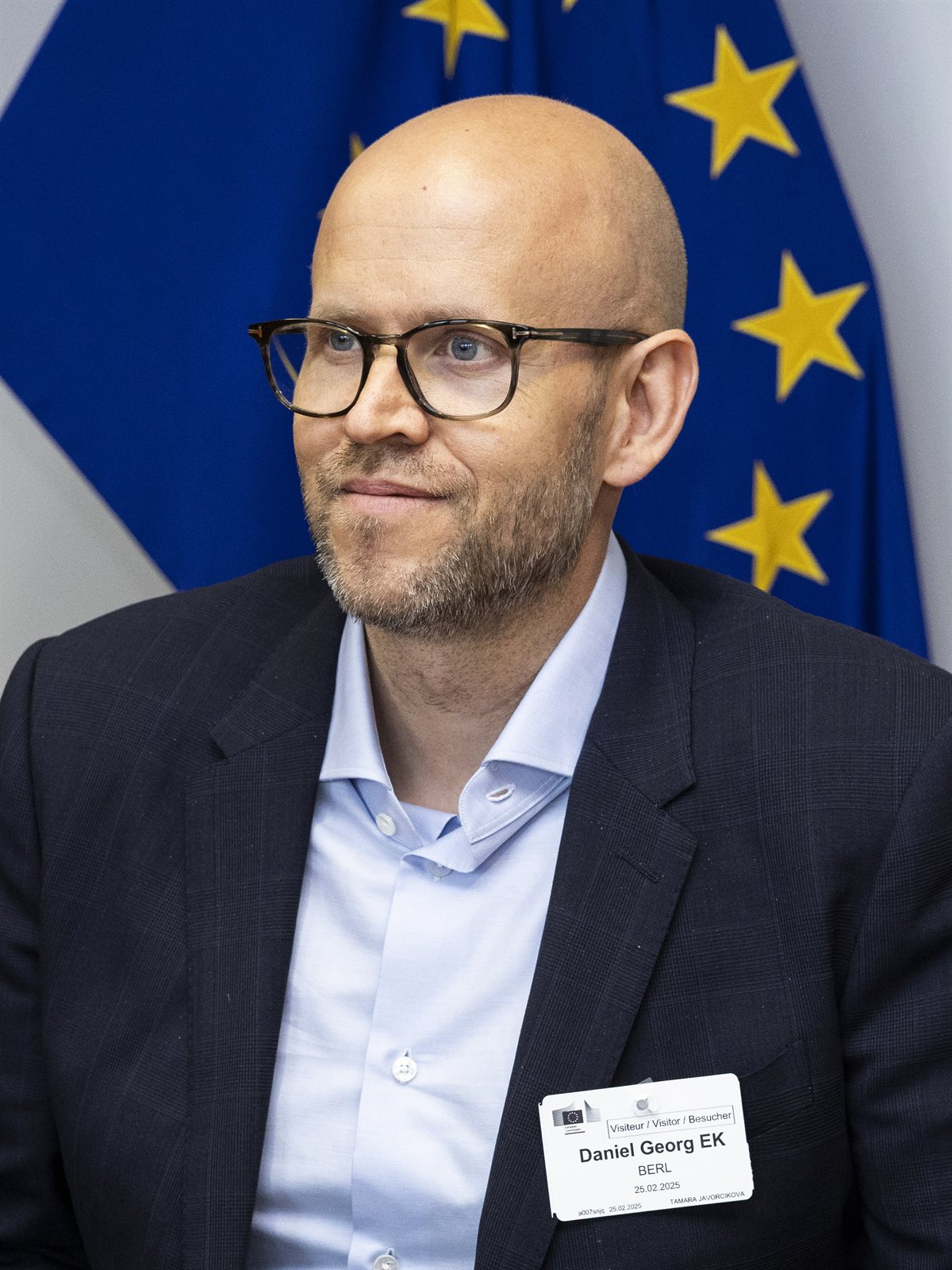
Daniel Ek: The Swede Who Beat Piracy by Building Something Better
A critically-neutral profile of Spotify’s Daniel Ek: how he beat music piracy not with lawsuits but with a freemium product better than free, endured two years of label negotiations and sixteen more before profit, and built a 675M-user streaming giant — alongside the artist-payment, Rogan and defence-tech controversies.

Whitney Wolfe Herd: The Founder Who Turned Being Pushed Out Into Bumble
A critically-neutral profile of Bumble’s Whitney Wolfe Herd: how she converted her ordeal at Tinder into the "women make the first move" thesis, took Bumble public at 31, and now fights to sustain it through a ~94% stock decline — the founding triumph and the hard aftermath, held honestly together.

Patrick Collison: The Irish Teenager Who Built the Internet’s Payment Rails
A critically-neutral profile of Stripe’s Patrick Collison: the teenage prodigy who sold his first startup at 19, reduced online payments to a few lines of developer code, and built the financial infrastructure of the internet — through a bubble, a markdown, and a full recovery past its old peak to ~$159B.