Claude Code: The Agent That Rewired Software Work
It has a credited creator, not a "founder," and its real controversies aren’t scandals — they’re what happens when you hand a capable agent the keys to your codebase. A fact-checked look.
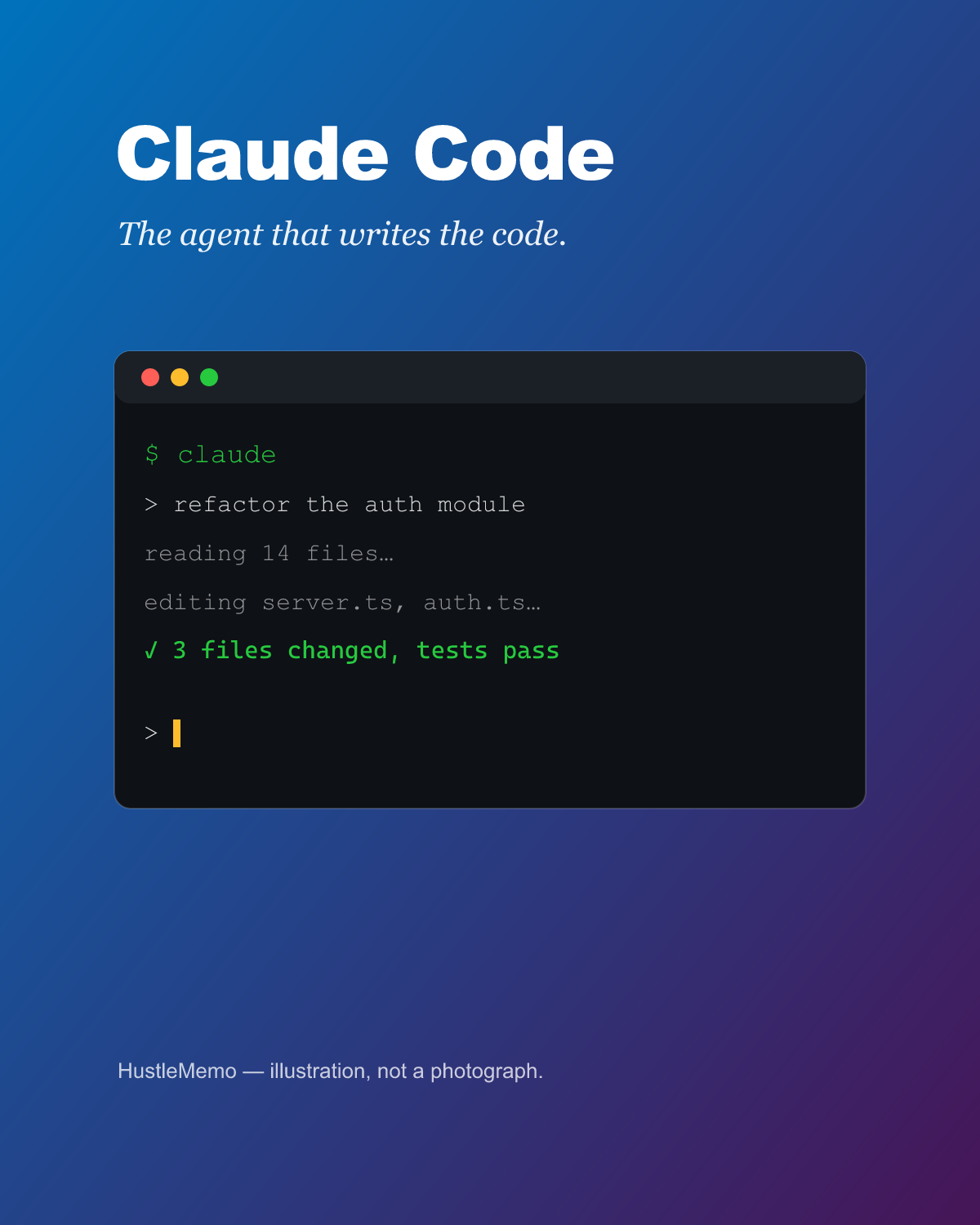
Claude Code did not begin as a product. It began as an internal hack at Anthropic — a terminal tool that let an engineer point a model at a codebase and say, in plain English, "fix this," and watch it read files, write changes, and run tests on its own. Within roughly a year it had gone from that quick prototype to one of the most influential developer tools of the era, credited inside Anthropic with enormous productivity gains and, by some estimates, touching a meaningful share of public code commits. There is no single "founder" of Claude Code in the company sense — it is an Anthropic product — but it has a clearly credited creator, and a set of genuine controversies that have nothing to do with personal scandal and everything to do with what these tools actually do.
The creator
The person most associated with Claude Code is Boris Cherny, credited as its creator and head. Before Anthropic he spent about five years at Meta as a principal engineer and wrote Programming TypeScript (O'Reilly), a well-regarded technical book. That background matters: Claude Code feels like a tool built by someone who has actually lived inside large, messy production codebases, not a demo built to impress investors. It runs in the terminal, integrates with version control, executes commands, and is designed to operate over a whole repository rather than autocomplete a single line.
Cherny is also unusually public about how he uses his own creation — describing workflows like running several Claude instances in parallel and shipping a high volume of pull requests a day, with heavy emphasis on planning before letting the agent implement. Treat those numbers as a practitioner's anecdotes rather than audited metrics, but the underlying point stands: the tool's own creator uses it as an orchestration layer, not a fancy autocomplete, and that is the shift it represents.
What is genuinely new
It is easy to be cynical about AI tooling, so it is worth being precise about what Claude Code actually changed. Earlier assistants — autocomplete and chat-in-the-editor — kept the human firmly in the driver's seat, accepting or rejecting suggestions line by line. Claude Code belongs to a newer category, the agentic coding tool: you give it a goal, and it plans, reads, edits across many files, runs commands, observes the results, and iterates. The human moves from typing code to reviewing an agent's work.
That is a real change in the unit of software labour, and Claude Code executed it well enough to force every competitor — GitHub Copilot, Cursor, and others — to chase the same agentic model. Whatever one thinks of the consequences, the tool genuinely moved the industry's centre of gravity.
Controversy one: autonomy is a security surface
The same capability that makes an agent useful — reading your files and running commands by itself — is also its sharpest risk, and this is a documented, industry-wide concern, not a hypothetical. An agent that can execute shell commands can, if misdirected, delete data, leak secrets, or run something harmful. The most discussed failure mode is prompt injection: malicious instructions hidden in a file, a web page, or a dependency that the agent reads and obeys, turning "summarise this issue" into "exfiltrate these credentials."
Anthropic's response has been permission systems, allow-lists, and sandboxing — the agent asks before doing dangerous things. But every safety prompt is in tension with the convenience that makes the tool attractive, and users routinely loosen the guardrails to move faster. The honest framing: agentic coding tools shift real power to a system that can be socially engineered, and the security model is still being figured out in public. This is the legitimate controversy, and Claude Code sits at the centre of it precisely because it is good enough that people grant it real access.
Controversy two: slop, deskilling, and the junior-developer question
The second debate is about what happens to the humans. Critics argue agentic tools accelerate the production of code-slop — plausible-looking output that compiles, passes a glance, and quietly carries bugs, security holes, or unmaintainable structure that a reviewer waves through because the machine seems confident. The faster the agent ships, the more reviewing-not-writing becomes the bottleneck, and review is exactly the skill that atrophies when you stop writing.
There is a sharper version aimed at early-career engineers: if a senior engineer with an agent can do the work that used to require a team of juniors, where do the juniors come from in ten years? Defenders counter that every abstraction in computing history — compilers, high-level languages, Stack Overflow — drew the same alarm, raised the ceiling, and created more programmers, not fewer. Both arguments are serious. What is not yet known is which one this technology vindicates, and Claude Code is one of the main reasons the question is now urgent rather than theoretical.
Controversy three: the talent war
The most concrete "controversy" attached to Claude Code is not about ethics at all — it is about how brutally the talent behind it is fought over. In early July 2025, Boris Cherny and Cat Wu, the two people most credited with building Claude Code, left Anthropic for senior roles at Anysphere, the maker of the rival tool Cursor — reported as a high-profile poaching in the escalating war for AI engineering talent. Roughly two weeks later, both returned to Anthropic, a whiplash reversal covered widely across the industry press.
It reads almost as farce, but it is a real signal: the individuals who can build a frontier coding agent are scarce enough that the leading labs and startups will pay almost anything to move them a few feet, and the people themselves have enormous leverage. The episode says less about the character of any individual — we are not in the business of guessing at private motives — and more about the structure of the industry: a tiny number of builders, gigantic stakes, and a market that treats them like franchise athletes.
The honest verdict
Claude Code is one of the genuinely important products of the current AI wave, and it deserves credit on its own terms: a tool that turned "AI helps you type" into "AI does the task and you supervise," built by people — Boris Cherny foremost among them — with real engineering pedigree, executed well enough to reshape an entire category.
It is also the clearest live example of the trade every powerful tool forces. The autonomy that makes it valuable is the autonomy that makes it dangerous. The speed that makes it lovable is the speed that lets bad code through and lets human skill quietly erode. And the people who build it are so valuable that they can switch sides and switch back inside a month. None of those are scandals. They are the actual, unglamorous costs and questions of putting a capable agent into the workflow of the people who build everything else — and they are worth taking at least as seriously as the demos.
Editor's note: HustleMemo writes founder-led case studies grounded in public reporting. Claude Code is an Anthropic product, not a standalone company; we credit its creator and treat "controversies" as the documented debates about agentic tools and a real personnel episode, not invented personal scandal. The header image is a generated illustration, not a photograph of any individual. Corrections: editorial@hustlememo.com.
Sources
- Interviews and profiles of Boris Cherny as creator/head of Claude Code (his Meta principal-engineer background, authorship of Programming TypeScript, and described personal workflows), e.g. Lenny's Newsletter, The Pragmatic Engineer, developing.dev.
- General reporting and Anthropic materials on Claude Code as an agentic, terminal-based coding tool and its growth from internal prototype.
- Documented, industry-wide discussion of agentic-coding risks: prompt injection, autonomous command execution, sandboxing/permissioning, and the "code-slop"/deskilling debate.
- Reporting on the July 2025 talent move: Cherny and Cat Wu joining Anysphere (Cursor) and returning to Anthropic ~two weeks later (The Information; Techmeme, 16 July 2025).
More from this category

Daniel Ek: The Swede Who Beat Piracy by Building Something Better
A critically-neutral profile of Spotify’s Daniel Ek: how he beat music piracy not with lawsuits but with a freemium product better than free, endured two years of label negotiations and sixteen more before profit, and built a 675M-user streaming giant — alongside the artist-payment, Rogan and defence-tech controversies.

Whitney Wolfe Herd: The Founder Who Turned Being Pushed Out Into Bumble
A critically-neutral profile of Bumble’s Whitney Wolfe Herd: how she converted her ordeal at Tinder into the "women make the first move" thesis, took Bumble public at 31, and now fights to sustain it through a ~94% stock decline — the founding triumph and the hard aftermath, held honestly together.

Patrick Collison: The Irish Teenager Who Built the Internet’s Payment Rails
A critically-neutral profile of Stripe’s Patrick Collison: the teenage prodigy who sold his first startup at 19, reduced online payments to a few lines of developer code, and built the financial infrastructure of the internet — through a bubble, a markdown, and a full recovery past its old peak to ~$159B.